The feel
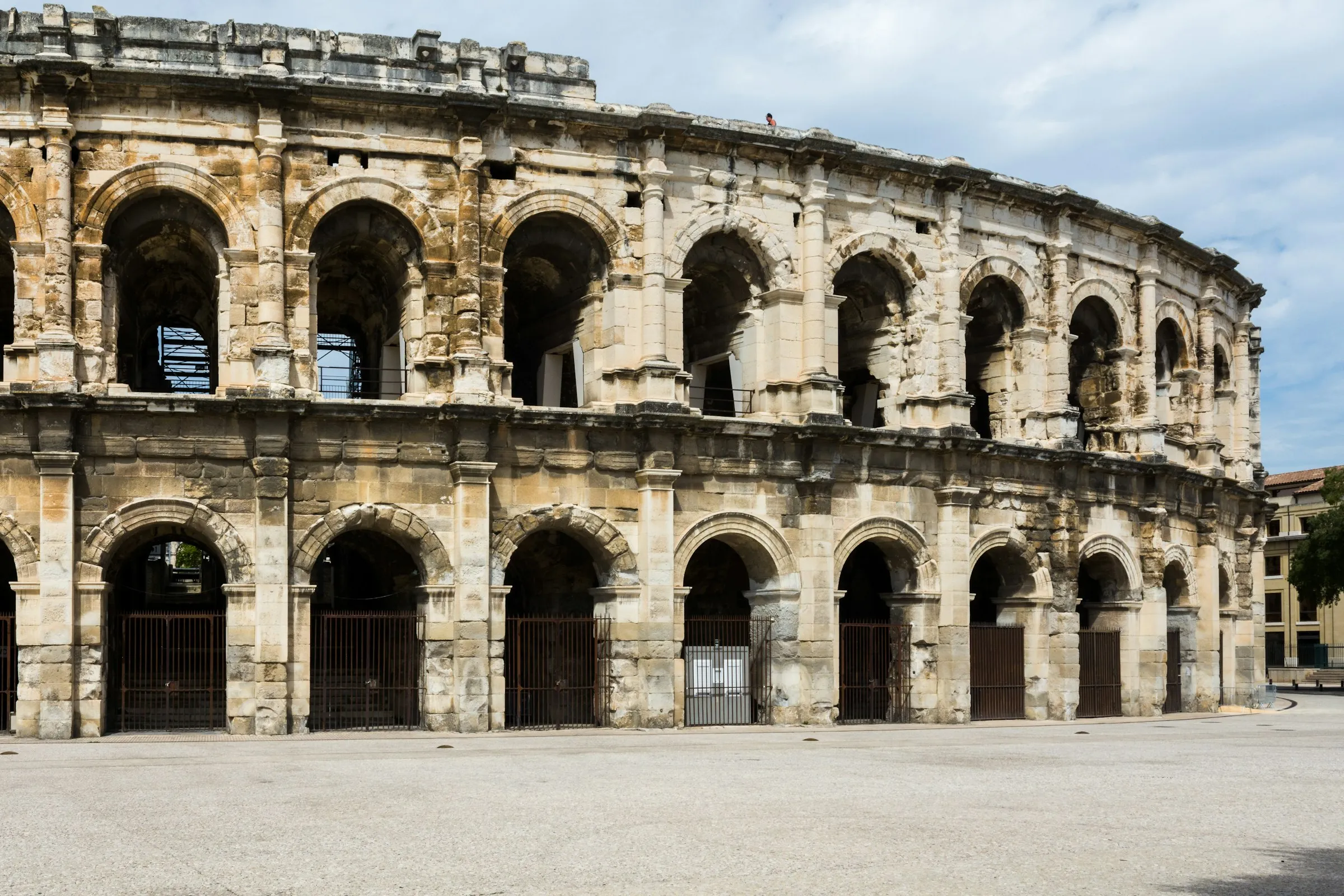
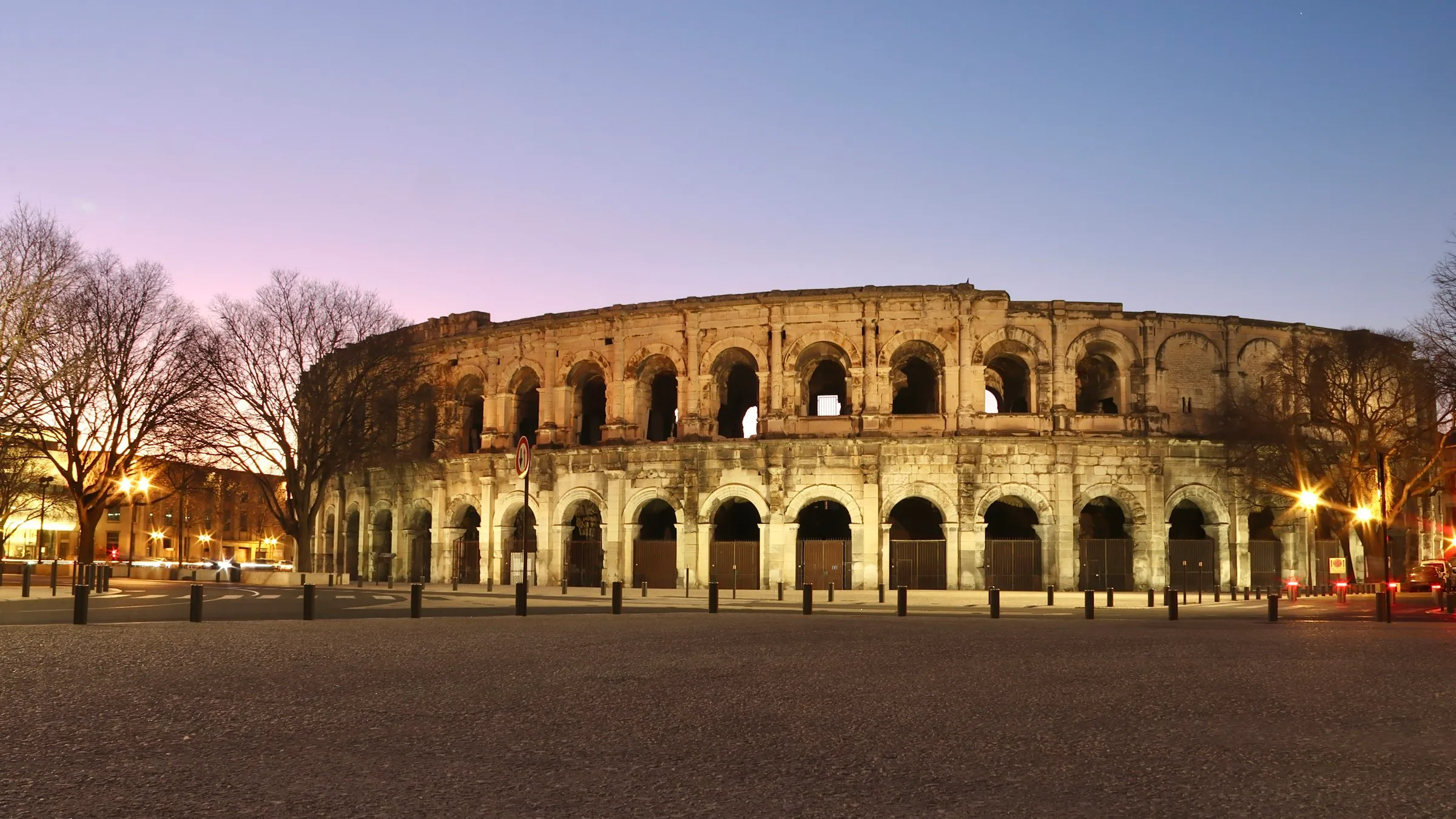
Nîmes's emblem — a crocodile chained to a palm tree, struck on Roman coins minted here — is still on the bollards and fountains: a city so casually Roman it puts antiquity on the street furniture. The arena still works for a living — ferias, summer concerts — two thousand years on, and the Maison Carrée, arguably the best-preserved Roman temple anywhere and a UNESCO site since 2023, presides over the Écusson, the shield-shaped, largely pedestrianized old town. Around all that marble runs a real southern city, scuffs included. Nobody polishes Nîmes for visitors, which is either its flaw or its whole charm.
Market day
In a city this size, market day is every day. Les Halles, the covered market at the heart of the Écusson, opens every morning, roughly seven to one — a hundred-odd stalls where Nîmes actually shops. The counter to learn first sells brandade, the city's silky cod-and-olive-oil emulsion, born of trading Camargue salt for northern cod; regulars stay to eat at the stalls.
Where your coffee happens
On the terraces of the Écusson's little squares — the Place aux Herbes by the cathedral, or the Place du Marché, where the crocodile fountain keeps the city's emblem on duty — or a few steps from the Maison Carrée, if the trick of drinking coffee beside two thousand years of Rome never wears off. In Nîmes it doesn't have to.
A Saturday here
Les Halles first. Then the Jardins de la Fontaine, laid out in 1745 around the spring the city was founded on — among the first public gardens in Europe — canals and balustrades below, a slow climb through the pines to the Tour Magne and the whole plain in view. Lunch late. On a summer evening, the arena itself: the Festival de Nîmes has filled it with big-name concerts every June and July since 1997.
The year, honestly
The Météo-France station sits at Courbessac on the edge of town, so these numbers are Nîmes's own: about 2,700 hours of sun a year, fifty-nine days over 30 °C, more than 120 over 25 °C. Summer is not an episode here; it is a season, and city stone holds it after dark. Rain comes on only about sixty-five days a year, often violently in autumn — Nîmes has a serious flash-flood history, twenty-one flood disaster decrees deep, and we treat the flood map as required reading before anyone buys. The ferias — Pentecôte at Whitsun, Vendanges in September — swallow the town twice a year. But barely six percent of homes are second homes — this city belongs to its residents — and winter, short and bright with around twenty frost days, stays entirely open for business.
Who thrives here
People who want a real city at a budget Provence stopped respecting years ago: sales average about €2,300 a square metre, rents just under €15 — markedly less than the same sun costs across the Rhône. People for whom healthcare decides: the Carémeau university hospital is a few minutes' drive, and the home-help and residential-care network runs unusually deep. Film people — three cinemas, one art-house, films in VO. And anglophones who want company without an enclave: BritsNîmes, an AVF welcome association, the Nîmes–Uzès English-speakers' circuit, and two local doctors on the US Consulate's English-speaking list.
Think twice if
You wilt in heat — fifty-nine days over 30 °C is a climate you live in, not one you visit. You're expecting Provence polish: Nîmes carries deprived inner-city pockets, unemployment above the national average, and streets Aix would have gentrified a generation ago — the scruff is structural. Property crime sits mid-range for French cities — ordinary urban vigilance, not village trust. You plan to own: the combined property-tax rate is 54% (2025) — levied on a notional cadastral rental value set by the tax office, not on the price you paid — and flood-zone diligence is non-negotiable. Or you moved to France for a village — this is 150,000 people, with the traffic to match.
The orbit
Uzès, about thirty-five minutes. The Pont du Gard, about half an hour. The sea at Le Grau-du-Roi, under an hour through the Camargue, or a fifty-minute direct train. Montpellier's airport, about fifty minutes, flies to the States with one stop at a European hub, and the TGV puts Paris at about three hours.
The Aelos view
Nîmes is the value position in the Roman south: a university hospital, a daily covered market, a real cultural calendar, and Mediterranean light at prices Aix and Avignon abandoned long ago. It asks two things in return — that you take the summer seriously, and a working city's rough edges as texture rather than failure. We'd send the member who toured Provence and flinched at the listings; we'd steer the polish-minded and the heat-averse elsewhere. And if you want this countryside at village scale, Uzès is thirty-five minutes up the road.