The feel
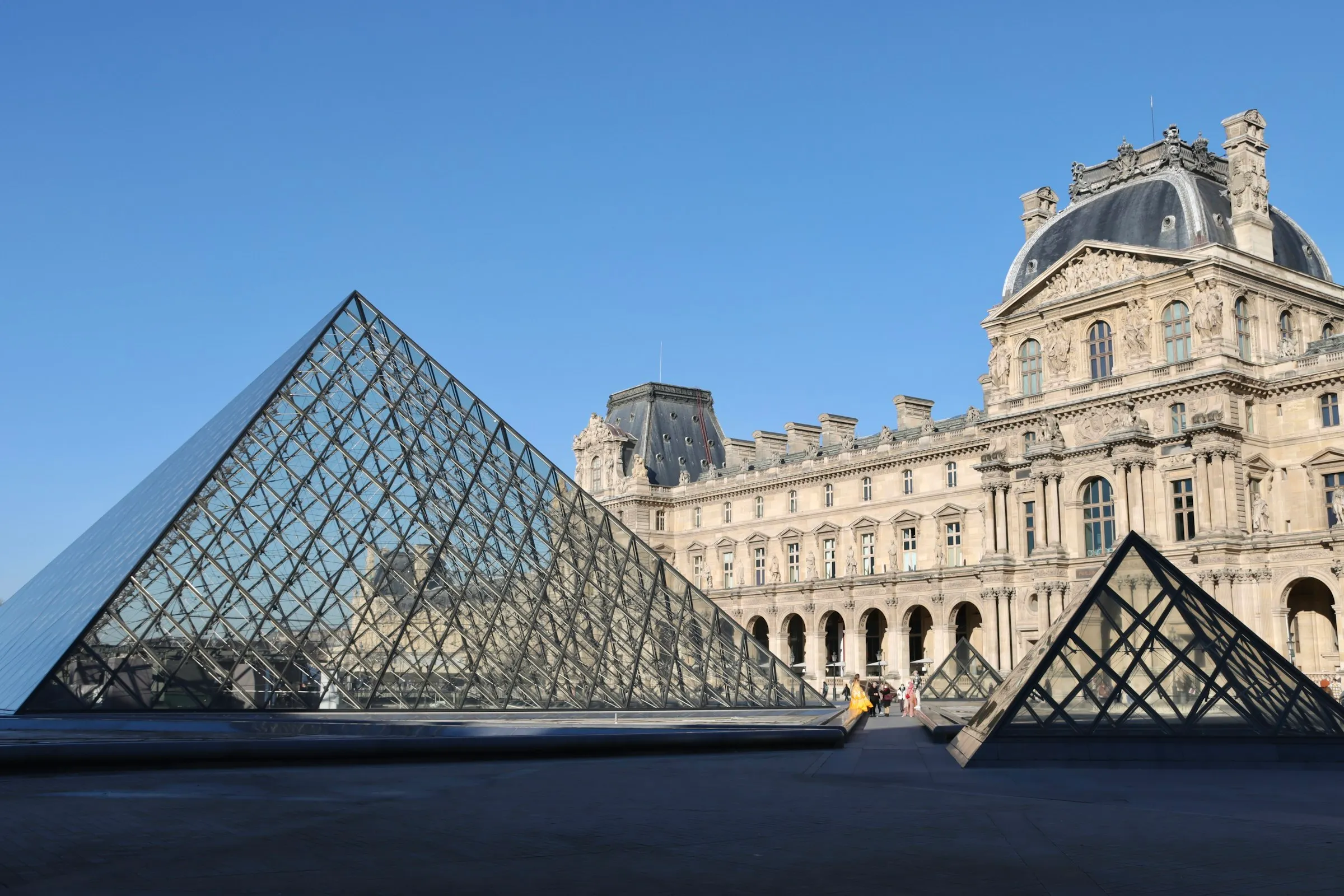
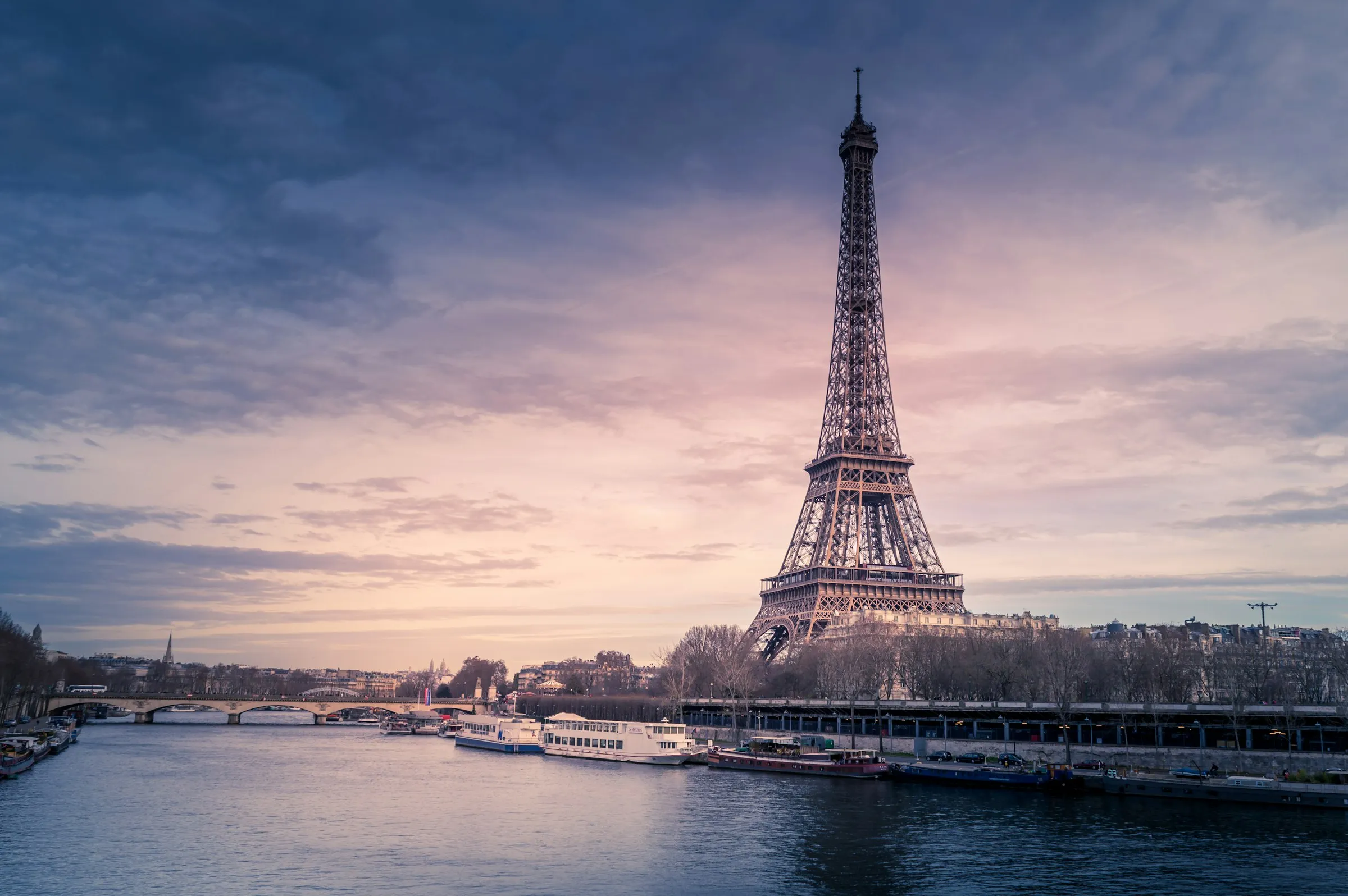
Set aside the postcard Paris; you would not retire to it. The Paris you'd live in is about ten streets — your boulangerie, your pharmacist, your café, your market street — inside a city of 2.1 million that behaves like a federation of villages. Each arrondissement keeps its own shopping street, its own square, its own familiar faces. The capital adds everything else — 1,885 protected monuments, 77 cinemas, 300-odd festivals, the deepest American infrastructure in France — none of it requiring a car.
Market day
There is no market day here; there is a market street, and the question is which one is yours. In the 7th it's the rue Cler — polished, part-pedestrian, touristy by noon but a working food street at nine. In the 5th, the rue Mouffetard tumbles downhill through the Latin Quarter. In the 12th, the marché d'Aligre runs every day but Monday and stays loud, cheap, and stubbornly local. Wherever you land, the food shopping of legend is downstairs, six days a week.
Where your coffee happens
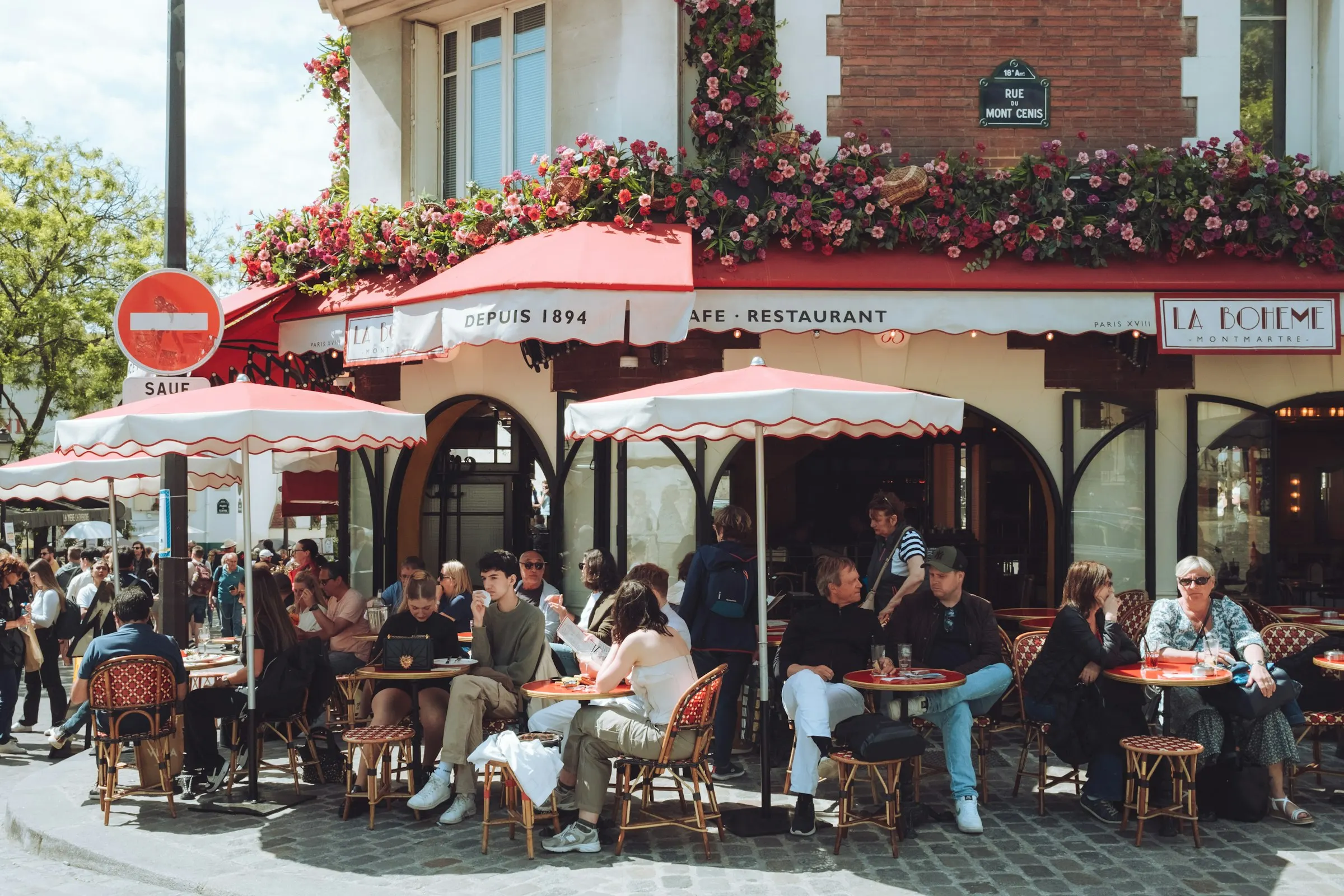
At the unfamous café on your corner, where counter and terrace charge different prices and the waiter stops asking by week two. For English company, the American Library's reading room in the 7th has served for generations.
A Saturday here
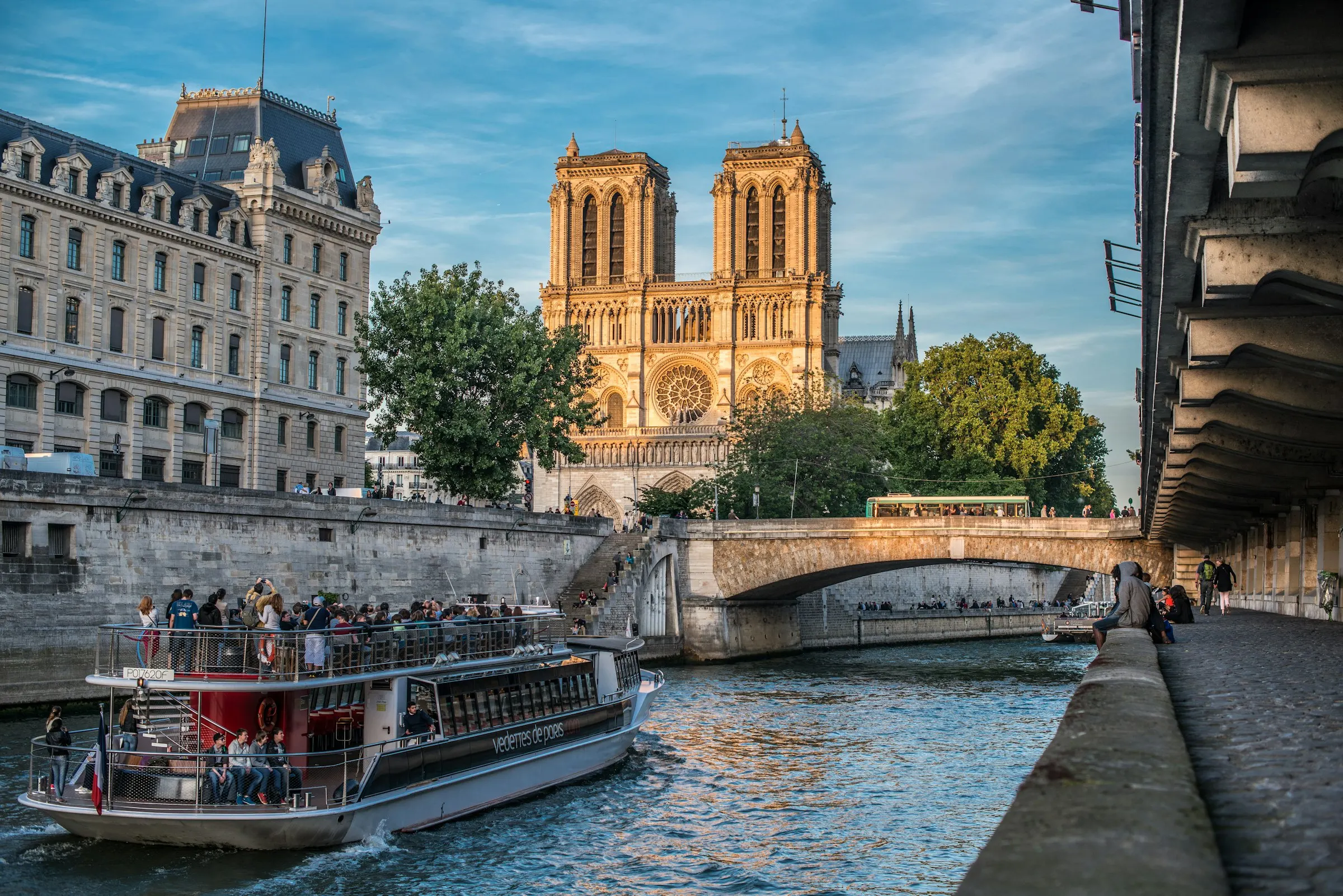
Market first. Then an exhibition, or a matinee at one of those 77 cinemas — 37 of them art-house, English-language films shown undubbed — or neither: the long walk home along the Seine. Dinner stays in the quarter. You will not have left a two-kilometer circle; it will have been a full day.
The year, honestly
The Météo-France station in the Parc Montsouris, on the city's southern edge, says what Parisians admit reluctantly: about 1,700 hours of sun a year — a thousand short of the Mediterranean south — and rain roughly one day in three, mostly drizzle rather than drama. November through February is grey more than cold; frost appears about three weeks a year. Summer is temperate — fourteen days over 30 °C — though heatwaves land hard on a stone city never built for them. The tourist tide never fully goes out; it deepens in summer. But fewer than one home in ten is a second home, and the neighborhoods run year-round — except in August, when Parisians leave and some of your shopkeepers will too.
Who thrives here
People retiring to a life, not a view. The car-free by conviction. People who want Americans within reach: roughly a quarter of the Americans in France live here — 7,700 by the strict US-born count, nearer 14,000 by broader estimates — with the American Church, the American Library, WICE, AARO, and Democrats Abroad; the 7th and 16th are the traditional concentrations. And the medically cautious: the Hôtel-Dieu and the AP-HP network minutes from the center, the American Hospital of Paris in Neuilly, and the US Embassy's published list of English-speaking doctors.
Think twice if
Your budget has to matter. Sales averaged €10,278 per square meter across 2022–2024 — the most expensive housing in France — and rents run about €33 per square meter; the money that buys a house and garden in most of this guide buys a modest apartment here, often without the guest room and sometimes without the elevator. You came for the sun: winter is long, grey, and damp. You hate friction: strikes will reroute your week, noise is ambient, the préfecture queue is real. On safety, Paris sits mid-band in our scoring — violent crime unremarkable for a capital, but pickpocketing on the Métro and in the tourist cores is the crime you will actually brush against.
The orbit
For once the orbit runs inward: the TGV map radiates from here. Bordeaux is just over two hours, Lyon under two, and the whole country is a weekend. Nearer in, Versailles is about forty minutes on the RER C, Fontainebleau about forty by train from the Gare de Lyon, Giverny about an hour via Vernon. Charles de Gaulle is thirty-five minutes away with nonstop flights across the US — no French address gets you home faster.
The Aelos view
Paris is the right answer more often than its price suggests, and less often than its fame does. If you are car-free by preference, culture-hungry, medically cautious, and comfortable with the budget, few cities anywhere retire better — and nowhere in France will surround you with more Americans. If the budget needs watching, or the dream involves a garden and the sound of nothing, the same money buys a far larger life almost anywhere else in this guide — we would happily point you there.