The feel
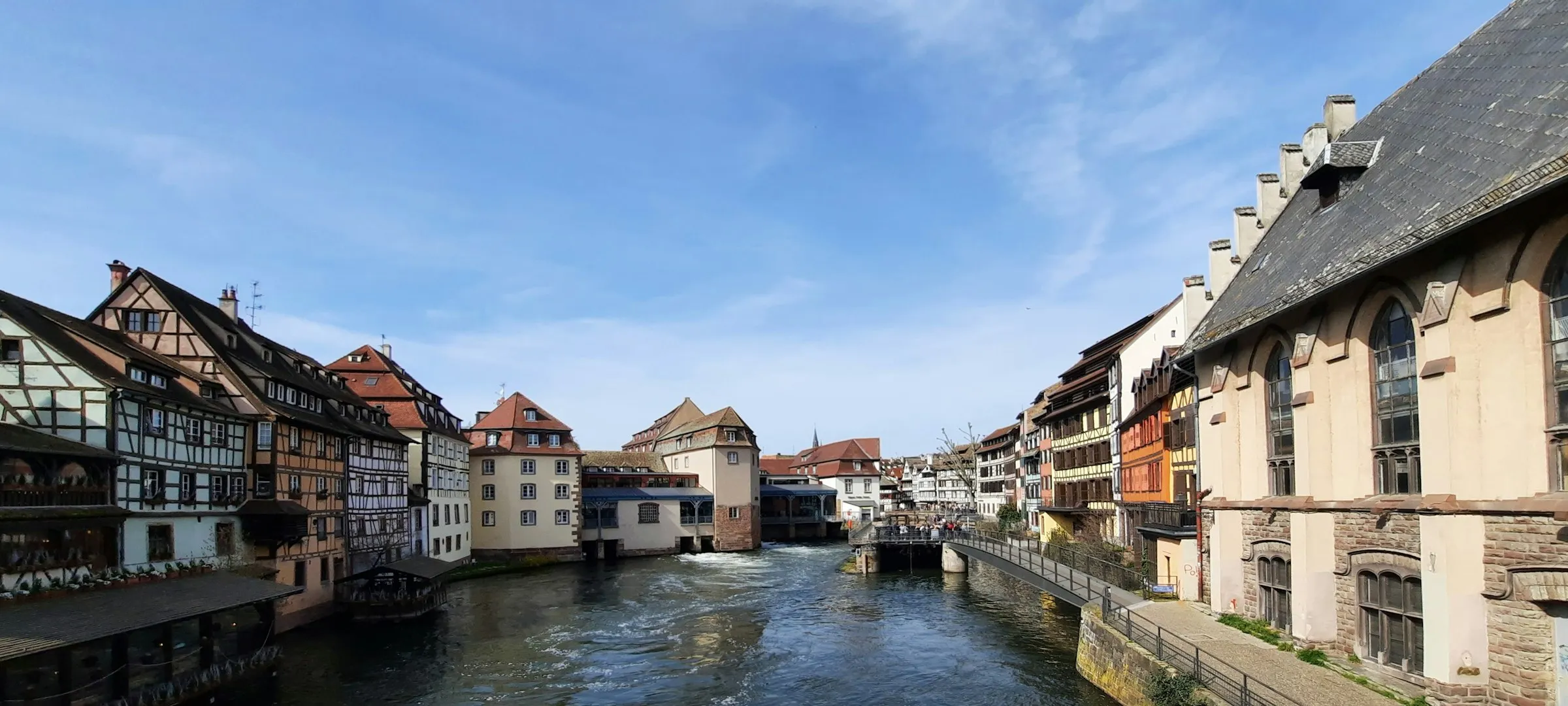
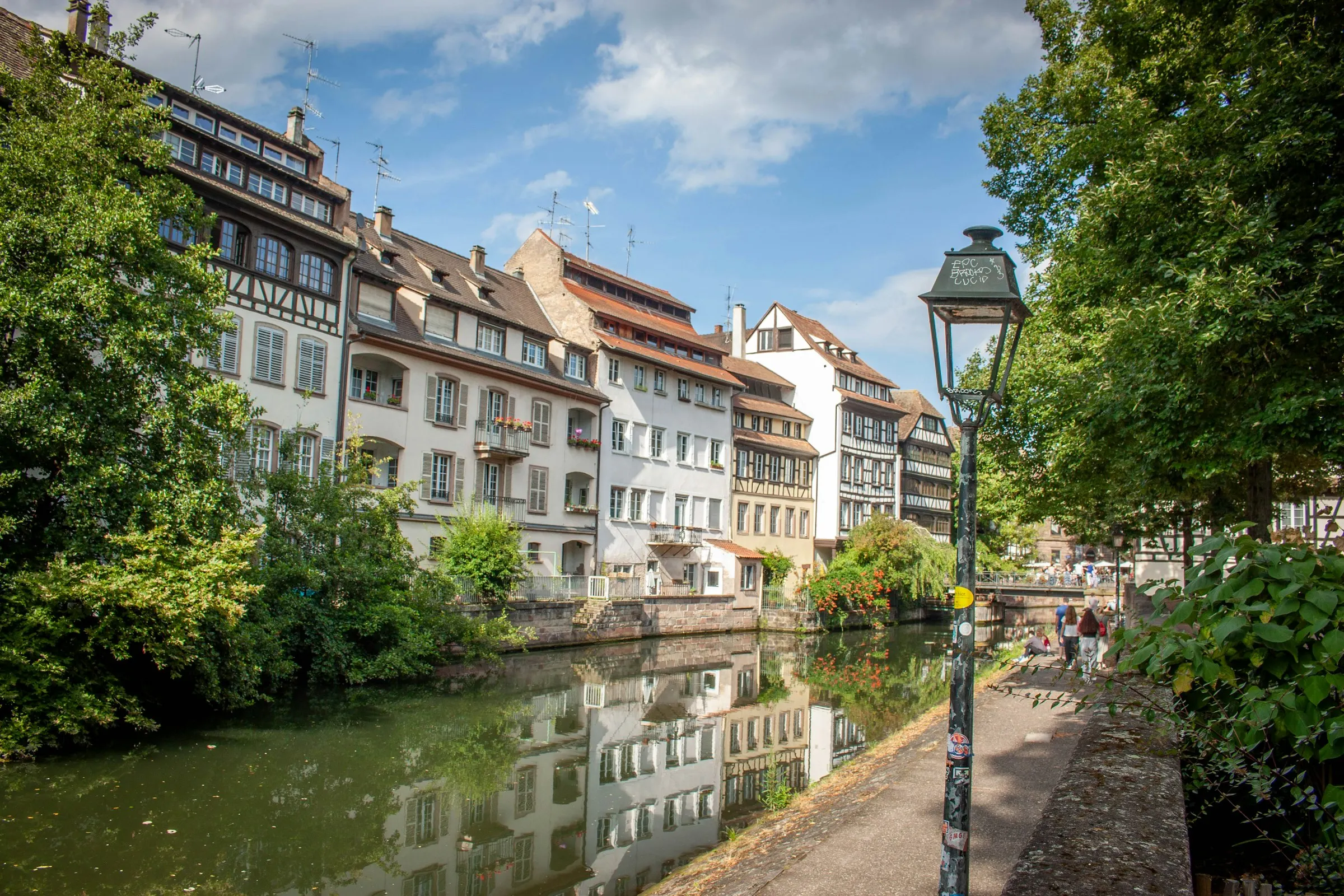
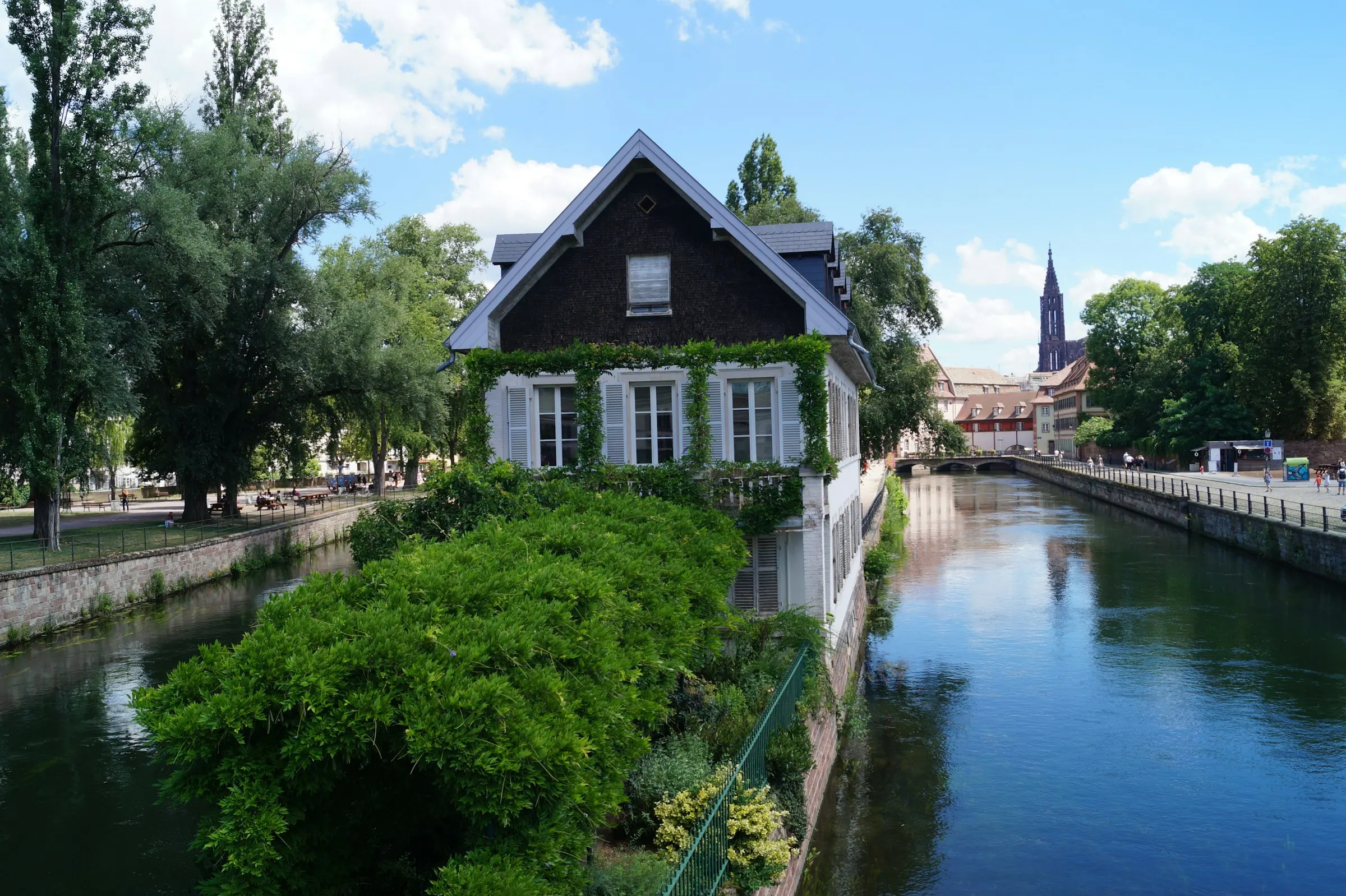
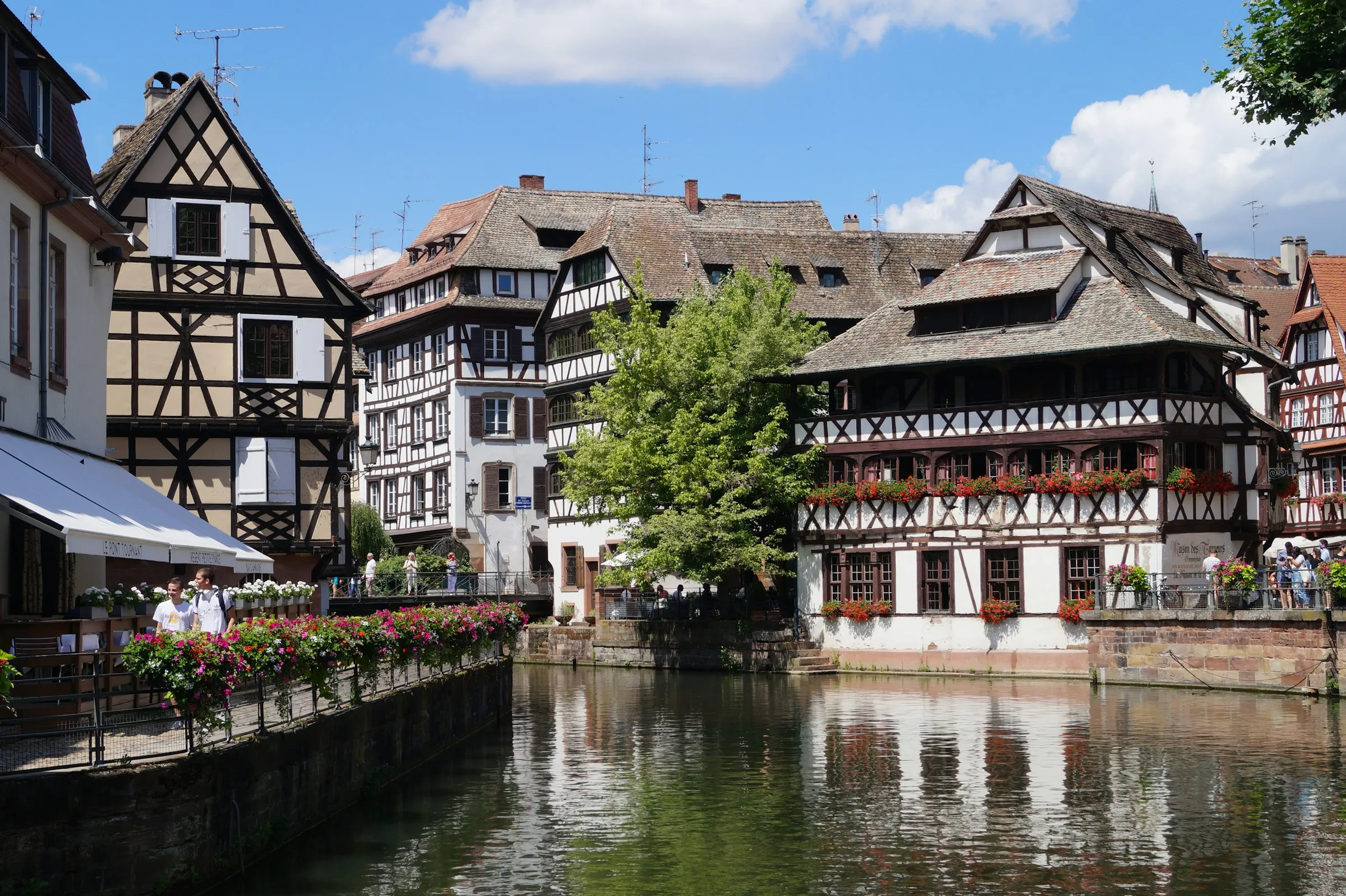
Canals, timbered houses leaning into one another, and the cathedral's single sandstone spire — the tallest thing humans had built for more than two centuries, and it still carries itself that way. But the Grande Île is only the middle of a working city of 290,000, where French and German trade places mid-sentence and the European Parliament, the Council of Europe, and the Court of Human Rights keep the northern quarters quietly international. It is a capital at neighborhood scale: the student-worn Krutenau, the grand German-built Neustadt, each quarter running its own small-town week.
Market day
Tuesday and Saturday mornings on the boulevard de la Marne, seven until one: one of the city's biggest markets runs along the Esplanade toward the Orangerie. Most quarters keep their own market morning. Then December, when the market becomes the city: the Christkindelsmärik has run since 1570 — the oldest Christmas market in France — and draws around two million visitors.
Where your coffee happens
Alsace takes its coffee the Central European way, with something baked attached, so the salons de thé near the cathedral do the theatre and the kougelhopf. The Krutenau does the unhurried version, on terraces that belong to the neighborhood. On market mornings, coffee happens standing up on the Marne, between the cheese stall and the flower van.
A Saturday here
The Marne market first, then the classic loop: along the Ill through Petite France, across the Ponts Couverts, back past the cathedral before the afternoon tide. Later, the Orangerie under the storks — the park ran the reintroduction that saved Alsace's emblem — or tram D across the Rhine: Kehl's German riverbank is twenty minutes from the centre, no passport required. Dinner is a winstub — wood panelling, choucroute, riesling taken seriously.
The year, honestly
Read this part twice: Strasbourg has one of the weakest winter-light profiles of any town we cover. The Météo-France station at Entzheim — the airport, about nine kilometres from the centre — logs around 1,750 hours of sun a year, nearly a thousand fewer than our Mediterranean towns, with rain roughly one day in three and close to sixty mornings of frost. November through February is genuinely grey. But the city refuses to hibernate: fewer than one home in twenty is a second home, fifty-odd festivals fill the calendar, and December, improbably, is high season. Summers are the pleasant surprise — warm and green, about eighteen days a year over 30 °C rather than the furnace of the south.
Who thrives here
People who want to sell the car and mean it: six tram lines, flat streets, a real cycling culture. People for whom medicine is the first filter: the university hospital is about five minutes from the centre, a dedicated cancer centre barely further, GP access scores at the very top of our index, and the US Embassy publishes a list of English-speaking doctors for Strasbourg. And culture eaters: an opera house, more than two hundred protected monuments, five cinemas — three art-house, showing films undubbed. The anglophone scene is international rather than American — an Anglican church, an English-speaking community association — so bring your French, or the will to build it.
Think twice if
You're moving to France for the light — nothing on this page cancels those grey months. You want the sea: the nearest coast is a serious journey. You pictured a village: this is a real city, with a city's noise and the station-district pickpocketing to match. You want the France of the films: Alsace is its own country in everything but law — the dialect, the food, the Rhenish rhythms — and some retirees never stop feeling like guests. Central housing is a fight: the institutions keep demand and prices firm in exactly the districts you'd want.
The orbit
Colmar, half an hour by train, with the wine-route villages strung between. The Vosges rise to the west for walking; the Black Forest answers from across the river. Kehl is a tram stop — Germany is an errand here, not a trip. Paris is about an hour and three-quarters by TGV, and Entzheim airport, twenty minutes out, puts the States one connection away.
The Aelos view
Strasbourg is for members who discover mid-planning that what they want is a European city life — medicine and music at walking distance, trains in every direction, Germany across the bridge — rather than a Mediterranean one. We send urbanites, culture-first couples, and the winter-hardy here with confidence. We steer sun-seekers south without apology: light is the one thing this city cannot offer, and the one thing people adjust to less easily than they expect.