The feel
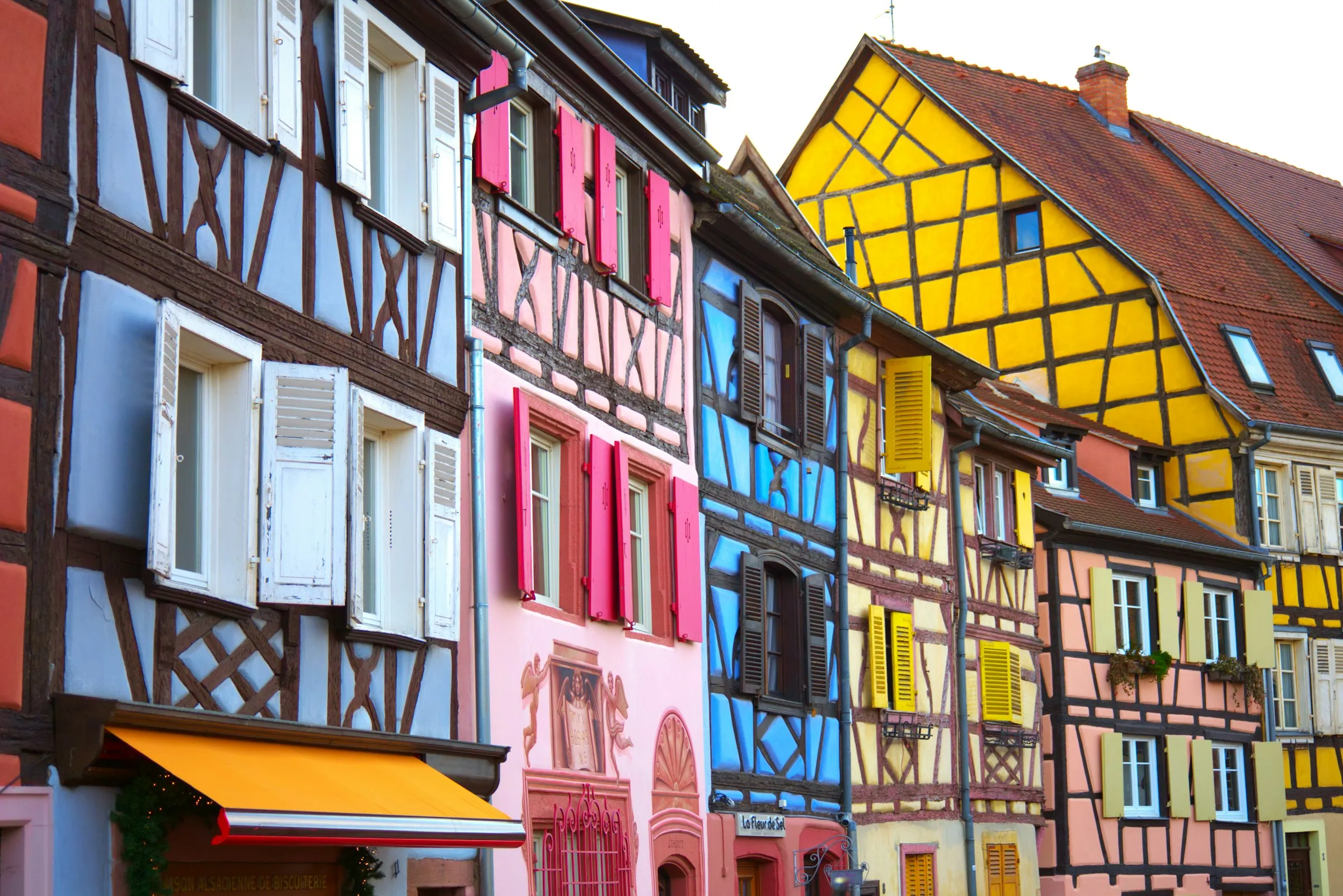
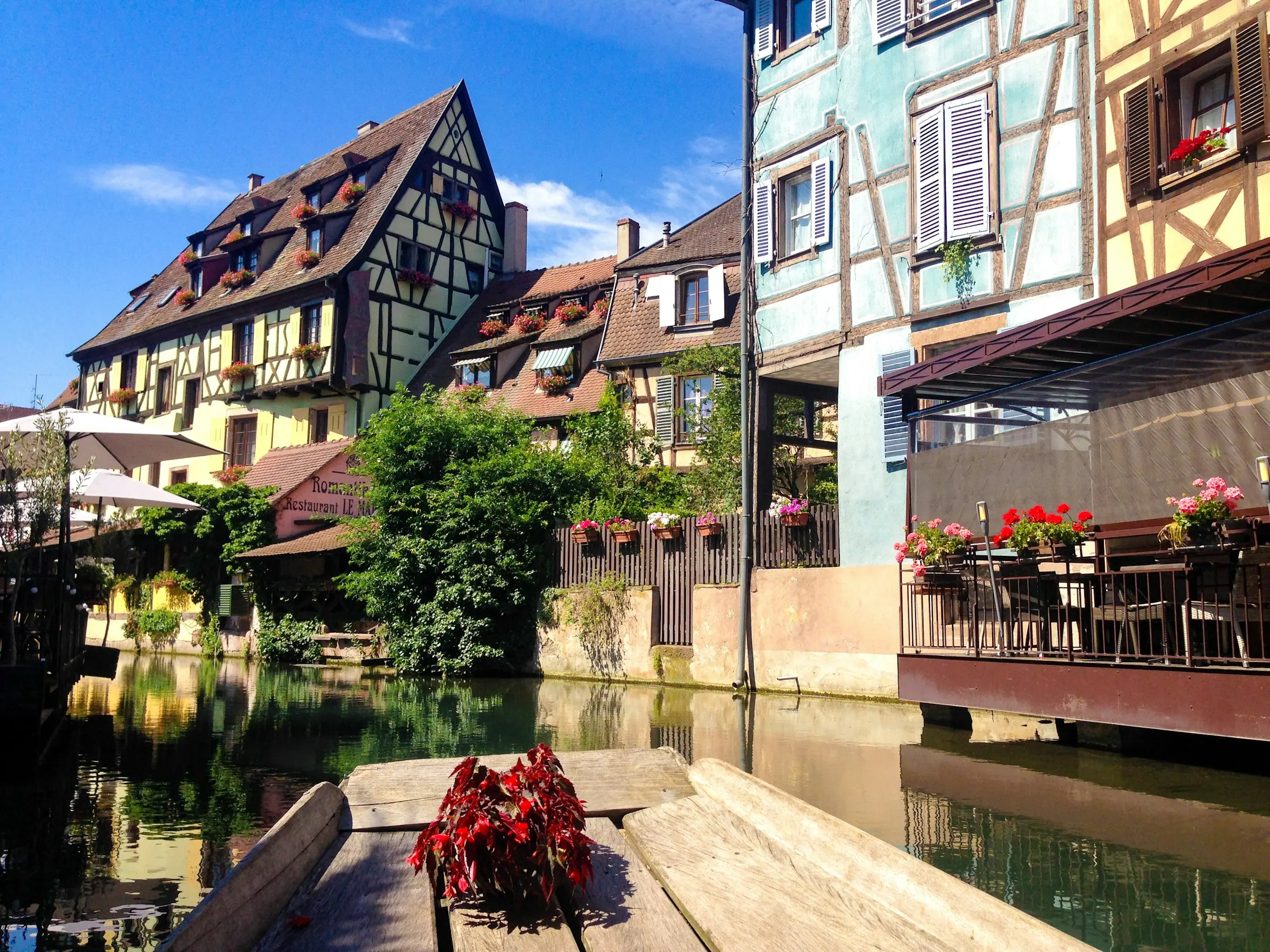
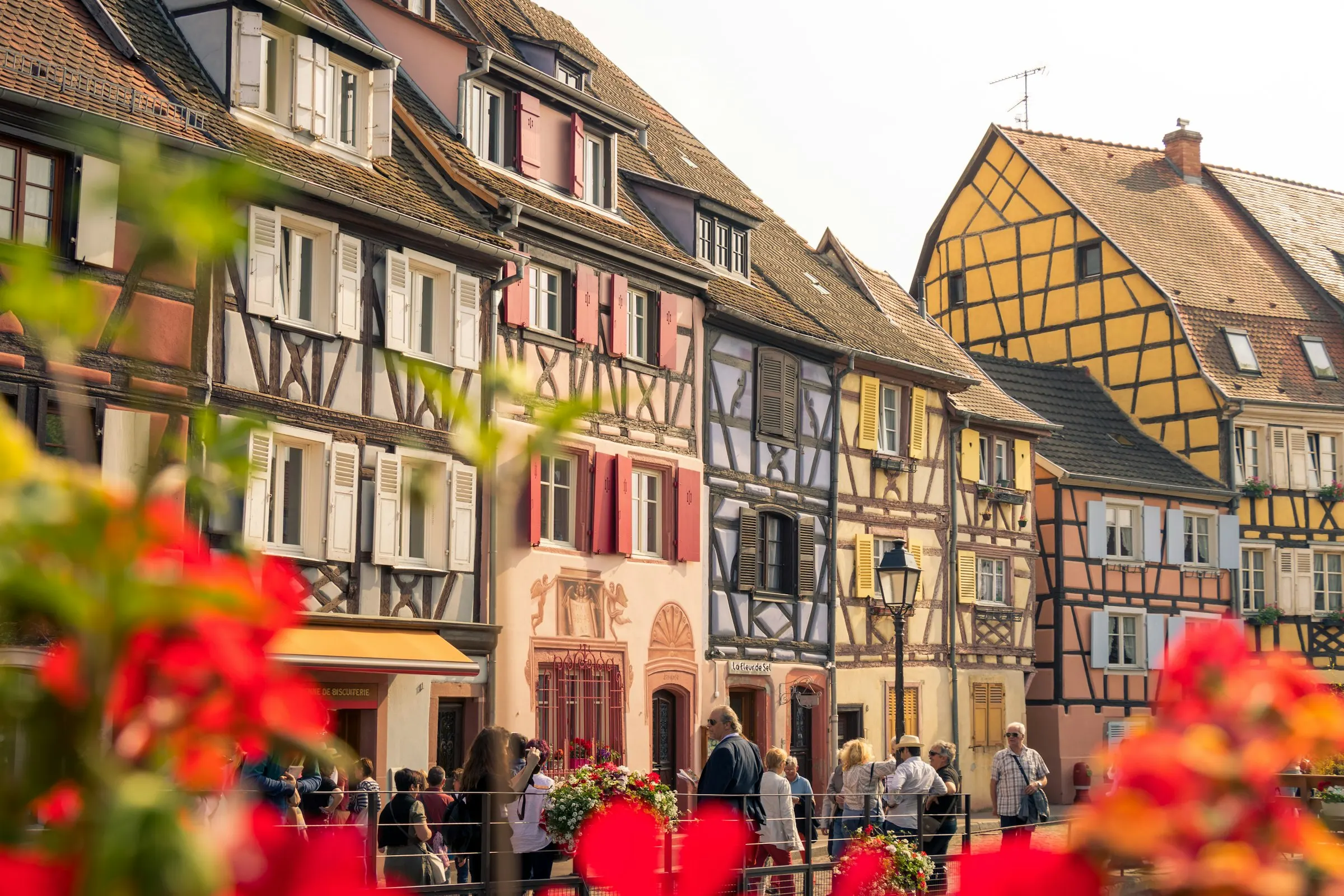
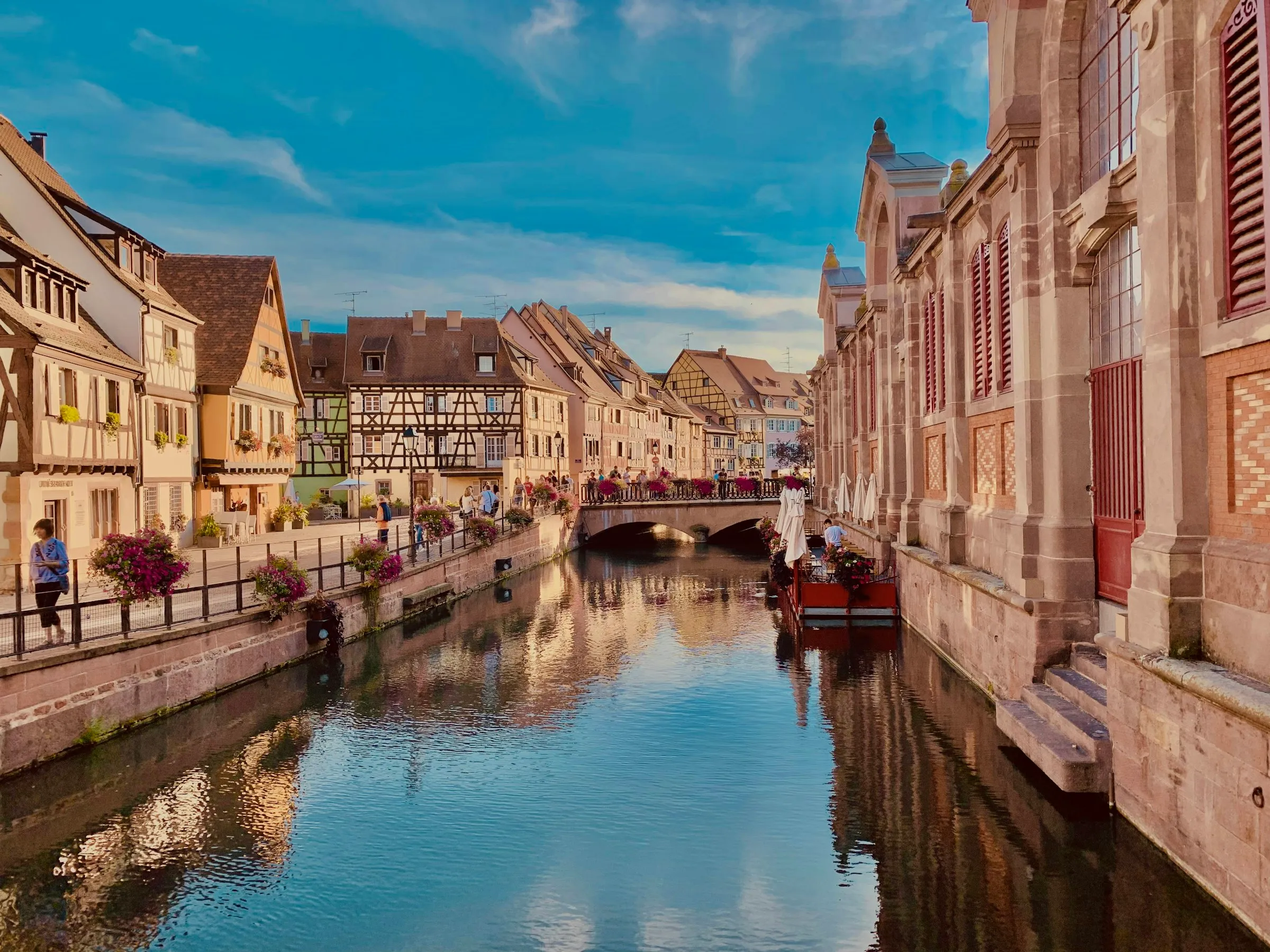
Little Venice at eight in the morning, before the day-trippers: ochre and oxblood timber leaning over a slow green canal, delivery vans on the rue des Écoles, the smell of bread. Colmar is the most photographed version of Alsace and knows it — but the postcard is a thin layer over a working town of 67,000: schools, clinics, a courthouse, Alsace's most visited museum. The crowds come to look; nearly everyone who owns a front door lives behind it.
Market day
The covered market on the rue des Écoles, at the edge of Little Venice, runs every day except Monday — fish, flowers, Munster down from its Vosges valley, counters where lunch happens standing up. In December the Christmas markets roar outside while the market hall keeps its ordinary week — a town quietly feeding itself in the middle of its own spectacle.
Where your coffee happens
Not on the canal quays — those belong to the visitors by ten. Regulars pull back a street or two, toward the Champ de Mars park on the town's calmer flank, or into a winstub side room with a view of nothing in particular. The line between tourist Colmar and lived-in Colmar is one street wide; you learn it within a week.
A Saturday here
Market early, then the Unterlinden — a thirteenth-century convent holding the Isenheim Altarpiece, the most harrowing, magnificent painting in this half of France; you will bring every houseguest. Lunch late, then out into the vines: Eguisheim is seven kilometres away, Kaysersberg and Riquewihr barely twice that, and the vineyard footpaths between them suit the walk-first, taste-after school of exercise. In winter, trade the vines for the market hall and be home before the lights come on in the lanes.
The year, honestly
The famous claim — that Colmar is one of the driest towns in France — is about rainfall, and it's real: the Vosges wring out the weather before it reaches the plain. It is not a claim about sunshine. The nearest Météo-France station — Colmar-Meyenheim, on the plain seventeen kilometres south — logs about 1,880 hours of sun a year, seventy-one mornings of frost, and twenty-one days over 30 °C: continental seasons in full, grey cold Januaries included. The tourist tide is equally seasonal — five weeks of Christmas markets from late November, then full lanes again in summer. Yet the town never empties: second homes sit at 4.7%, sixteen festivals spread across the calendar — a serious international classical festival each July among them — and January belongs to the people who stayed.
Who thrives here
People who want their beauty with services attached: the Louis Pasteur hospital is in town, under twenty minutes door to door, and everyday medicine is well covered. Wine-and-mountain people — the Alsace route begins at the city limits, and the Vosges ridges are a standing Sunday option. Value people, quietly: rents run under 13 € a square metre, modest for a town this photographed. And people ready to live in French: the anglophone scene is thin — an AVF welcome association and a regional English-speakers' circle, not an American community — which, for some, is exactly the point.
Think twice if
You dislike crowds in your own streets — the Christmas markets are a five-week occupation, and summer brings the tour groups back. You need winter sun: dry is not bright, and those seventy-one frosts arrive under plenty of grey. You want ready-made American company or English-speaking doctors: we found no established US community, and the embassy's regional practitioner list carries a single Colmar address. Serious specialist medicine means Strasbourg's university hospital, about an hour by road. And every flight home is a connection — via Basel, Strasbourg, or Paris — and will never be otherwise.
The orbit
Eguisheim, seven kilometres; Riquewihr and Kaysersberg, under fifteen. Strasbourg, about thirty minutes by direct train. EuroAirport Basel-Mulhouse-Freiburg, fifty minutes away, handles the one-stop trip to the States; Paris is about two and a half hours by rail. The border is part of daily life — Germany just across the Rhine, Switzerland at Basel.
The Aelos view
Colmar is the rare town that survives its own postcard: behind the tour groups is a well-run, well-priced mid-size city with vineyards for suburbs and a real hospital in town. We'd send four-season people here — walkers, wine people, market cooks — ready to build their new life in French. If you're picturing lavender light and an instant English-speaking circle, look south; this is the other France, and it's proud of it.