The feel
Stand at the railing of the Boulevard des Pyrénées on a clear morning and the whole chain is laid out to the south — the Pic du Midi d'Ossau, which the Palois call Jean-Pierre, floating above the Jurançon vineyards. Lamartine called it the most beautiful land view in the world; Pau has never felt the need to add anything. It is a real mid-size city — 80,000 in town, 200,000 with the agglomeration — moving at the pace of somewhere smaller. The British aristocracy wintered here for a century on doctor's orders and left behind continental Europe's oldest golf club, a racecourse, an Anglican church, and a gentility the city never quite shook off.
Market day
The halles on the Place de la République are the city's kitchen: stallholders Tuesday through Saturday from seven, Sunday from nine, closed Monday. The producers' floor — the carreau, where Béarn farms sell direct — runs Tuesday, Wednesday, Friday, and Saturday mornings until one, and one Friday evening a month the building stays open late and turns into a party. The cheese is ewe's-milk down from the mountain valleys, and someone will explain garbure to you unprompted.
Where your coffee happens
On a boulevard terrace facing the peaks — mountain-watching is a legitimate civic activity here — or in the pedestrian lanes below the château, where the cafés serve the town rather than the view.
A Saturday here
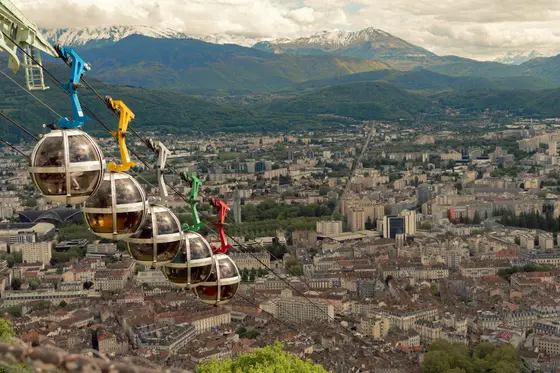
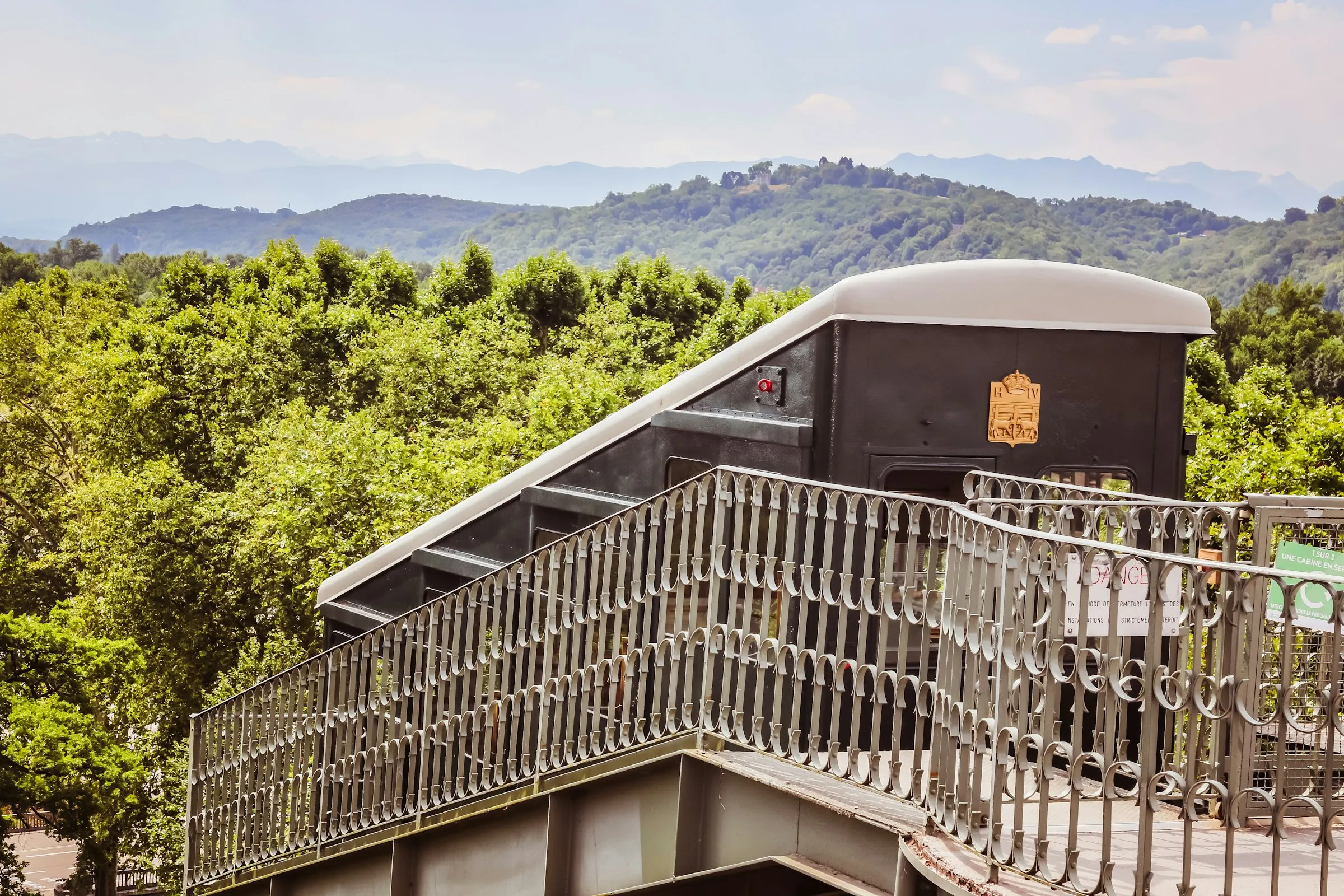
The halles first, then the boulevard end to end — Henri IV was born in the château, and Pau has dined out on that for four centuries — then down to the station by funicular, running since 1908, fare-free since 1978. The afternoon is a choice the map makes generous: snow at Gourette in season, or the Atlantic at Biarritz. Evenings are quiet; dinner reservations are not a competitive sport.
The year, honestly
This is the green side of the mountains, and the green is paid for. The Météo-France station at Pau-Uzein — beside the airport, ten kilometers north of town — logs 127 days of rain a year against roughly 1,900 hours of sun: Atlantic numbers, not Mediterranean ones. In exchange the year's edges are sanded off — about 29 frost mornings, some 20 days over 30 °C — in the famously still air that once had doctors prescribing Pau's winters. And there is no off-season to survive: second homes are barely 3 percent of housing, festivals stretch across three seasons, January is simply the city with its coat on, and in May the center's streets close for the Grand Prix, run here since 1933.
Who thrives here
People who want a full-service city at a gentle price: property trades around €2,150 per square meter — thousands of recorded sales agree — rents near €12. Mountain people, ocean people, and anyone unwilling to choose between them. Joiners — the anglophone infrastructure is old and organized: St Andrew's Anglican church still holds services, Anglophones Pau Pyrénées and Pau English Speakers run active calendars, and the golf club the British founded in 1856 still plays in neighboring Billère. Planners, too: home-help and care-home coverage here runs unusually deep by French standards.
Think twice if
You moved to France for the light — 127 rain days is real weather, and the famous panorama spends part of every winter behind cloud. You need an easy trip home — the airport is small, so America is always two legs through a hub, and the Paris train runs about four and a half hours. You expect medicine in English: the US embassy's provider list for this district names Bordeaux, not Pau — plan on healthcare in French. You want big-city evenings; nightlife is provincial and finishes early. Or you picture village France — Pau is a city, ring roads and ordinary quarters included.
The orbit
The Centre Hospitalier de Pau is in town — minutes, not a drive; the nearest comprehensive cancer center is Toulouse, about two hours. The airport is fifteen minutes north, one stop to the States via Paris. Gourette and the ski valleys, about an hour south; Biarritz and the ocean, an hour and twenty west; the Jurançon vineyards begin across the gave, Spain over the passes behind them.
The Aelos view
Pau is the value pick among our full-size cities: a real hospital, a real market, an organized English-speaking circle, and the Pyrenees as standing furniture — at prices the fashionable coasts no longer offer. The rain is the honest tax on all of it. We send people here who want a working city rather than a village postcard and will actually use the mountains; if you need dry light in February, keep looking south.