The feel
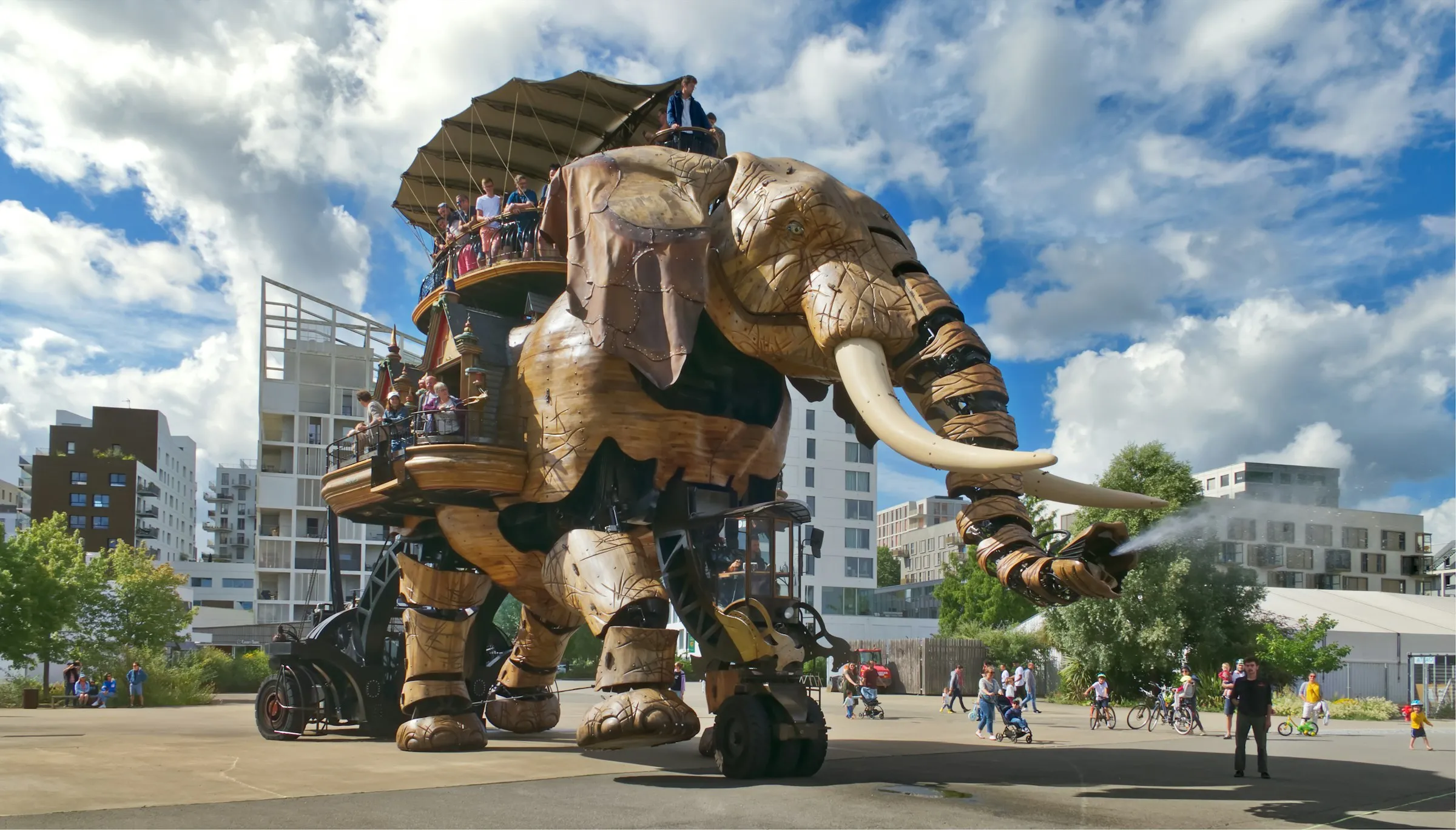
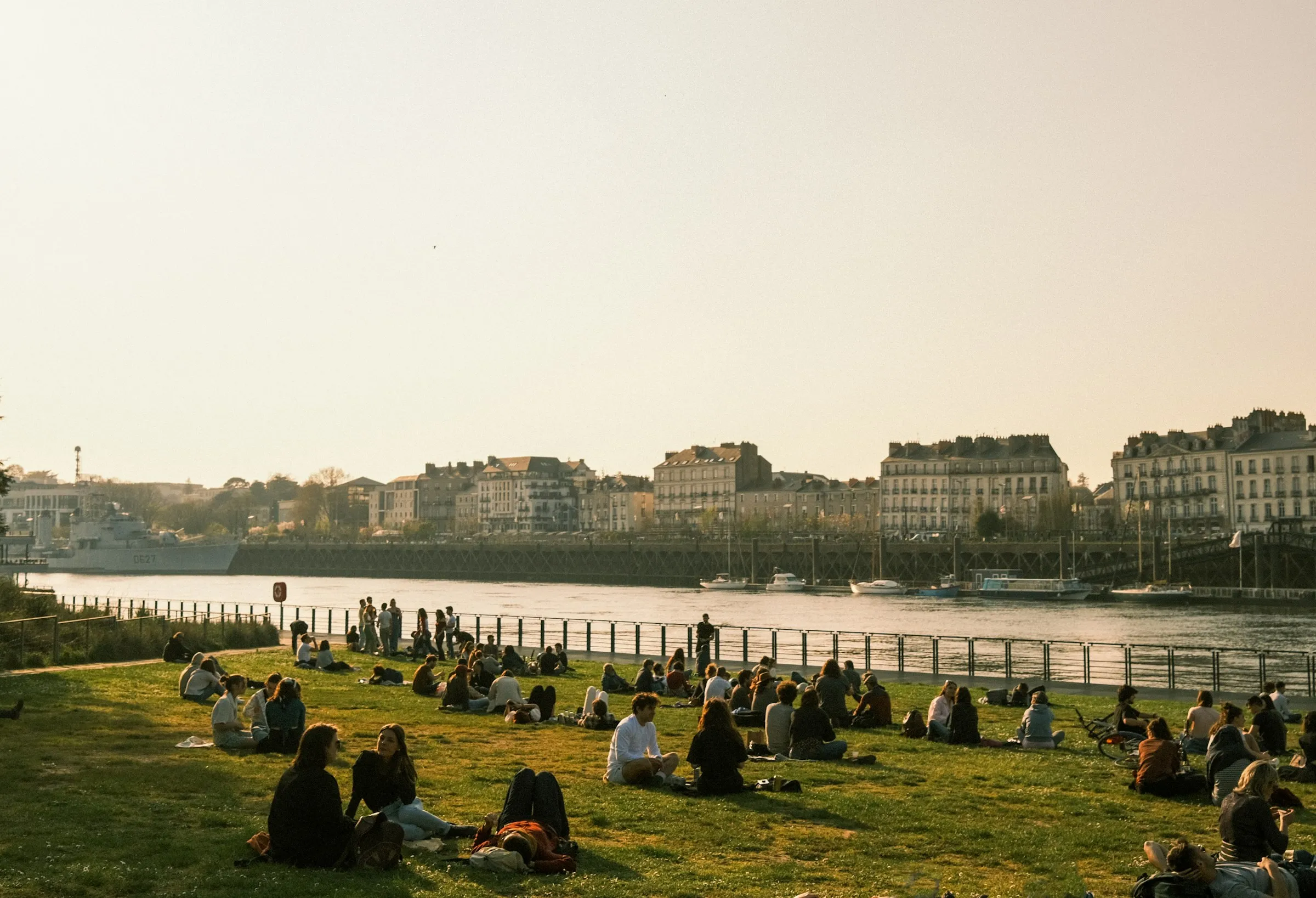
The shipyards closed, and Nantes decided — deliberately, with public money and a straight face — to become inventive instead. On the Loire island where hulls were once riveted, a giant mechanical elephant now carries passengers past the old cranes. This is a city that treats art as infrastructure. Around it, a real metropolis — 330,000 people, a million in the metro area, trams everywhere, students everywhere, an Atlantic light that never quite turns southern. Nantes keeps appearing near the top of French quality-of-life rankings for an unglamorous reason: it is well run, green, and built for the people who live in it.
Market day
The city's kitchen is Talensac, the covered market north of the center — open every morning of the year except ordinary Mondays (it opens even on holidays), with producers in from Brittany, the Vendée, and the Loire. Saturday is the crush; Sunday morning, the whole quartier seems to end up there. Neighborhoods keep weekly markets of their own.
Where your coffee happens
At La Cigale on Place Graslin if you want the full ceremony — an 1895 Art Nouveau brasserie, tiled to the ceiling, facing the opera house. At the Talensac counters, standing among people carrying leeks. Or in Trentemoult, ten minutes across the water by Navibus ferry — the old fishing village whose houses are painted in leftover boat colors, with terraces facing the river.
A Saturday here
Talensac early, then across to the island to walk the old yards and watch the elephant make its rounds. Ferry to Trentemoult for a long lunch. In the evening, five cinemas — four of them art-house — show films in version originale, no small thing for an American; or a concert somewhere — with forty-odd festivals a year, there usually is one.
The year, honestly
Nothing here is Mediterranean: the Météo-France station at Nantes-Atlantique airport, nine kilometres southwest of the center, logs roughly 1,870 hours of sun a year and nearly 120 rain days — much of it winter drizzle off the ocean. In exchange, summer behaves: only about a dozen days a year top 30 °C, and frost visits perhaps thirty mornings. The year is anchored at both ends — La Folle Journée, France's biggest classical-music festival, fills the city with hundreds of short, inexpensive concerts in late January; from July into early September the Voyage à Nantes turns the center into an open-air gallery, a green line on the pavement leading between the works. The honest tell: second homes are under five percent of housing — this city is lived-in all twelve months; nothing shuts.
Who thrives here
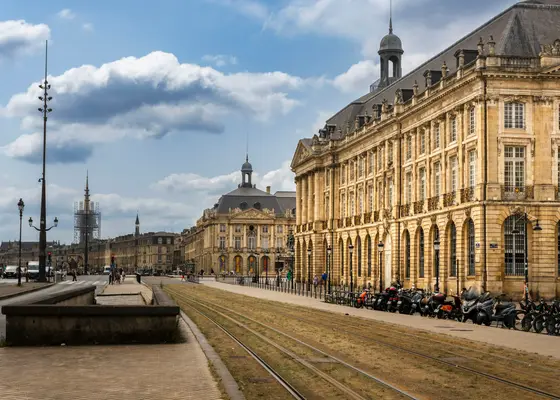
People who want a real city's full apparatus without a car — trams, the ferry, a walkable center. People for whom medicine is the deciding factor: the CHU sits minutes from the center, publishes a list of English-speaking doctors, and runs an international patient office; our data puts the metro near the top nationally for senior-care and home-help capacity. And people priced out of the fashionable coasts: buying averages around 3,800 €/m² (15,500 recorded sales, 2022–2024), renting about 14.5 €/m² — big-city money, but gentler than Bordeaux.
Think twice if
You are moving for the light — 1,870 hours of sun runs eight hundred to a thousand hours behind the Mediterranean towns on this list, and November through February is genuinely grey. You imagined a ready-made American circle: the anglophone institutions here lean British — a Franco-British cultural center, an English-language association — and the American presence is thin; you would be building a French-first life. You want village intimacy: this is a real city, with a real city's mid-band crime figures and anonymity. And read the fine print: the taxe foncière rate is steep (a combined 53 % in 2025), and this river city has a flood history worth checking street by street before you buy.
The orbit
The Atlantic, forty-five minutes west, the estuary running down to it past the art trail's permanent installations. The Muscadet vineyards begin just southeast of town. Nantes-Atlantique airport is twenty minutes out, one stop to the States via the big European hubs; the TGV puts Paris at about two hours.
The Aelos view
Nantes is for members who want France with the safety net fully deployed: university medicine minutes away, unusually deep aging-care capacity, culture on tap, no car required. What it will not give you is the postcard — no lavender, no ready-made expat scene, and a winter you should be honest with yourself about. If your France is a café in the sun, go south. If it is a good life, well organized, with the ocean close, Nantes is one of the strongest cities on our list.