The feel
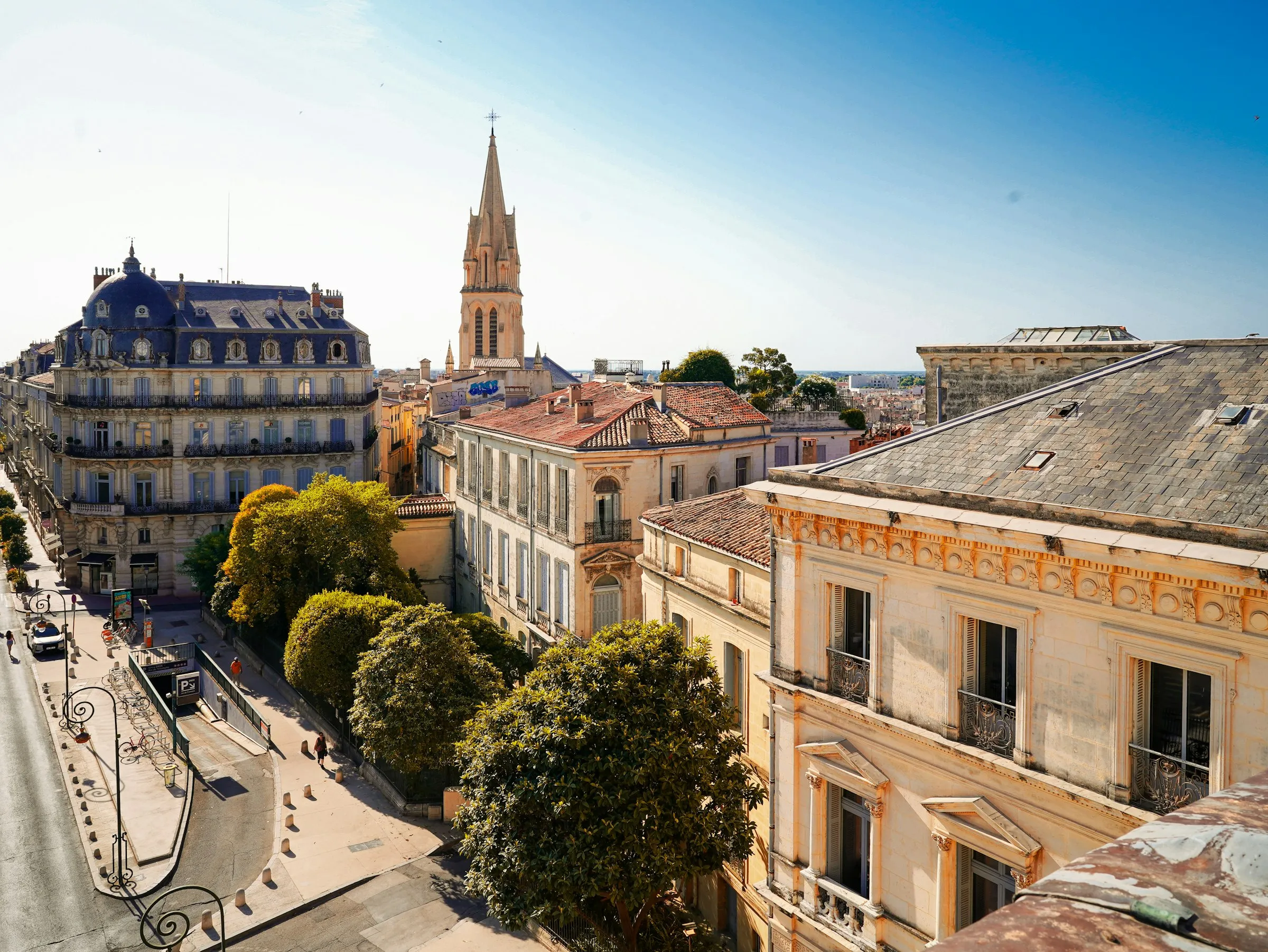
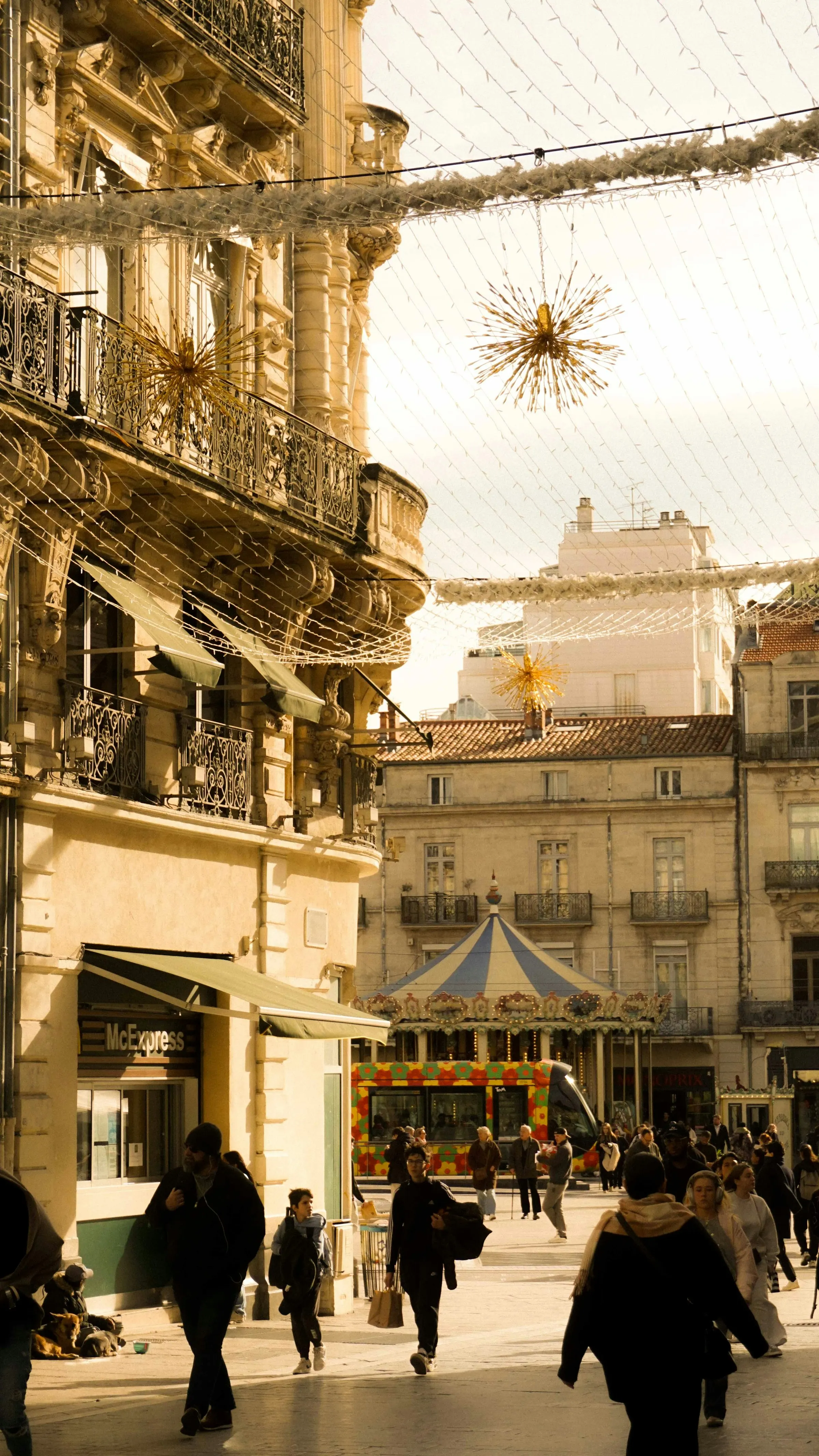
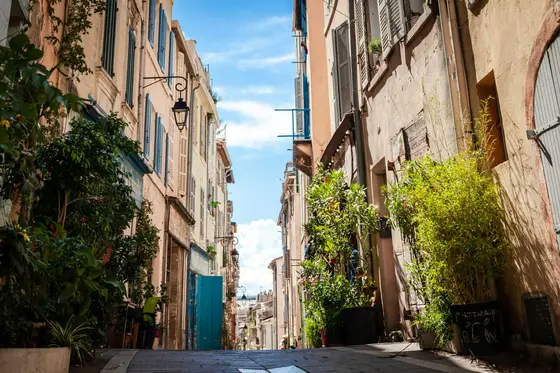
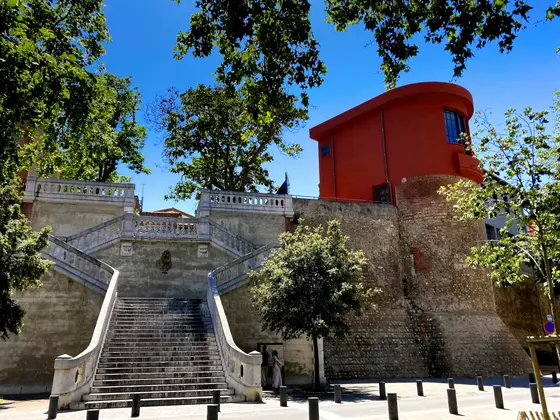
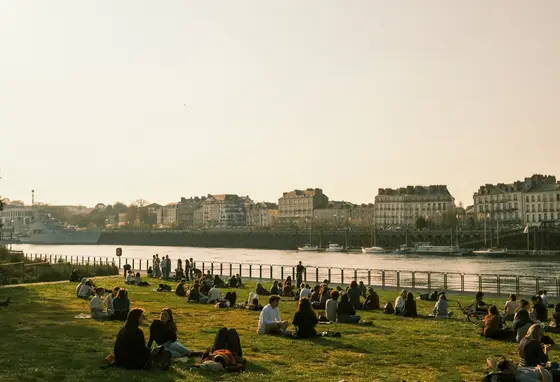
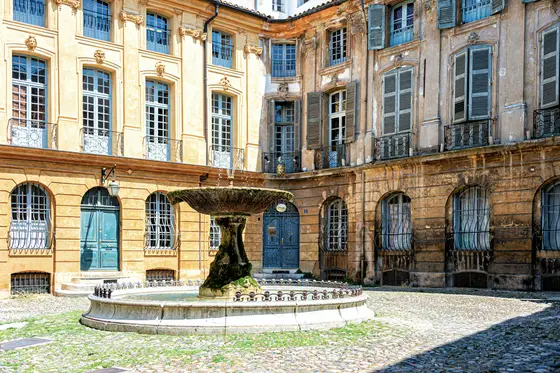
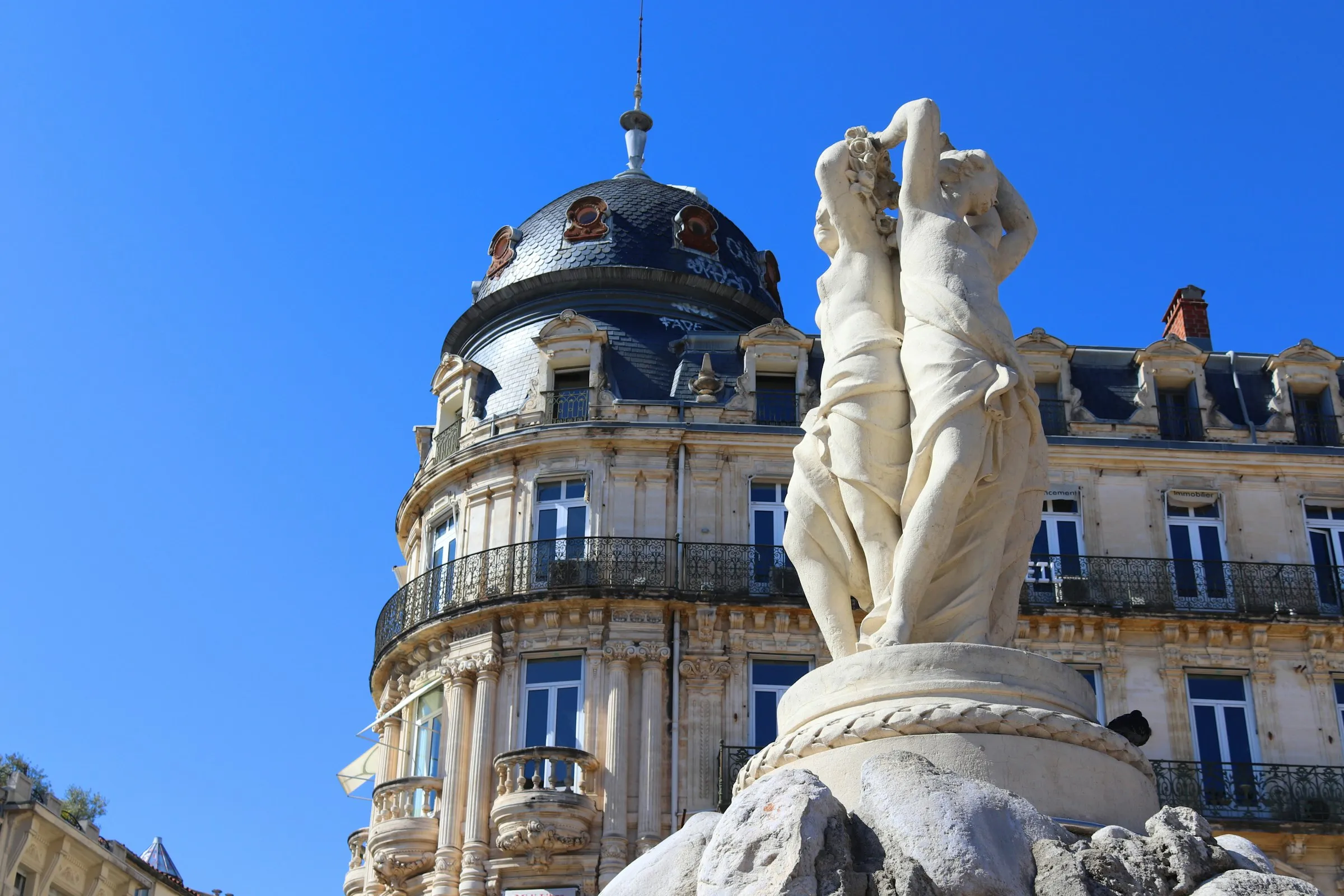
Start inside the Écusson, the car-free medieval core: pale stone lanes that get you agreeably lost before releasing you onto the Place de la Comédie, where the opera house and café terraces preside over one of the south's great people-watching squares. Then notice who fills it. This is a university city to its bones — roughly four residents in ten are under thirty, by the figure everyone quotes — and its oldest institution is the medical school, teaching since 1220, the oldest still operating anywhere. That is the Montpellier trade: village-scaled streets inside a real city of 310,000, young noise in exchange for serious infrastructure — and, since the end of 2023, trams and buses free for the metropole's residents.
Market day
A city this size has a market geography rather than a market day. The one retirees tend to adopt is the Arceaux — Tuesday and Saturday mornings beneath the arches of the old aqueduct just west of the Écusson, up to eighty stalls, heavily organic, producers who learn faces. It is the closest Montpellier comes to a village market with village manners. The rest of the week belongs to the Halles Castellane, the covered market raised in iron and stone in 1858 in the old center, open daily.
Where your coffee happens
On the Comédie if you want the parade; in a quiet Écusson lane if you don't. The Promenade du Peyrou — the seventeenth-century esplanade above the old town, Louis XIV on horseback — is where the coffee gets walked off.
A Saturday here
The Arceaux early, before the crush. Then the Jardin des Plantes, France's oldest botanical garden, planted in 1593 for the medical faculty and still theirs. In the warm months, tram line 3 toward the sea: it ends at Pérols, still a two-kilometer last leg — a half-hour on foot, a rented bike, or the summer shuttle — from the sand at Carnon. In the evening, some fifty festivals a year and six cinemas — three art-house, original versions included — make choosing the problem.
The year, honestly
The numbers come from the Météo-France station at Fréjorgues, by the airport eight kilometers southeast: about 2,700 hours of sun a year, 34 days over 30 °C, more than a hundred over 25 °C. Summer in the stone center is fierce, and the stone holds it after dark. Autumn brings the Mediterranean's violent rains — the commune has logged 21 flood-related disaster decrees — so ask hard questions about ground floors and flood zoning before you sign. Winter is the reward: short, mostly bright, light frost on perhaps three weeks' worth of mornings, and a city that does not close — second homes are barely 4 percent of the housing here, and the university keeps everything open.
Who thrives here
People planning the next thirty years around healthcare: the university hospital is about ten minutes away, the regional cancer institute about fourteen, family-doctor coverage is strong, and the US Consulate's English-speaking provider list for the region includes the Montpellier CHU. People who want a full city week without owning a car. And joiners — the French American Center, the American Women's Group of Languedoc-Roussillon, and busy international meetups give anglophones a way in, though the American scene is looser here than in Lyon or Bordeaux.
Think twice if
You came to France for the postcard village — this is a working city with a working city's rough edges: mid-band crime statistics driven mostly by theft, and some genuinely poor neighborhoods you will learn to route around. You bruise at young noise — in term time, parts of the center keep student hours. You hate heat; those 34 days arrive mostly together. You pictured the beach at your door — it is a tram ride plus a last leg, not a stroll. Or you haven't priced the property tax: the combined rate passed 54 percent in 2025.
The orbit
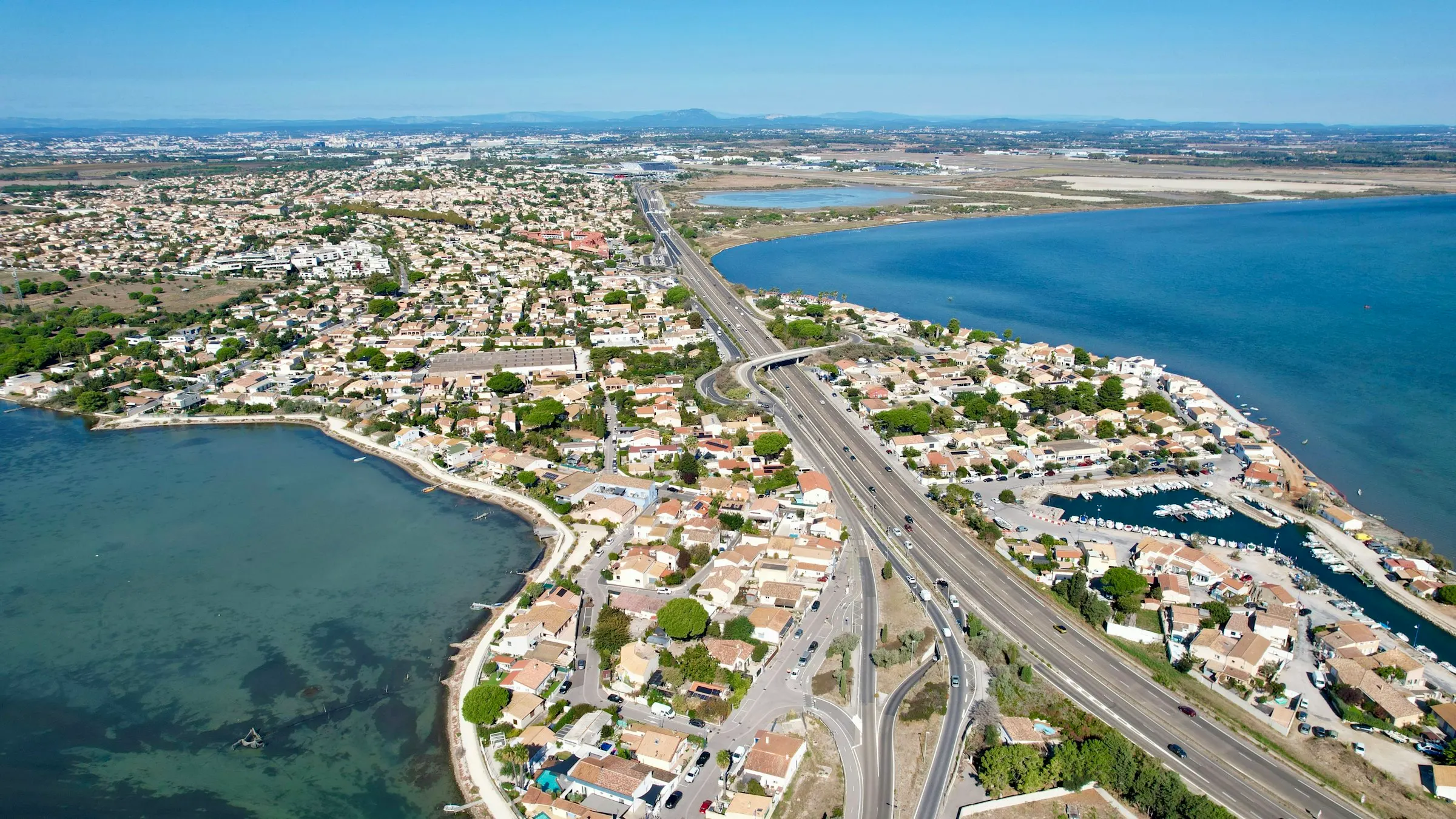
Sète, stacked around its canals, is twenty minutes down the rail line; Nîmes about thirty. The vineyards in the garrigue hills open just north of town. The airport is fifteen minutes away, with one-stop routings to the States through the European hubs, and the TGV puts Paris at about three and a half hours.
The Aelos view
Montpellier is where we point members whose list reads: serious medicine, real sun, a car-free week, and a buying price — around €3,400 per square meter — that undercuts the comparable coast east of the Rhône. The honest cost is the ambiance: young, loud in places, urban in the full sense. If "college town" made you smile, come. If it made you wince, we'd show you the smaller towns in its orbit instead.