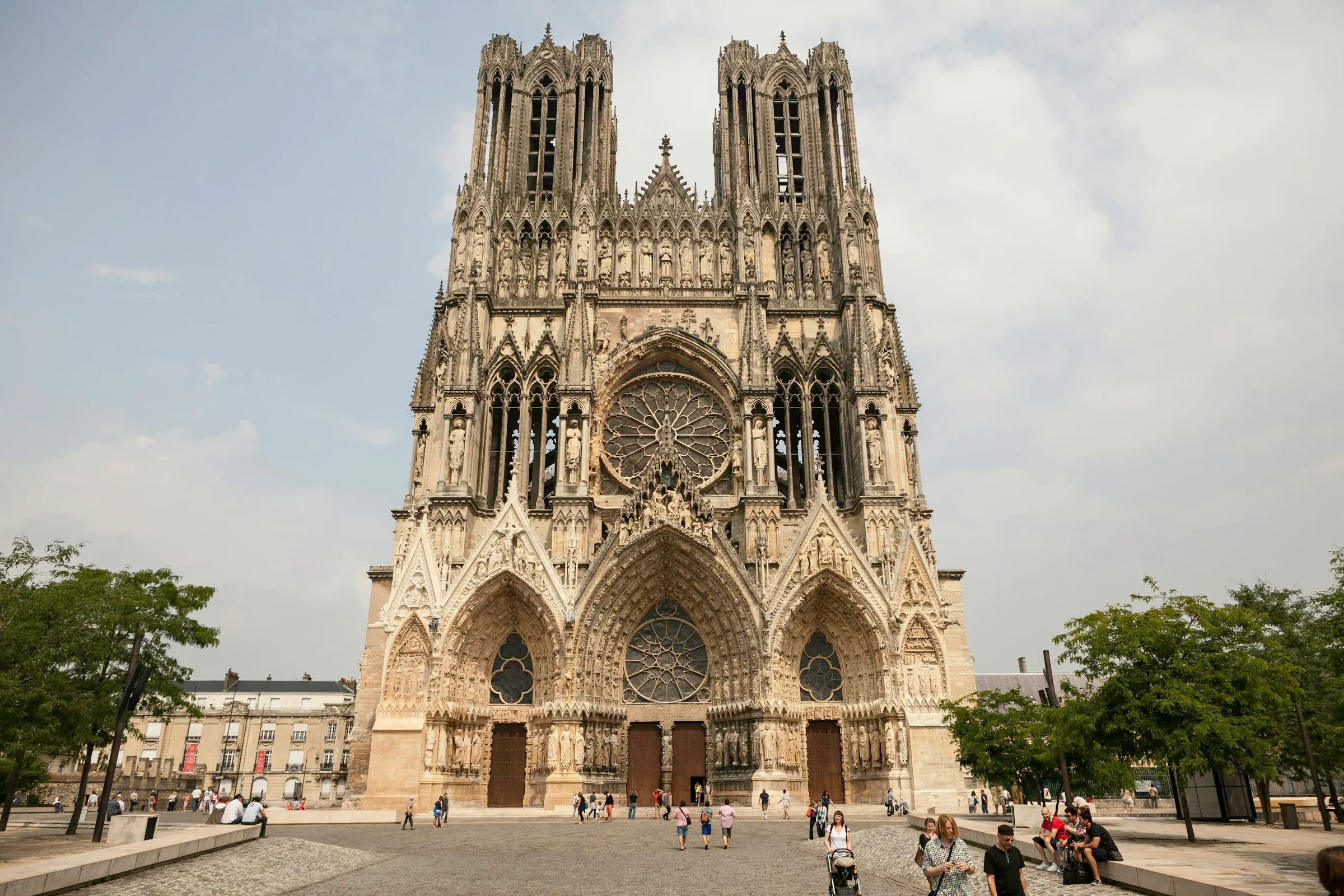
The feel
Twenty-five kings of France were crowned in the cathedral here, and Reims treats that fact the way it treats champagne: as work, not theatre. German shells set the cathedral burning in 1914; the city rebuilt itself through the twenties largely in Art Deco — the Carnegie library is the showpiece — so the Gothic keeps jazzier company. This is a working city of about 178,000 where the great houses are employers as much as monuments, aging their bottles in chalk galleries under the Saint-Nicaise hill. The center is compact enough to live on foot, and second homes are just 3.8 percent of the housing: this town belongs to the people who live in it.
Market day
Wednesday, Friday, and Saturday mornings under the parabolic concrete vault of the Halles du Boulingrin — a 1929 hall, seven centimeters thin and nearly twenty meters overhead, that Reims almost demolished before listing it in 1990 and restoring it in 2012. Saturday is the full production; Friday adds an evening organic market. It is a covered market in a northern city, which matters: January changes nothing.
Where your coffee happens
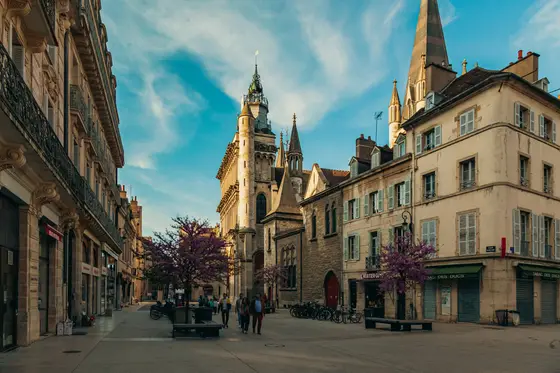
On the Place Drouet-d'Erlon if you want company — a pedestrian square, four hundred meters of terrace after terrace, with the gilded Victory of the Subé fountain presiding. In the quieter streets between the halles and the cathedral if you want your newspaper left alone.
A Saturday here
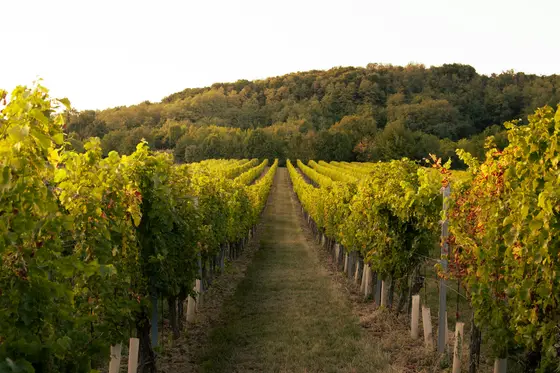
Market first. Then the cathedral, where the Chagall windows from 1974 hold the east end — worth standing in front of monthly, not once. In the afternoon, walk up to Saint-Nicaise for a cellar visit — the crayères, chalk pits begun in Gallo-Roman times, joined the UNESCO list in 2015. Or take the Bubble Line — la Ligne des Bulles — the little train that threads the vineyard villages of the Montagne de Reims, and be home for dinner on Erlon.
The year, honestly
The climate numbers come with an asterisk we'd rather show than hide: the reference Météo-France station is Saint-Dizier, seventy-five kilometers southeast on the same champagne plain. It logs about 1,780 hours of sun a year, 125 days with rain, and fifty-odd mornings of frost. That is a genuinely northern year — long gray stretches from November to February, drizzle rather than drama. The flip side is a summer with manners: around sixteen days over 30 °C, most of the season simply warm. The city does not hibernate, though — the halles trade year-round, festivals run across three seasons, and there is no autumn emptying-out to survive.
Who thrives here
City people who want their week on foot — market, cathedral quarter, a proper run of shops and restaurants — without Paris prices: apartments trade around 2,600 €/m², rents near 13 €/m². Healthcare-first planners: the Robert Debré university hospital is about seven minutes from the center, with a dedicated cancer center in town and strong GP coverage for a city this size. And anyone keeping one foot in Paris — at 46 minutes by TGV, an afternoon there is a day trip, not an expedition.
Think twice if
Winter light is load-bearing for you: this is among the grayest winters of any town we cover, and no amount of champagne fully compensates. Or if you're counting on a ready-made English-speaking circle — there isn't one. The city's one expat meetup group has been deleted, leaving individuals finding each other on forums, and the US Embassy's lists of English-speaking doctors cover Paris, Strasbourg, Lyon, Marseille, Rennes, and Bordeaux — not Reims. The newcomers' club is active and welcoming, in French. If your picture of France is a village, this is a city, with a city's traffic, concrete, and ordinary urban crime. And if the Mediterranean is the point, you are looking at the wrong half of the country.
The orbit
Épernay, the champagne trade's other capital, about half an hour by train. The Montagne de Reims regional park begins just south of the city, its villages strung along the Bubble Line. Paris is 46 minutes by TGV; Charles de Gaulle has its own direct TGV — about an hour and a half by car — and nonstop flights to the States.
The Aelos view
Reims is for members who want a working French city rather than a postcard: serious medicine seven minutes away, honest prices, Paris and the airport at arm's length, and a very good glass on an ordinary Tuesday. We'd send confident francophones and committed learners; we'd steer anyone who needs winter sun or a built-in American community further south — here you would be genuinely on your own, in the way some people want and others quietly regret.