The feel
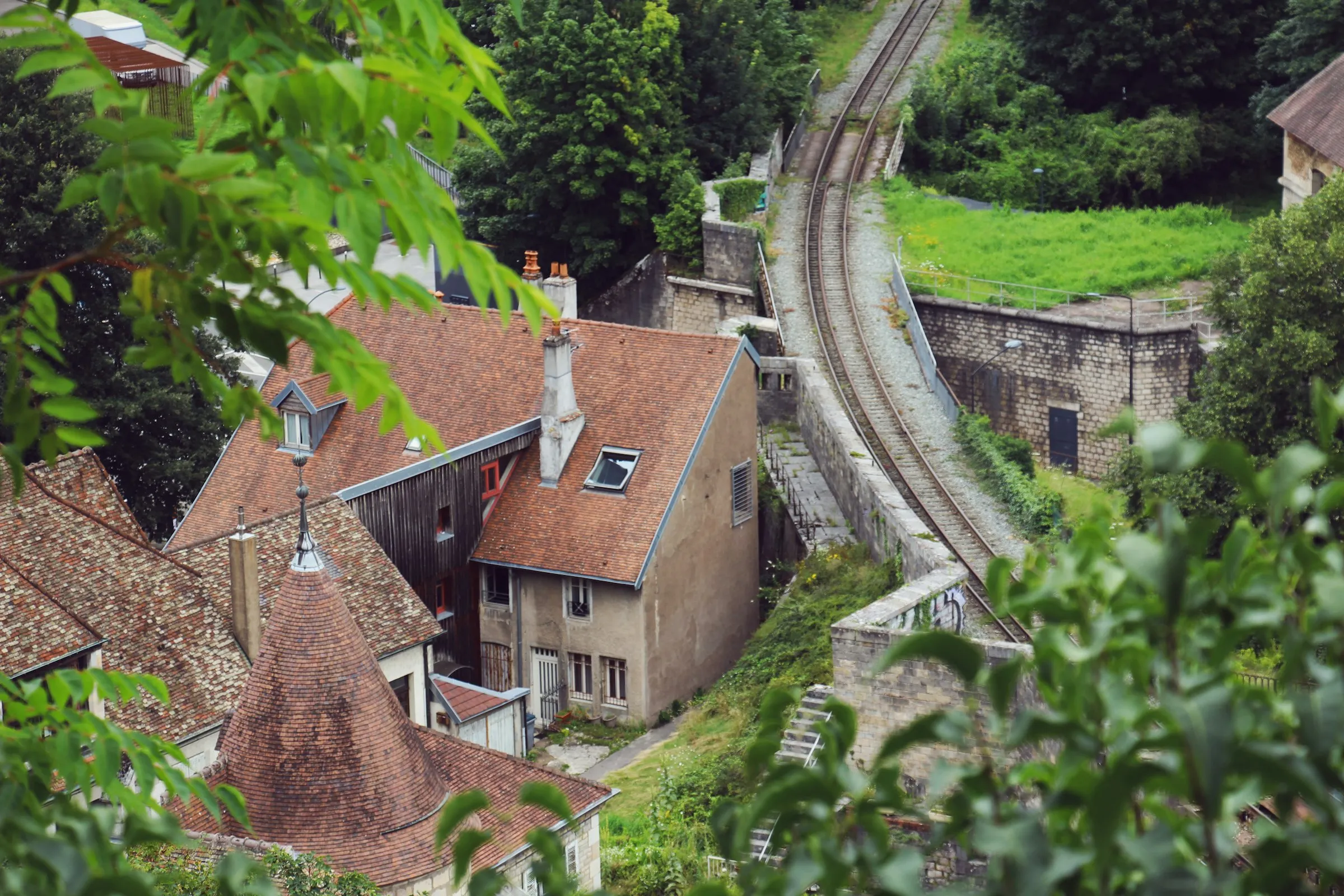
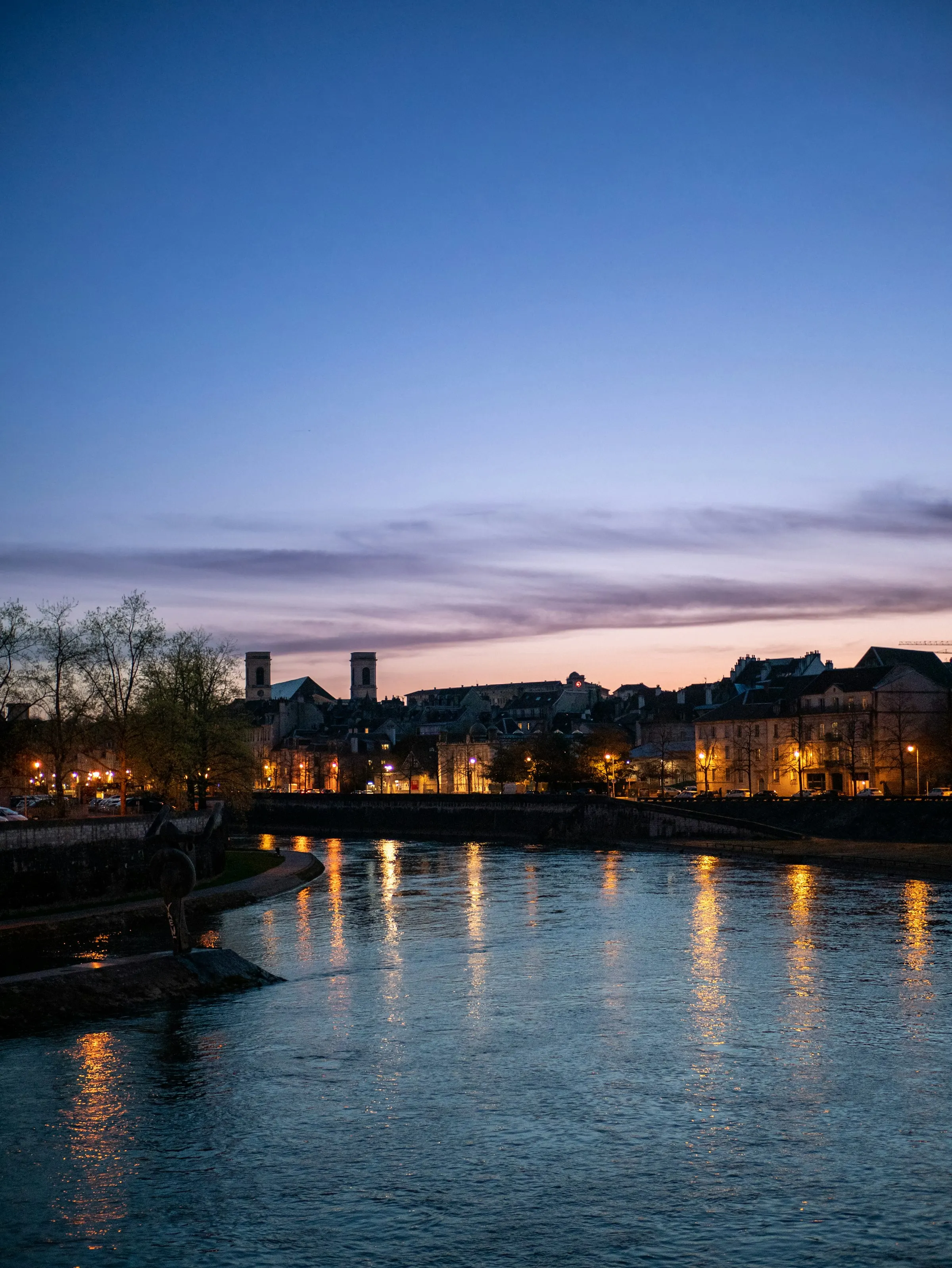
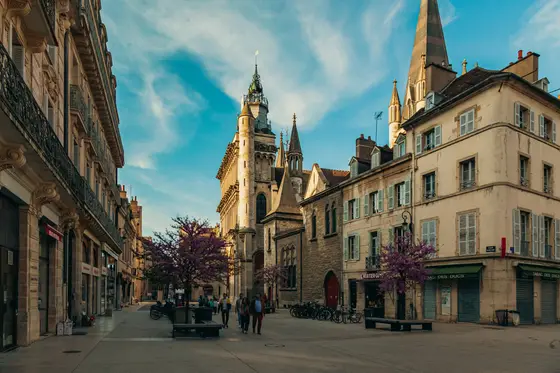
The old town is held inside a near-circle of the river Doubs — the Boucle, locals call it — with Vauban's UNESCO-listed citadel plugging the single gap from its limestone ridge. Besançon made France's watches for two centuries — the craft has its own UNESCO listing — and kept the temperament: a precise, unshowy city of blue-grey stone that has never lived off tourists and doesn't perform for them. Victor Hugo was born on the Grande-Rue in 1802; the street mostly gets on with things around the fact. The university keeps the terraces full, and the wooded hills that close every view back up the city's old boast: greenest in France.
Market day
Saturday is the full version: the open-air market on the Place de la Révolution runs from seven in the morning until six; Tuesday and Friday mornings bring smaller editions. The quiet advantage shares the square — the Halles Beaux-Arts, a covered market open six days a week, Sunday morning included, where the region flexes: Comté from the village fruitières, graded by its months in the cellar, smoked saucisse de Morteau, wines from the nearby Jura. Second homes are 2.3 percent of housing; the audience is the city itself, all twelve months.
Where your coffee happens
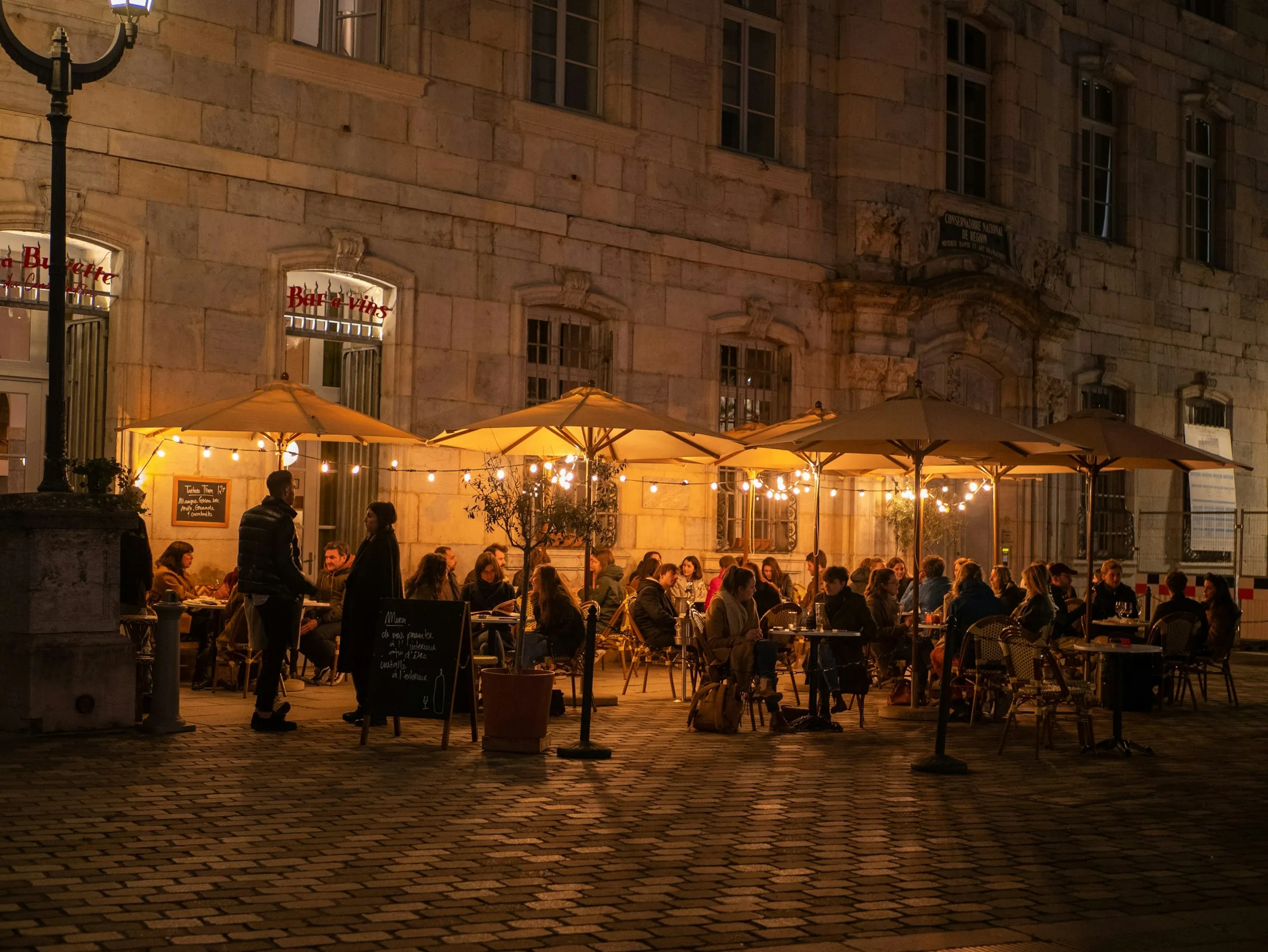
On the Place de la Révolution when you want the market's theatre; under the trees by the Palais Granvelle — the Renaissance palace housing the Musée du Temps, the city's museum of its own clockmakers — when you want your book. The tram stops at both, two lines threading market square, station, and university hospital: no car required.
A Saturday here
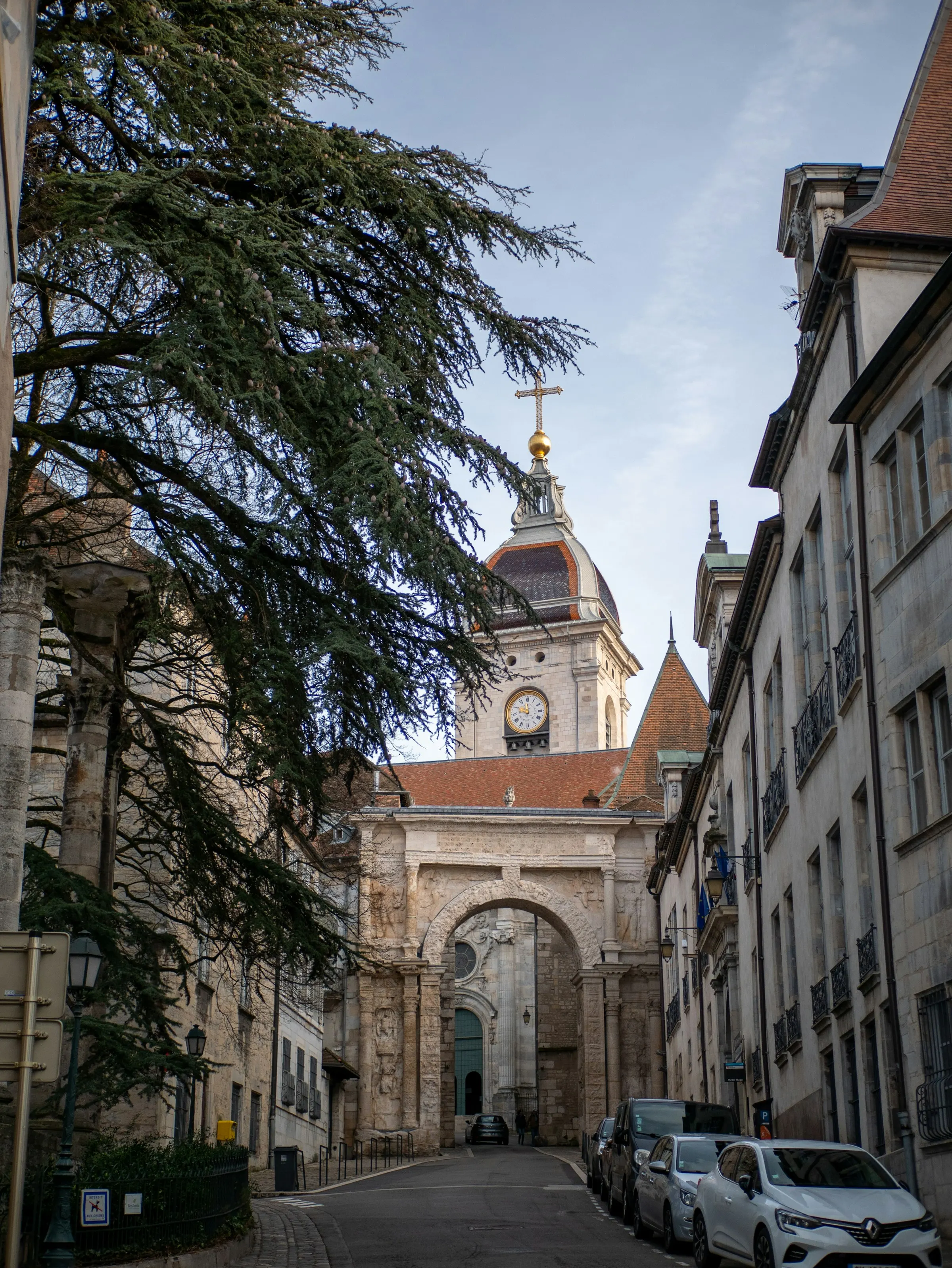
Market first, then the climb the city eventually talks everyone into: up through the cathedral quarter to the citadel, where the ramparts hand you the whole loop of the river and the first folds of the Jura. Lunch back in the Boucle, unhurried. Afternoons, a surprise at this size: three cinemas, two art-house, original language intact. In September the international music festival arrives, its young-conductors' competition picking out future podium stars since 1951.
The year, honestly
Météo-France's Besançon station, on the plateau three kilometres from the Boucle, does not log southern numbers: about 1,870 hours of sun a year — the Gard logs over eight hundred more — 136 days of rain, 58 frosts. Winter is long, grey, and damp, with mist off the river; nobody should move here pretending otherwise. The compensation is real. Summer stays temperate — around fifteen days over 30 °C, a quarter of what the south endures — and the city never shuts because it never empties: festivals across three seasons, students back just as the light goes.
Who thrives here
People who mean it about living in French: there is no expat bubble to soften the landing, and the city hosts the CLA, the university language centre that has taught French to foreigners since 1958. People who watch both budgets and hospitals: apartments sell around €2,200 a square metre and rent near €13, the university hospital is seven minutes away, and elder-care capacity ranks near the top of our roster.
Think twice if
You are counting on other Americans: there is effectively no anglophone community — no clubs, no English-speakers' group; even the multi-language café night is cancelled, and the newcomers' association runs in French. We found no English-speaking practitioner coverage either; the US Embassy's lists stop at Strasbourg. If winter light is part of what you're moving to France for, the numbers above are disqualifying. Trips home are two legs from everywhere. Two smaller prints: property tax is high — a combined 45.65 percent in 2025 — and the Doubs floods; buy on the quays with open eyes.
The orbit
Ornans and Courbet's Loue valley, about half an hour. Dijon, about an hour — the bigger city, home to the region's specialist cancer centre. Paris takes about two hours on the best trains, but from Besançon Franche-Comté TGV, thirteen kilometres out of town; a fifteen-minute rail shuttle links it to the central Viotte station, whose through-trains are slower. For the States: EuroAirport Basel-Mulhouse-Freiburg, about an hour and forty minutes, then one stop through a European hub.
The Aelos view
Besançon is the roster's quiet overachiever: big-city healthcare, a real market, deep culture, and honest prices in a green setting most celebrated towns can't touch — paid for in grey winters, a two-leg trip home, and a life conducted entirely in French. We'd send the couple who genuinely want immersion, with a university hospital a tram ride away; we'd steer anyone needing winter sun or a ready-made English-speaking circle toward the south. This city offers neither, and doesn't pretend to.