The feel
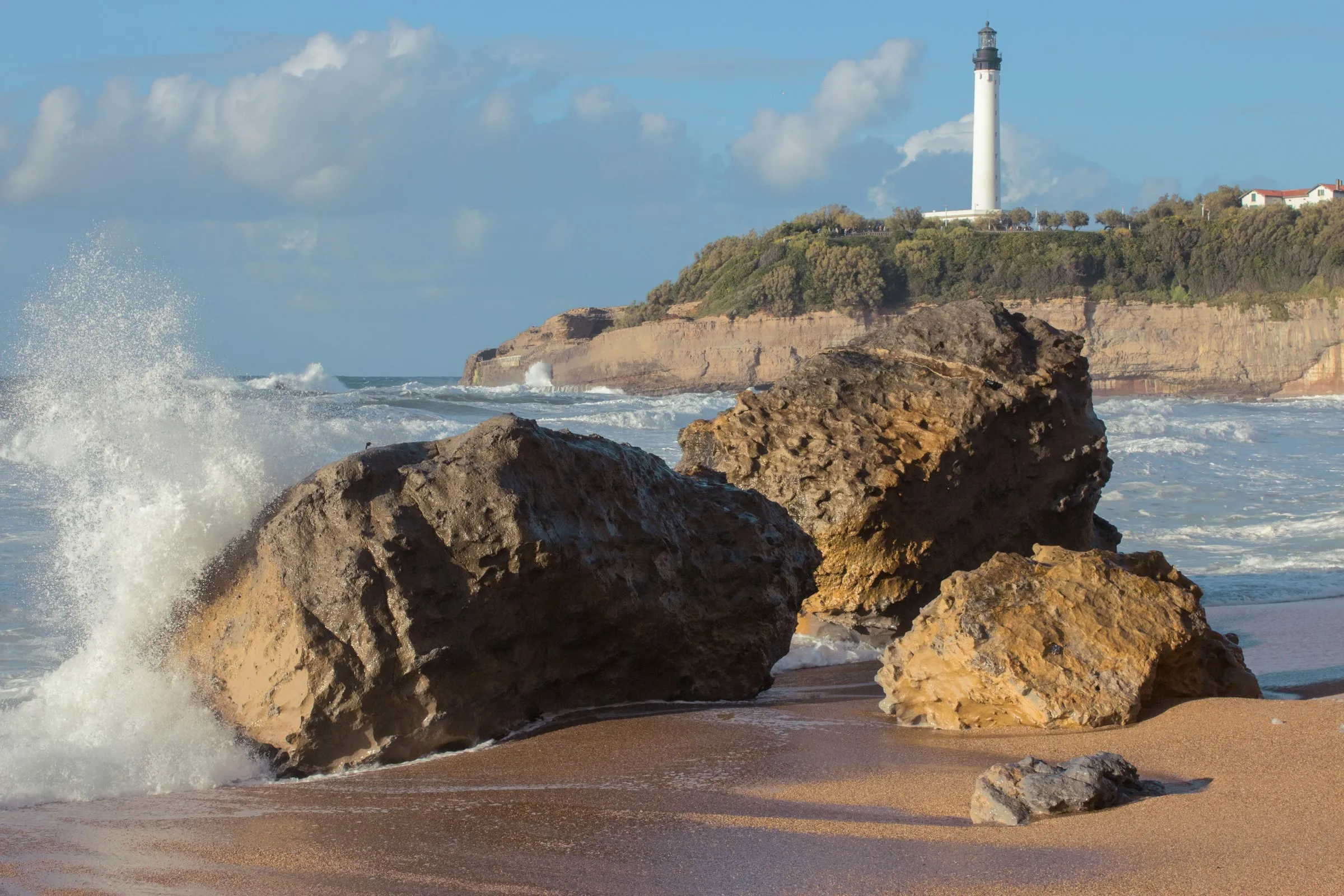
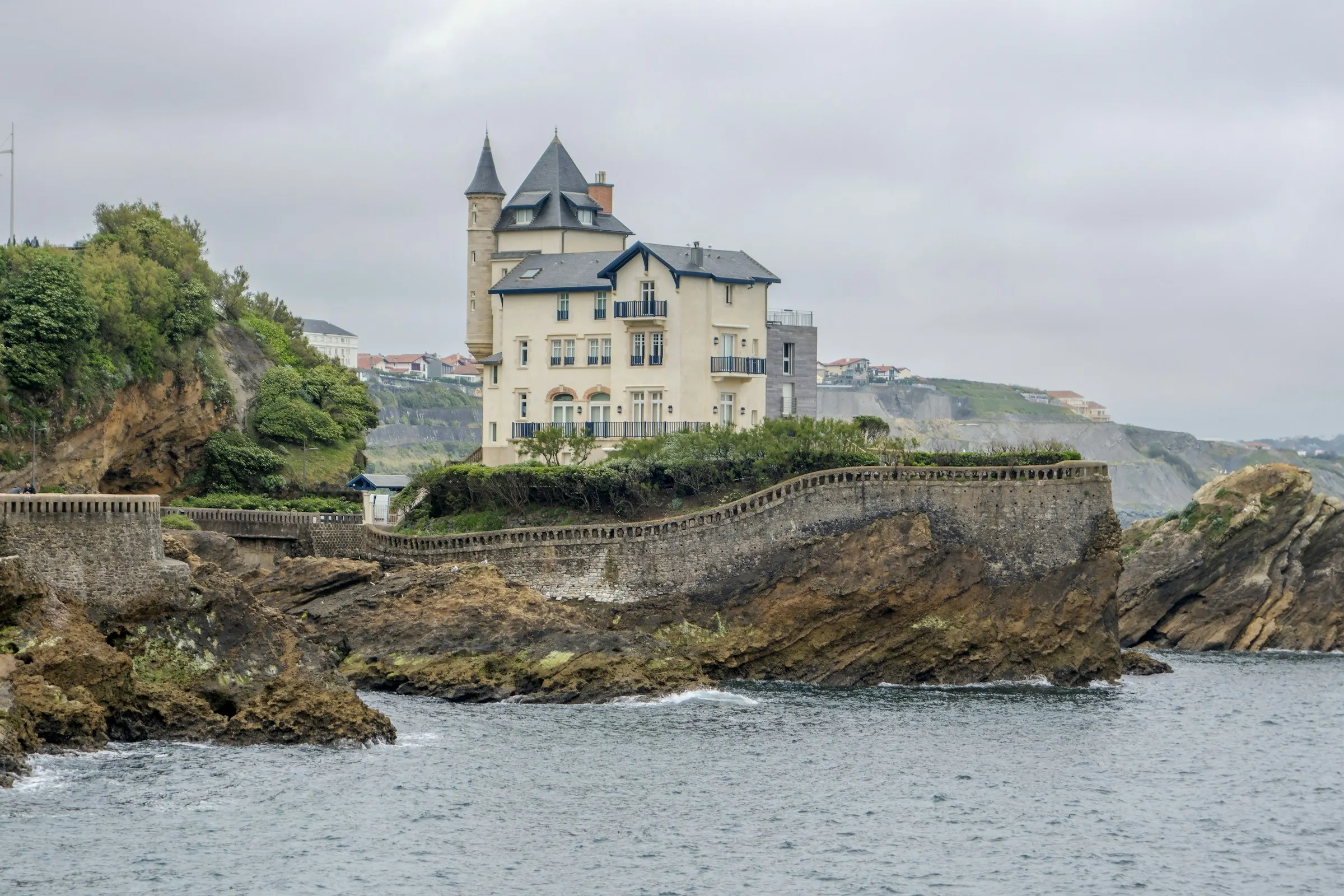
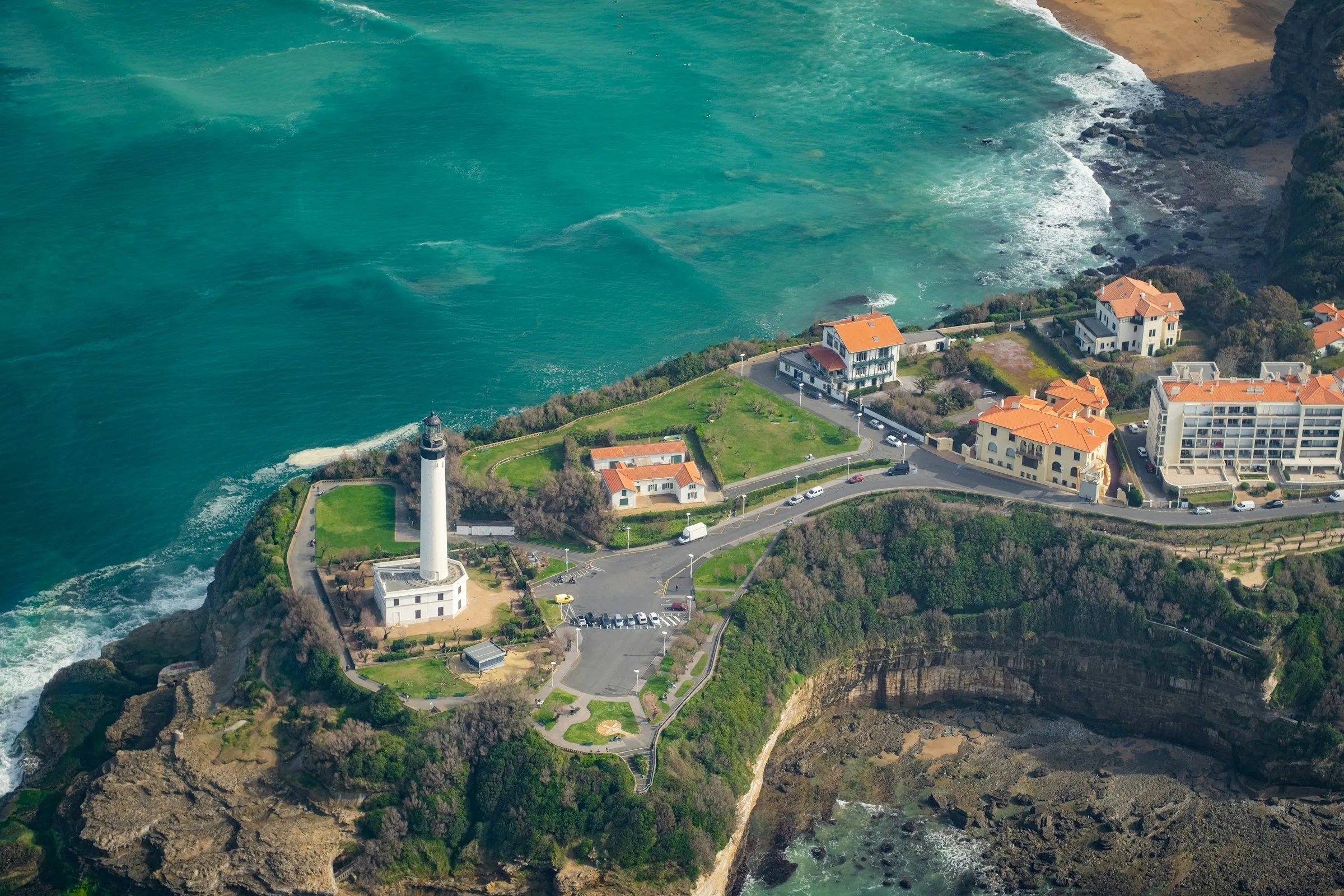
Biarritz has led two lives and kept both. Uphill, the villas of the Second Empire — turrets, wrought iron, gardens behind walls — still face the ocean Empress Eugénie made fashionable. Below, on the Côte des Basques, the beach where surfing in Europe is usually said to have begun, the first wetsuits cross the sand before the bakeries open. In between, a town of about 26,000 carries a resort's depth of shops and services, and a resident's whole week happens on foot between the covered market and the sea. Over everything, the signature: wild Atlantic light on a green coast, nothing like the fixed blue of the Midi.
Market day
There is no market day here; there is a market morning, every morning. Les Halles, the covered market a few streets from the Grande Plage, opens at 7:30 daily — fish off the Basque boats, Ossau-Iraty from the hills, Espelette pepper in ropes. Saturdays add a farmers' market outside the halls. The bars ringing the building are where the town conducts its social life, basket at foot, from about ten o'clock.
Where your coffee happens
At the Halles, mid-errand, standing if you want to be taken for a local. Or on a terrace above the Côte des Basques, where coffee comes with surf commentary and, on clear days, the Spanish coast down the horizon.
A Saturday here
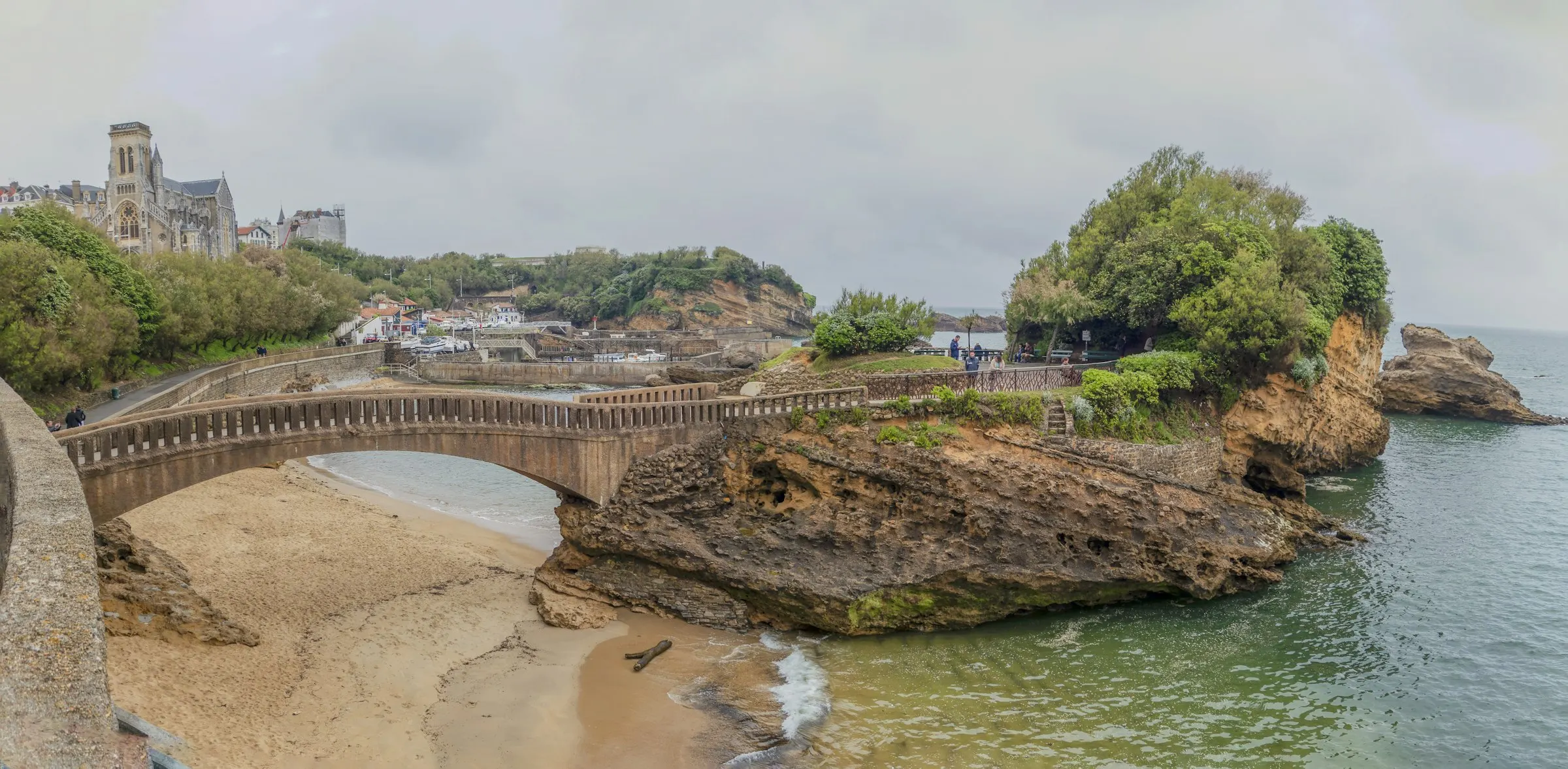
Market first. Then the shoreline walk the whole town shares: the Grande Plage below the palace Napoleon III built for Eugénie — the Hôtel du Palais now — around to the sheltered Port Vieux, where people swim long after summer, and out the footbridge to the Rocher de la Vierge. A long lunch. In the afternoon, thalassotherapy — an old industry here, not a spa gimmick — or a film in version originale at the art-house cinema. A town this size with Malandain Ballet Biarritz in residence does not leave evenings empty.
The year, honestly
The Météo-France station at the airport, two and a half kilometers from the center, tells it plainly: about 1,920 hours of sun a year, and rain on 141 days. This is the green Atlantic, not the Mediterranean. Summers stay temperate — a dozen days over 30 °C — and winters soft, fifteen mornings of frost, theatrical when the swells arrive. July and August belong to the visitors. The harder truth is winter: four homes in ten here are second homes — the town taxes them at the maximum 60 percent surcharge, which tells you it knows — and some quarters go dark by November. What stays lit: the Halles every morning, Le Temps d'Aimer filling September with dance, and FIPADOC, the documentary festival that takes over the town each January.
Who thrives here
People who build their days around the ocean, riding it or watching it perform. People who want small-town scale with resort-grade comfort and solid medicine: GPs are easier to find here than in most of coastal France, elder-care capacity runs deep, and the Côte Basque hospital group's nearest site is about thirteen minutes away. Anglophones will find company — a surf-borne international crowd, an Anglican church, an English-language Meetup — but no organized American community: you assemble a circle here rather than join one.
Think twice if
Budget decides. At roughly €7,800 per square meter in recent sales, this is among the most expensive property on France's Atlantic coast, with rents around €16 per square meter to match. Think twice, too, if you're moving for sunshine — it rains two days in five — or want a town fully alive in February, which a 40 percent second-home share quietly forbids. And while everyday medicine is close, specialist cancer care means Bordeaux, two hours away.
The orbit
Bayonne, the working capital of the French Basque Country with the everyday-city ballast Biarritz lacks, is effectively next door — the towns run together. The airport sits ten minutes from the center, its Paris links putting the States one stop away; the TGV reaches Paris in about four and a quarter hours. South, the coast road strings Bidart, Guéthary, and Saint-Jean-de-Luz; San Sebastián and its pintxos bars are about forty-five minutes into Spain. Inland, Espelette and the Basque foothills fill the half-day map.
The Aelos view
Biarritz offers what almost no French town its size can — the ocean at the end of the street, serious medicine minutes away, an airport in town, a ballet company — and it charges for all of it, in euros and in winter quiet. We'd send ocean people here without hesitation if the budget clears; if you need Mediterranean light or a village that holds you close in February, we'd point you elsewhere.