The feel
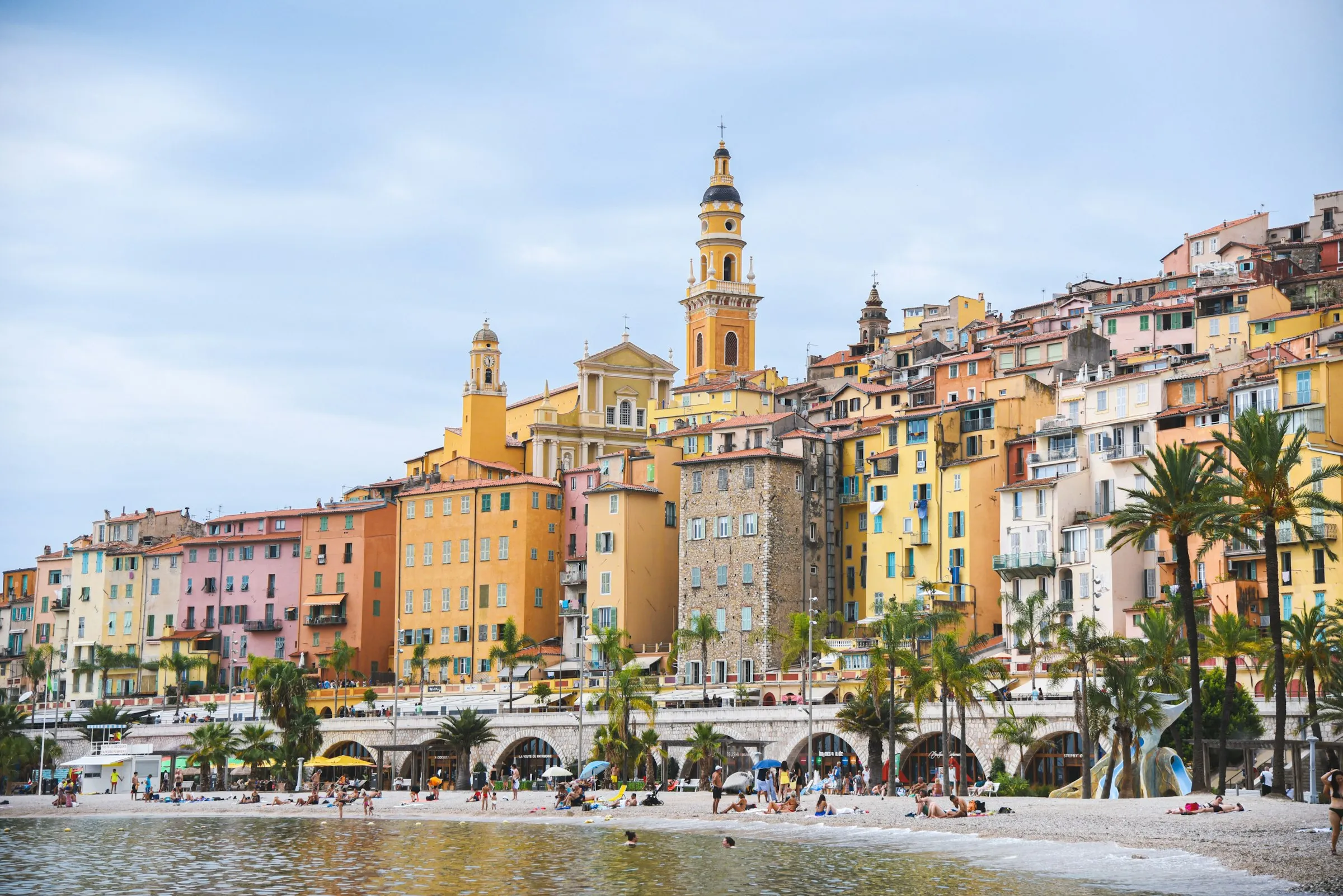
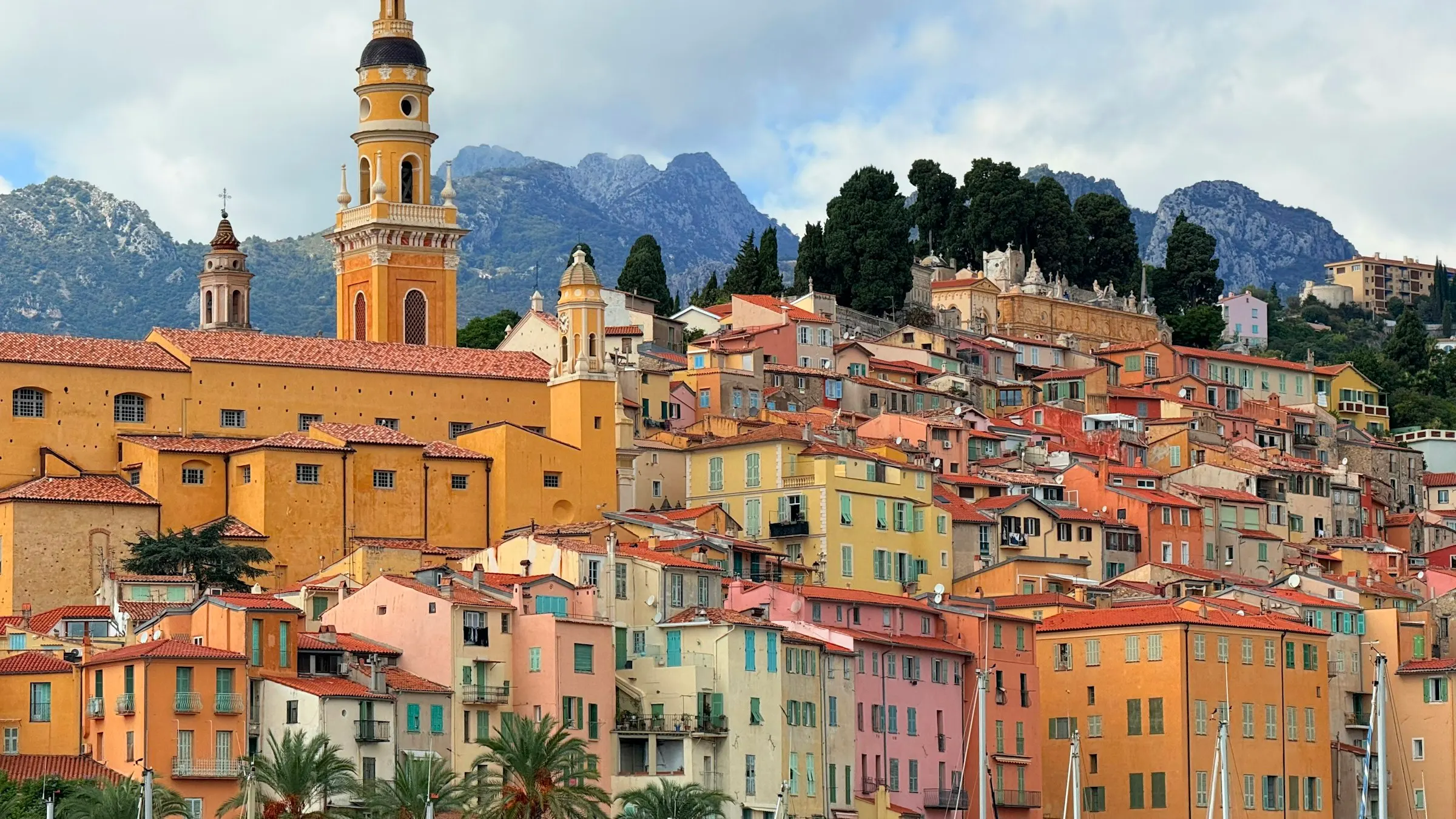
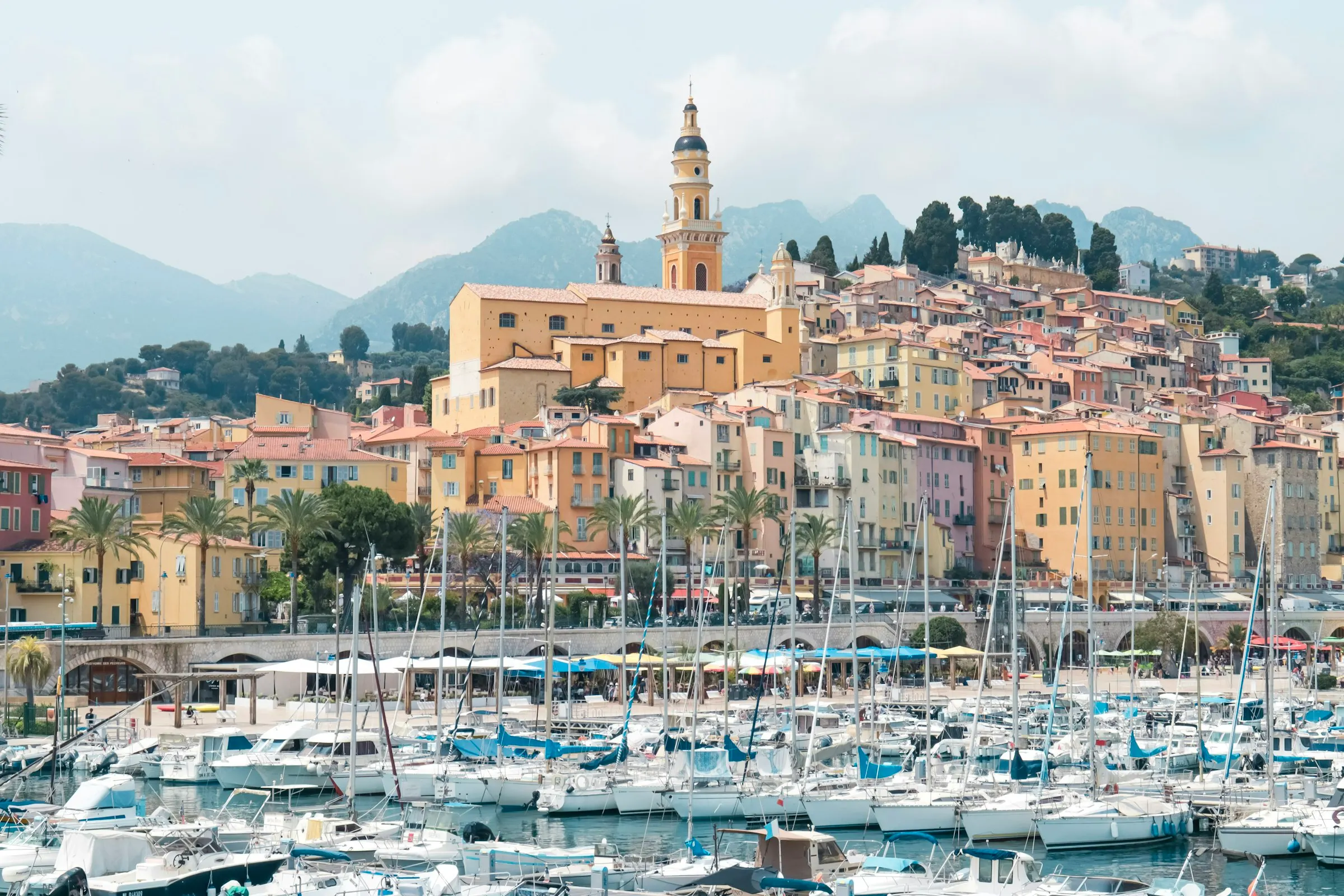
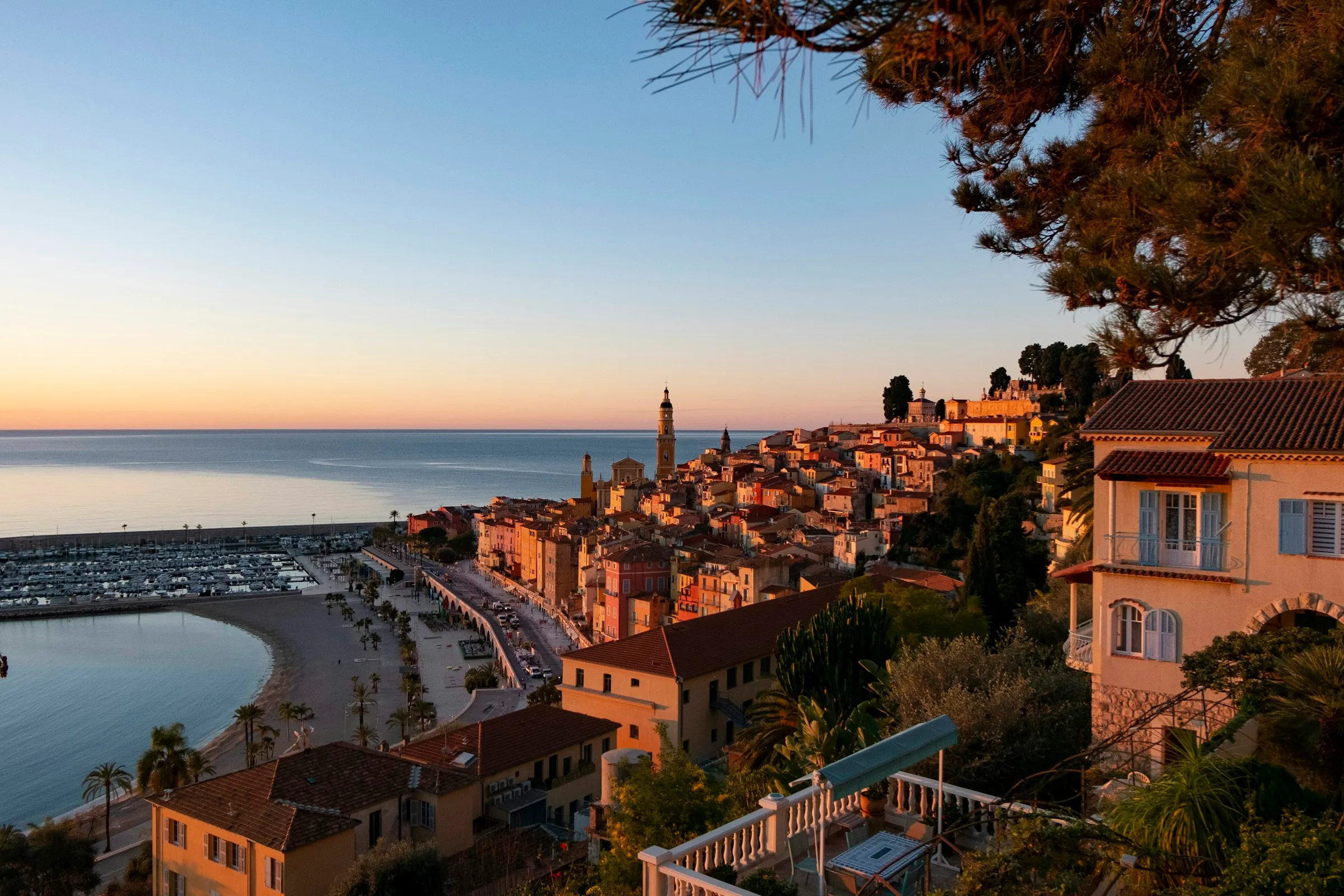
France ends at Menton, and it ends gently. The old town stacks its ochres and terracottas up the hillside like the Ligurian villages just east; the border is a half-hour walk along the shore. The British found these winters in the nineteenth century and never entirely left — St John's Anglican Church still anchors an English-speaking circle more Sussex than Boston. Menton doesn't perform: it sits in its amphitheater of mountains, faces due south, and lets the climate make the argument.
Market day
Les Halles — the 1898 market hall with a small campanile over the door — runs every morning until about one, Mondays thinner: thirty-odd merchants, fish, vegetables, flowers. Saturday mornings the stalls spill into the surrounding squares. And Friday belongs to Ventimiglia, ten minutes by train, one of Italy's biggest street markets. A week here has two market countries in it.
Where your coffee happens
Under the orange trees of rue Saint-Michel if you want the morning theatre; on a Promenade du Soleil terrace, Belle Époque façades behind you and the sea in front, if you want your paper unbothered. Cocteau's Bastion — the seventeenth-century harbor fort remade as his museum — stands between the two.
A Saturday here
Market first, then a garden — Menton keeps some of the coast's finest: Val Rahmeh in Garavan, botanical and some 1,700 species strong, or Serre de la Madone, planted between the wars by Lawrence Johnston. Lunch late. Late July into August, the Festival de Musique — one of France's oldest classical festivals, running since 1950 — puts chamber music on the parvis of the basilica.
The year, honestly
The climate numbers come from the nearest Météo-France station, at the Nice airport twenty-seven kilometers down the coast, and they are already generous: around 2,760 hours of sun a year, sixty-two days of rain, barely one morning of frost. Menton's own walled amphitheater has long claimed the warmest winters in France; the lemons are the evidence. Summer is the surprise — only eight or nine days a year pass 30 °C at that station, though the warm season runs nearly three months, and July and August bring the crowds. Winter is the town's own season: the Fête du Citron has built parade floats out of lemons and oranges almost every February since 1934, drawing some 200,000 people. The caveat comes between festivals: more than four in ten dwellings are second homes, and off the main streets November means closed shutters. The market runs daily regardless.
Who thrives here
People who choose a town by its winters. People who want the Riviera at walking speed and a notch below its famous prices — around €4,700 a square meter to buy, dear for France, moderate for this coast. People who want serious medicine close: La Palmosa, Menton's own hospital, is minutes from the center, the university hospital in Nice about thirty-five away — and the crime statistics are among the calmest of any coastal town we cover. And anglophones who don't need the anglophones to be American: the circle here is real but British-anchored, with Americans a minority inside it.
Think twice if
You need life after dark — Menton skews old and quiet, keeps one cinema, and the calm is not a pose. You can't live with stairs: the old town and the hillside neighborhoods are steep, and the decades won't make the climbs easier. You want year-round neighbors — with that second-home share, whole buildings go dark between seasons, and settling in takes more deliberate effort than the postcard suggests. You're planning a part-time base: Menton levies the maximum 60 percent surcharge on second-home residence tax. Or you're planning for the very long term: for a town famous for retirees, its home-help capacity sits in the bottom quarter of France, care beds only a little higher — support in the later decades needs arranging, not assuming.
The orbit
Ventimiglia, ten minutes by train one way; Monaco a few stops the other, with Nice about forty minutes on. Nice's airport is forty-five minutes by car, with seasonal nonstops to the States — otherwise you connect; Paris by rail is about six and a half hours. Behind town, the Alpes-Maritimes rise almost from the beach.
The Aelos view
Menton is our first answer when a member's real question is winter: nowhere on the French coast treats January more kindly, and few towns pair this much calm with a hospital this close. We'd send the market-and-garden retiree here without hesitation, and steer away anyone who needs nightlife, cultural voltage, or an American crowd. Whoever comes should plan late-life care early — the town's capacity hasn't kept pace with its reputation.