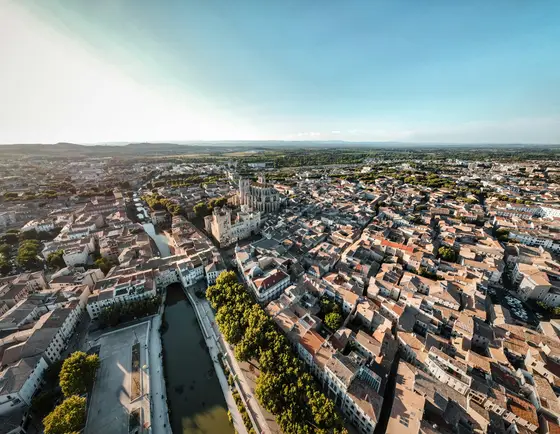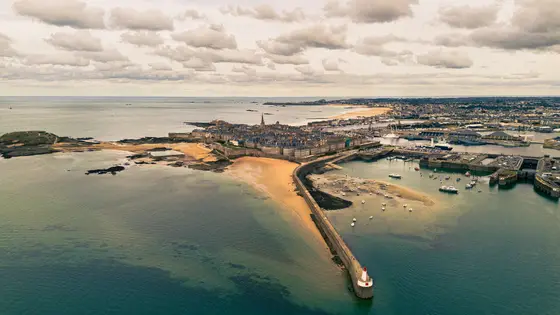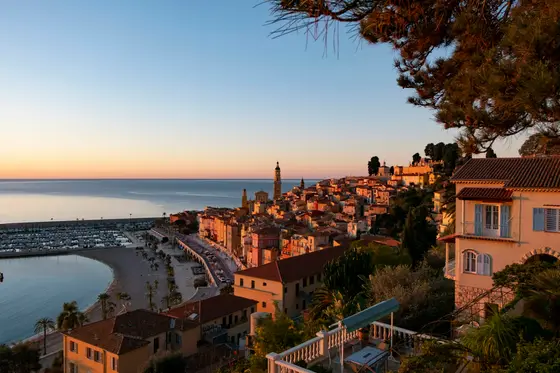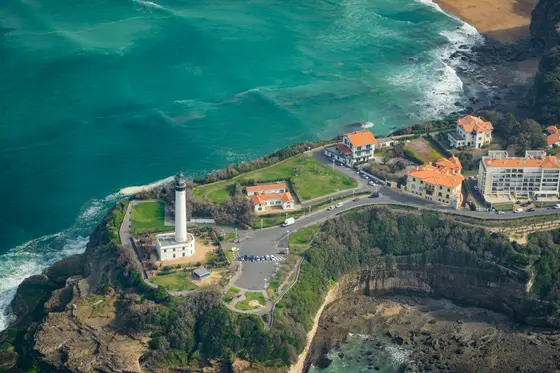
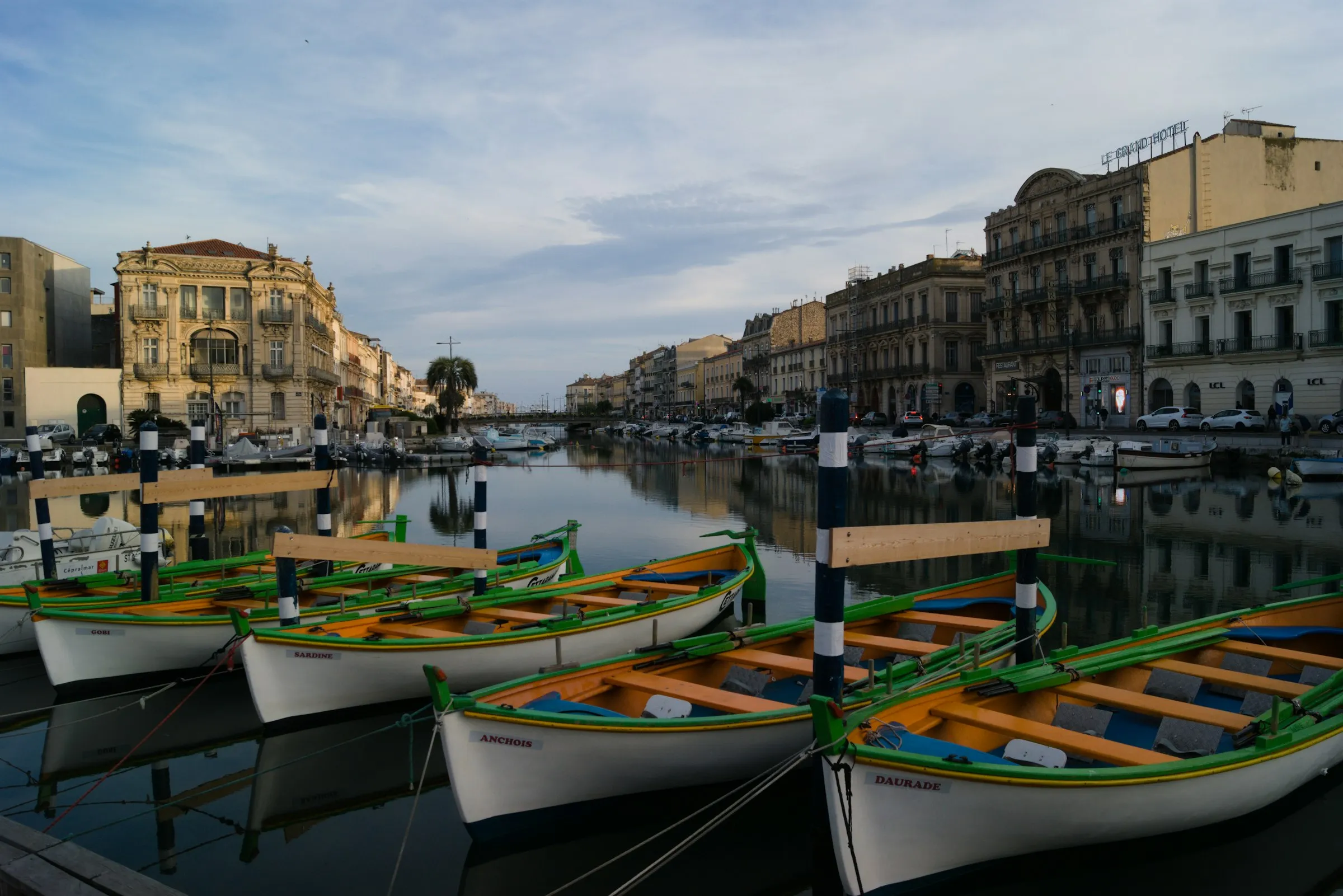
The feel
The nickname — "Venice of Languedoc" — makes Sète sound decorative. It isn't. The canals are working water: trawlers land the catch on the quays, and the town smells, honestly, of salt, diesel, and grilled fish. Above the old port climbs the Quartier Haut, settled in the late 1800s by fishing families from southern Italy and still nicknamed Little Naples; their octopus pie, the tielle, became the town's edible signature. Georges Brassens grew up here and is buried facing the lagoon — a walk from the beach one of his most famous songs asked for and didn't get. Sète doesn't audition for anyone. It has a job — which turns out to be the charm.
Market day
Every day, strictly speaking. Les Halles, the covered market at the center of town, opens at seven every morning but New Year's Day; the counters sell what the boats landed, plus oysters raised in the lagoon minutes away. Wednesday is the grand version: from seven to one the stalls spill outdoors around the Halles, food along the rue Alsace-Lorraine, flowers on the little Place Léon Blum, all year. A town of 45,000 that keeps a daily fish market solvent in February is telling you who lives here.
Where your coffee happens
On the canal quays, facing the moored fleet — the morning's show is boats and the people who work them. Or up in the Quartier Haut, on a scrap of square between tall Neapolitan-blooded houses, rooftops falling toward the water.
A Saturday here
The Halles first — a warm tielle eaten standing up. Then the climb the town eventually insists on: up Mont Saint-Clair through the pines to the Cimetière marin, where Paul Valéry is buried and the whole arrangement lies below — port, canals, the Étang de Thau on one side, open sea on the other. Afternoon on the sand; twelve kilometers of real beach run southwest from town. Dinner depends on what the boats decided.
The year, honestly
The nearest long-record Météo-France station is at Montpellier's airport, about thirty kilometers up the coast; it logs 2,700 hours of sun a year against fifty-eight days of rain, and counts thirty-four days over 30 °C. Sète, pinched between a lagoon and the sea, takes that heat humid — the thermometer undersells it. July and August belong to other people; late August brings the Saint-Louis, six days of water jousting staged here since 1743, glorious and jammed. About one home in five is a second home, so streets go dark after October — but the port doesn't stop, the Halles never close, and winter is a mild, bright, working season rather than a shuttered one.
Who thrives here
People who found the Riviera sterile and want a coast that still earns its living from the water. Daily swimmers and long-beach walkers. Anyone who wants serious medicine near a small address: the Hôpital Saint-Clair is minutes from the center, GP coverage is among the strongest we track, and Montpellier is fifteen to twenty minutes by train. And people ready to live in French — the anglophone presence is one regional group, not a community.
Think twice if
You want the postcard without the port: harbors come with noise, diesel, and rough edges, and some housing stock is frankly tired. You wilt in humid heat — those thirty-four hot days arrive with wet air and full beaches. You're counting on English: there is no AVF welcome chapter, no documented English-speaking medical roster in town, and the nearest anglophone organization covers the whole region. You plan to age in place without a plan: home-help and care-home capacity around Sète ranks in the bottom quarter of France — the later chapters need arranging early. And the low quarters between sea and lagoon flood: seven of the town's ten natural-disaster decrees are for flooding.
The orbit
Montpellier, fifteen to twenty minutes by train, around forty direct trains a weekday; TGVs call at Sète's own station, with Paris about three and a half hours up the line. Montpellier–Méditerranée airport, thirty-five minutes, one stop from the States. Montpellier's university hospital, about fifty minutes by car when it matters. Across the lagoon, the oyster villages of the Étang de Thau — the easiest lunch expedition in the south.
The Aelos view
Sète is our contrarian coastal pick: everything the polished Mediterranean sold off — a year-round working life, a daily market, free sand by the kilometer — at around 3,400 € a square meter. The caveats are real: you'll live in French, summer is fierce, and the elder-care bench is thin. For a couple in their early sixties with a taste for salt over polish, few coastal towns in France offer more life per euro.