The feel
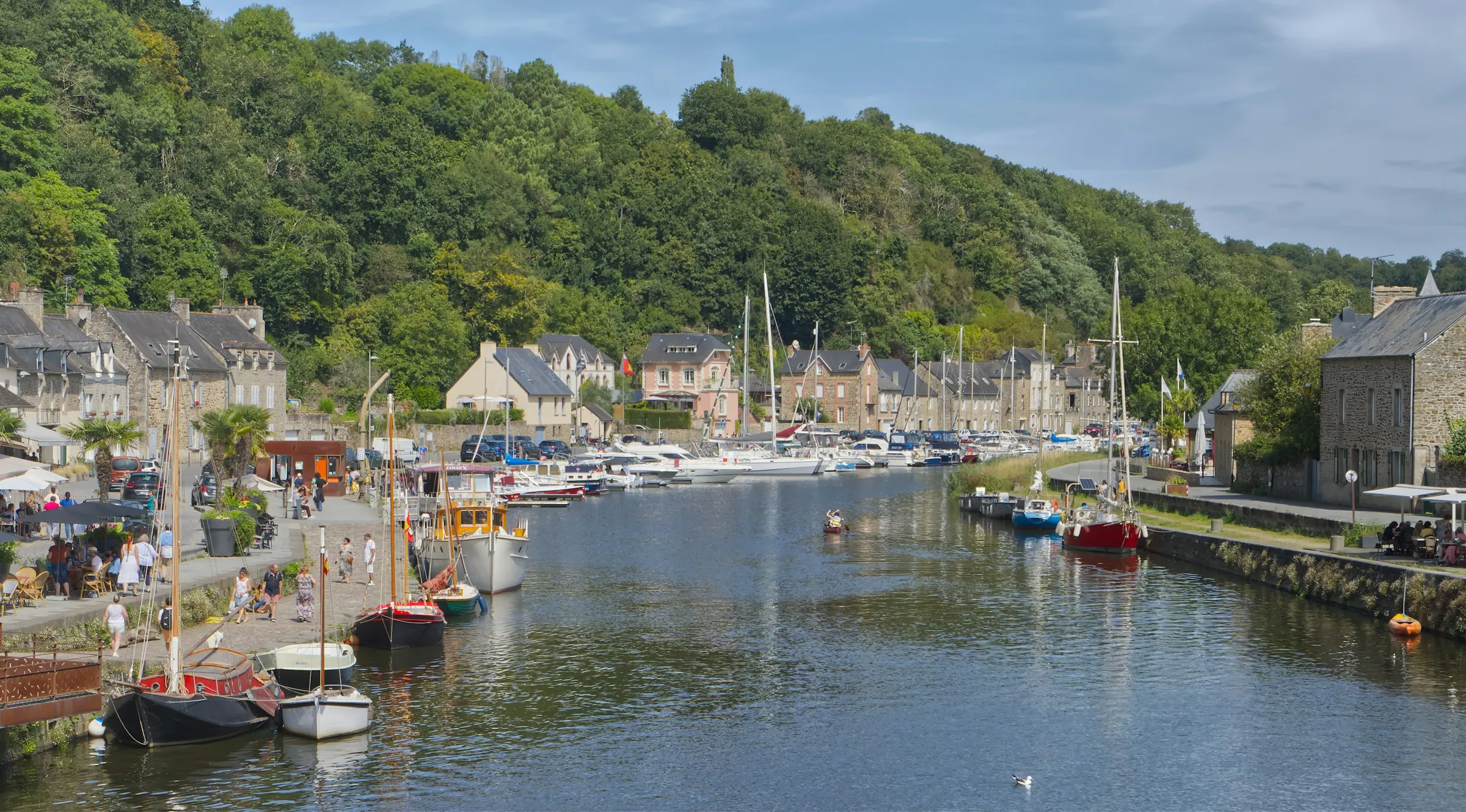
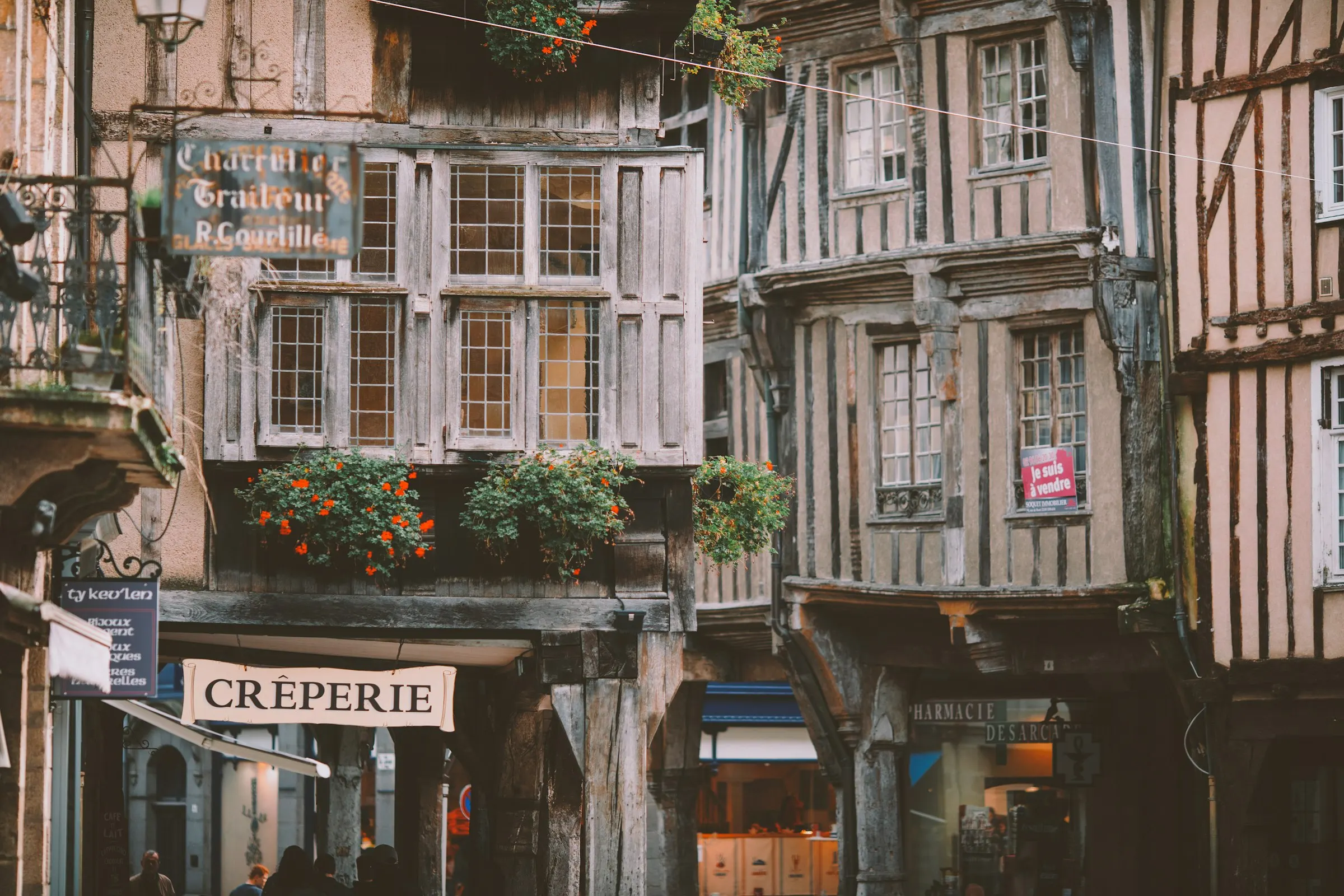
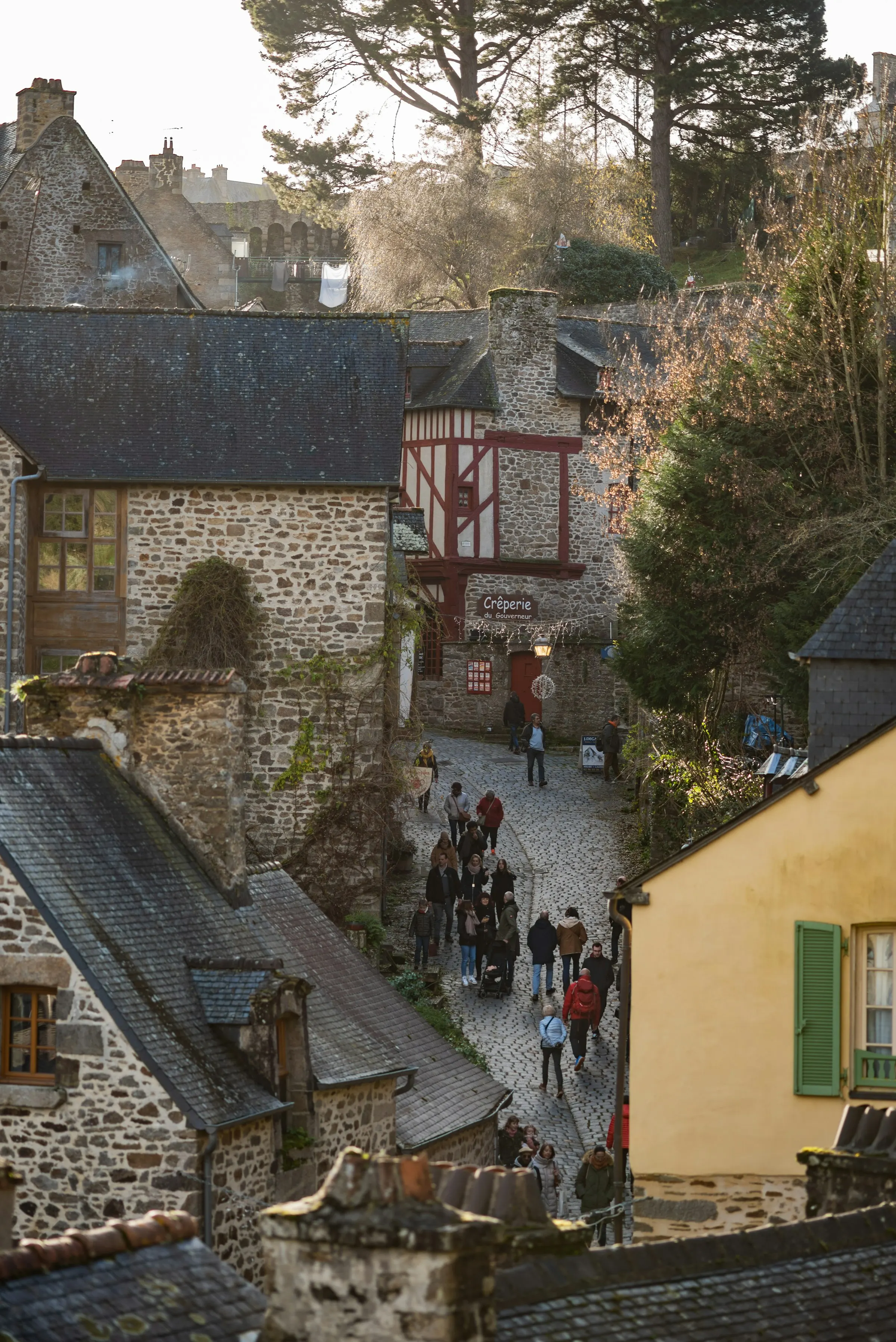
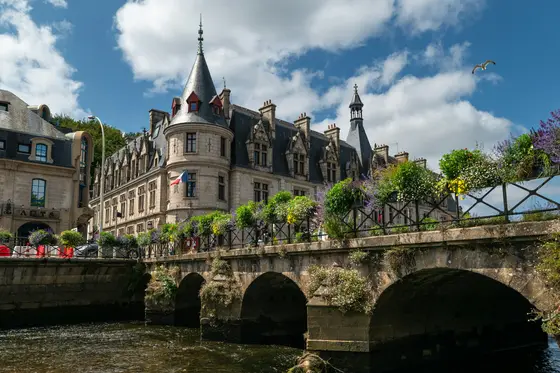
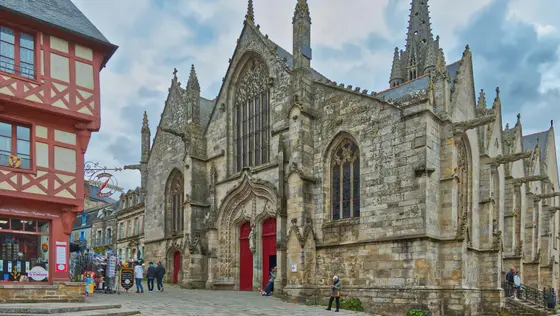
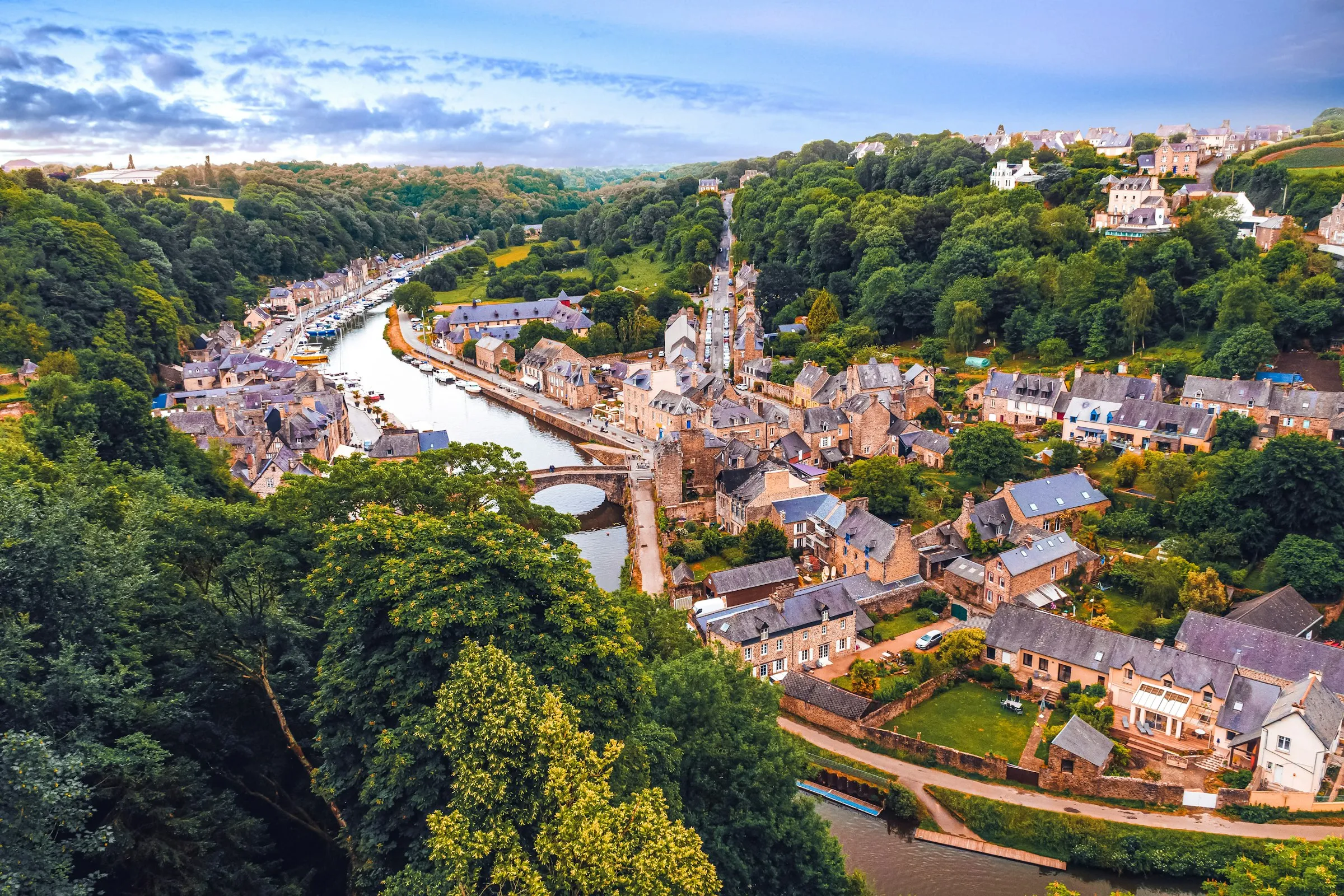
Dinan is what happens when a medieval town survives intact and declines to become a museum of itself. Inside the longest town walls left in Brittany — 2,650 metres of rampart — half-timbered houses lean over granite lanes, and the cobbled Rue du Jerzual pitches steeply down past artisans' workshops to the port on the Rance. And the detail that matters: second homes are under 8 percent here, so people live behind those crooked façades all winter. This is a working market town of nearly 15,000 that happens to be beautiful — not a stage set with residents.
Market day
Thursday, eight until one, on the Place Duguesclin and the Place du Champ Clos — squares laid out for it in 1319 — the market itself is two centuries older. The full Breton spread: fish, cheese, charcuterie, cider, bread, vegetables, plus the hats-and-linens stalls every real market carries. Shop before ten and you are shopping with Dinan; after that, with everyone.
Where your coffee happens
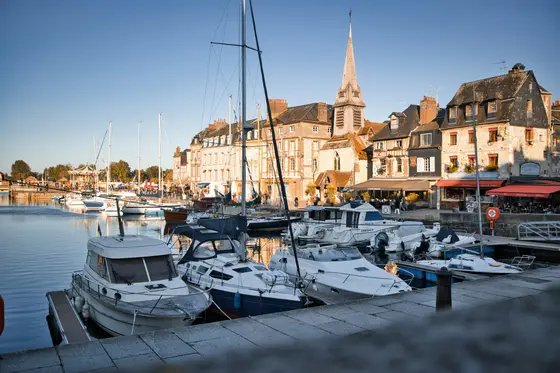
Under the timber porches of the Place des Merciers if you want the spectacle of the old town. Down on the port, among the quayside café terraces, when the weather is kind. You will develop opinions, and they will change with the sky.
A Saturday here
The ramparts first — a walking circuit rings the upper town. Down the Jerzual to the port for lunch by the water, then the flat towpath along the Rance: two green kilometres upstream to Léhon, a Petite Cité de Caractère with a ninth-century abbey, folded into Dinan since 2018. The climb back up the Jerzual is the day's honest exercise. The town's one cinema, an art-house, screens films in version originale — Saturday can end in English.
The year, honestly
The nearest Météo-France station — Dinard's small airport, about fifteen kilometres north on the coast — logs about 1,730 hours of sun a year and rain on 128 days; inland Dinan differs a touch, not enough to change the answer. The compensation is the other number: two days a year over 30 °C. While the south of France rehearses its heatwaves, Dinan puts a sweater on. July and August bring the day-trippers, and every other July the Fête des Remparts turns the town medieval for a weekend — a hundred thousand visitors, then calm (next edition, 2027). Winter is grey, damp, and quiet, with twenty-odd frost mornings — but the town is lived in year-round, so what closes in November is the tourist season, not Dinan.
Who thrives here
People fleeing heat rather than chasing sun — this is the antidote to the Midi's new summers. Walkers who want errands inside town walls and exercise along a river. Anyone planning for the later chapters: Dinan has its own hospital, the René-Pleven site minutes from the old town, elder-care capacity near the top of the national tables, and Rennes's university hospital fifty minutes away when medicine gets serious. And people at ease in a Franco-British milieu — Dinan is twinned with Exmouth in Devon, and the nearest Anglican congregation is in Dinard.
Think twice if
The grey would grind you down — 128 rain days is not a rumour, and January light here is northern light. You are hoping for a ready-made American circle — the anglophones here are few and mostly British; we found no American community to speak of. You want English-speaking medicine nearby — the closest doctors on the US Embassy's list are in Rennes, about 55 kilometres. You will not drive: the walled town works on foot, but specialists, the airport, and the coast ask for a car. Or steep cobbles worry your knees, now or in ten years — the Jerzual is a beautiful, punishing slope.
The orbit
Saint-Malo and its beaches, about half an hour; Dinard's belle-époque seafront on the same estuary. Mont-Saint-Michel, about an hour. Rennes — the university hospital, the embassy-listed doctors, the TGV — about fifty minutes, its airport at forty-five: one stop home to the States. Paris, a little under three hours by rail.
The Aelos view
Dinan is the strongest case we know for the green, walkable, storybook Brittany retirement — a genuinely medieval town that never stopped being a real one, healthcare unusually solid for its size, and Breton prices: recent sales average about 2,760 € a square metre. The costs are just as plain: Atlantic grey, a quiet winter, and an anglophone scene that speaks with a British accent when it speaks English at all. If you are fleeing heat and want a Thursday that structures the week, shortlist it. If your February daydream involves sun on the terrace, look south.