The feel
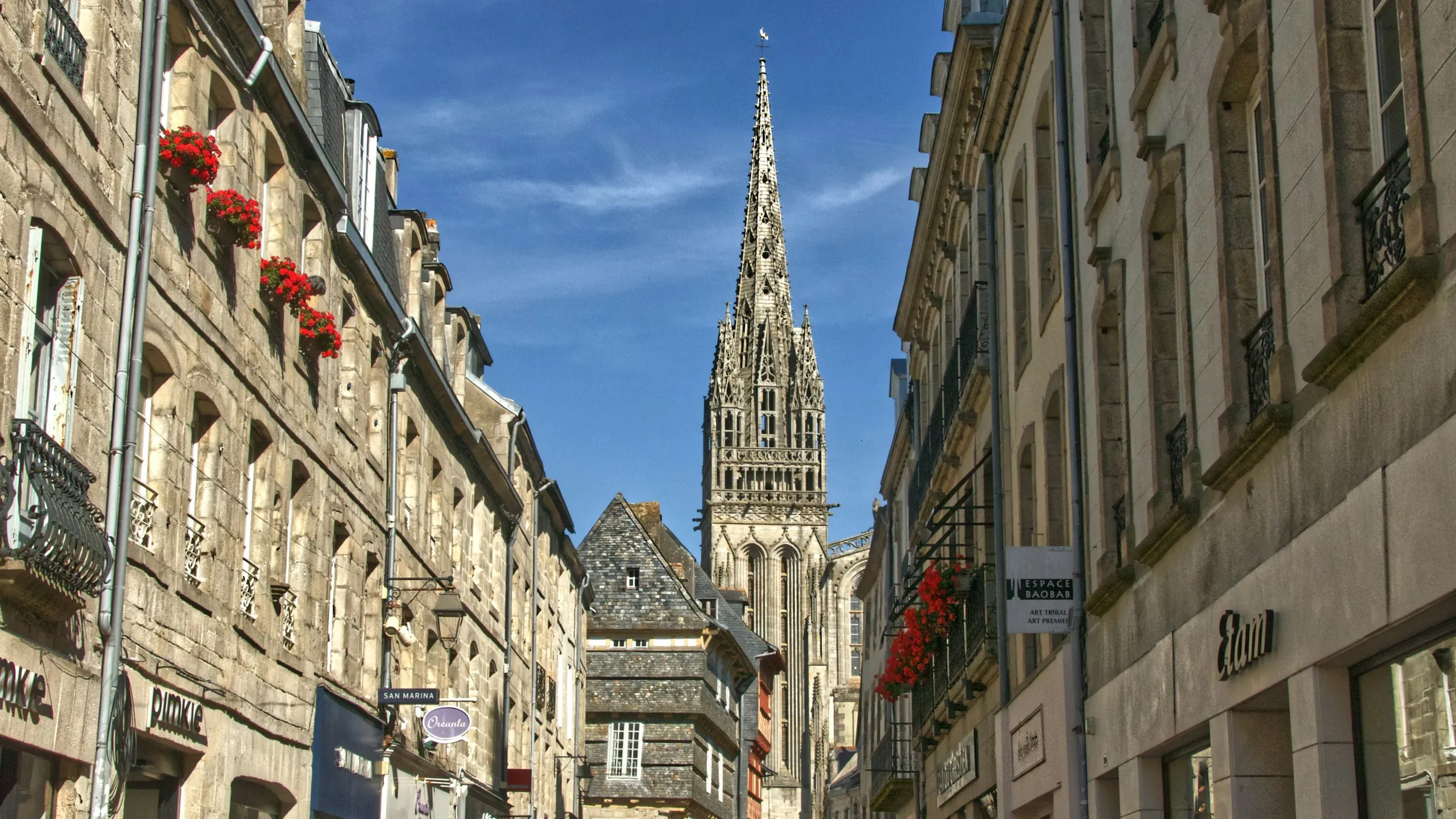
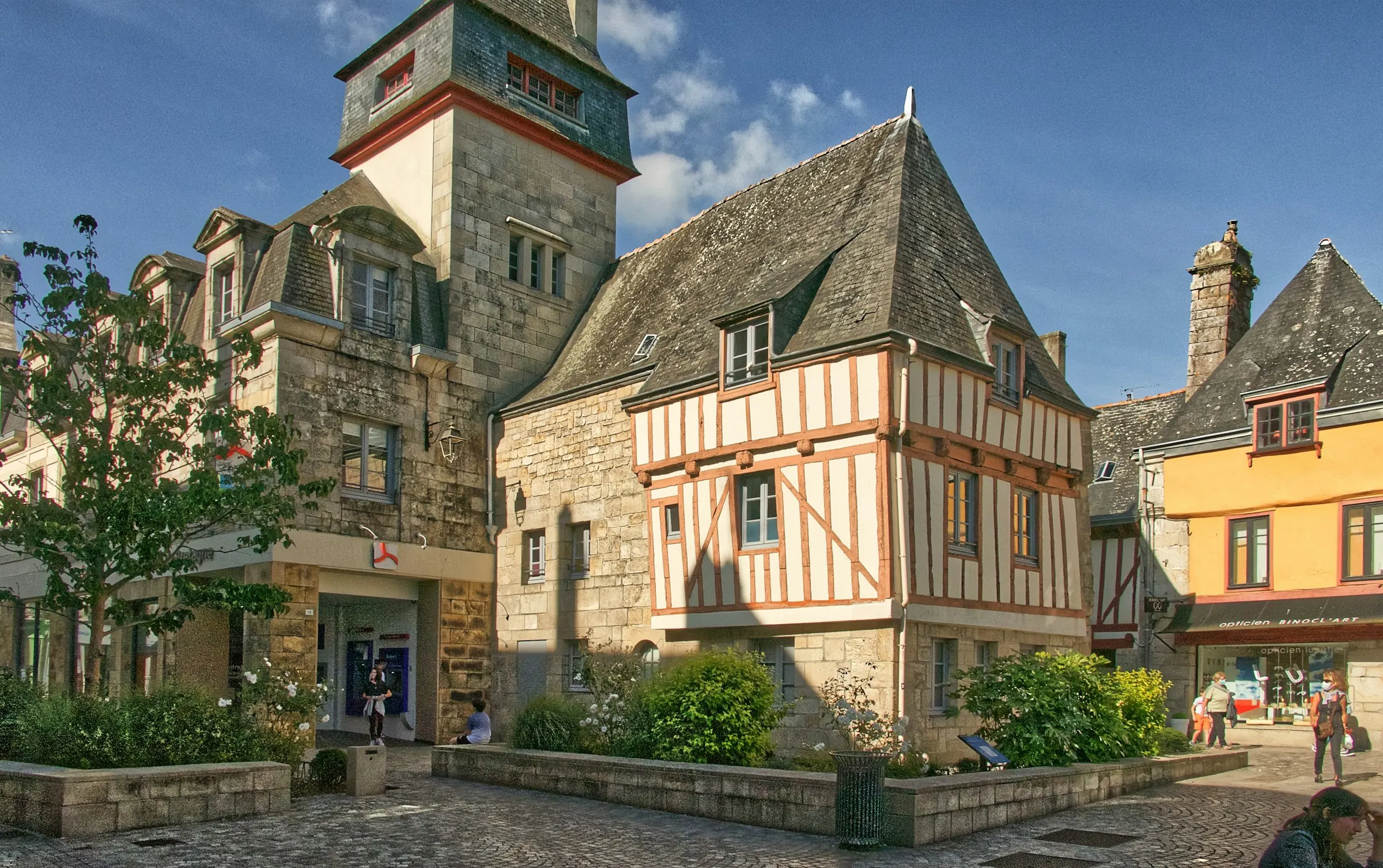
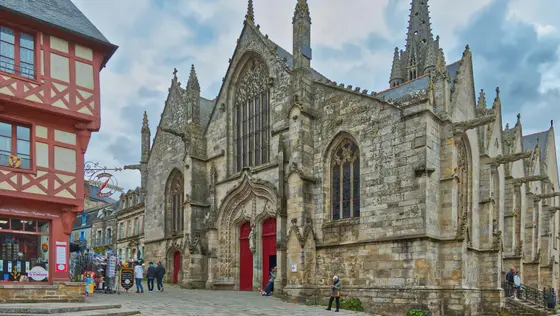
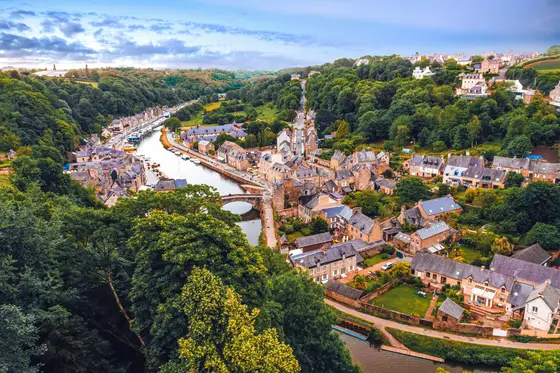
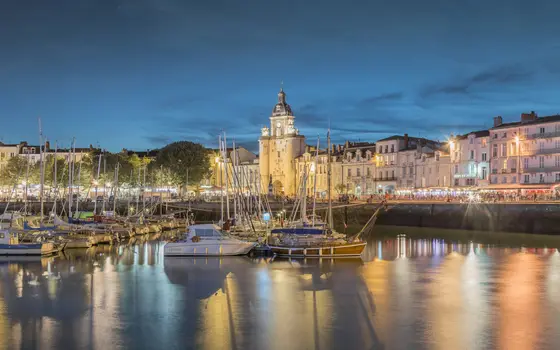
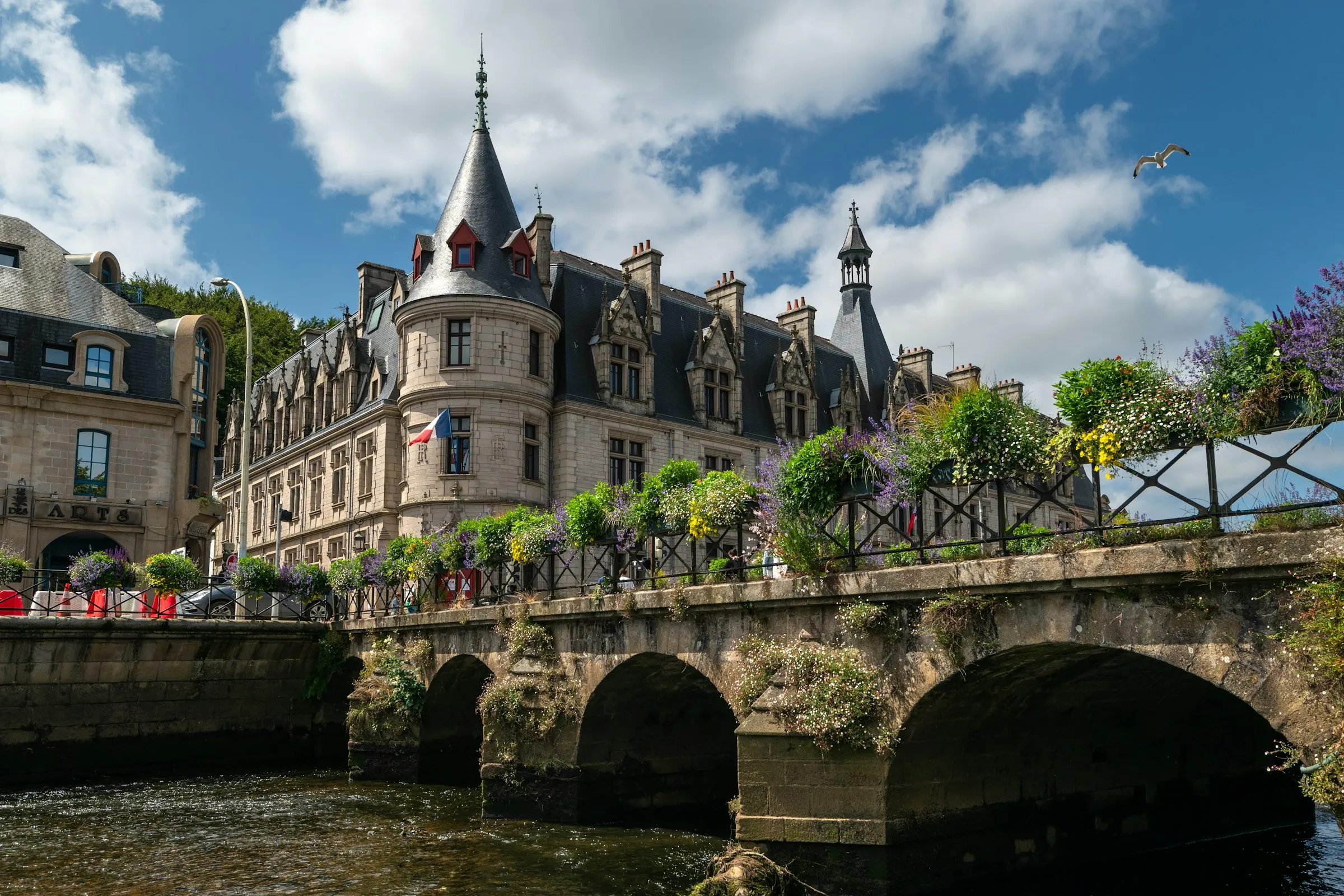
Kemper is Breton for "confluence," and the town still organizes itself around its meeting rivers — the Steir and the Jet joining the Odet, footbridges stitching the banks. Above it all rise the twin spires of Saint-Corentin, the cathedral whose nave takes its famous bend around swampy ground and an older chapel, never straightened. Some seventy half-timbered houses lean over rue Kéréon and its neighbors; the street signs come in French and Breton. Prefecture of Finistère, historic capital of Cornouaille — a working city, not a resort. The lights on in February belong to people who live behind them.
Market day
The Halles Saint-François have anchored the center since 1847 — rebuilt after a fire in 1976 — and open every day but the first Monday of the month, Sunday morning included; the everyday glories are fish and salted butter. On Wednesday and Saturday the open-air Grand Marché du Steir sets up alongside; Kerfeunteun adds an organic market on Friday afternoons, and the Braden quarter takes Sunday morning. None of it is staged for visitors — it is simply how the town eats.
Where your coffee happens
On the Place au Beurre — the little square named for the salted-butter trade, ringed by crêperies — for Quimper at its most itself; on a quay terrace over the Odet for the river and your newspaper. On the many gray days, the Halles do the work of a covered village square.
A Saturday here
Market first. Then up or down: up Mont Frugy, the seventy-meter beechwood hill above the center, for the view over slate roofs and spires; or downstream to Locmaria, the town's oldest quarter, where painted Quimper faience has been made since 1690. Crêpes and cider for lunch — in this town, not a tourist move. In summer, Bénodet, where the Odet finds the sea, is twenty minutes away.
The year, honestly
Western Brittany, said plainly: the Météo-France station at Pluguffan, five kilometers southwest, records roughly 150 rain days and four feet of rain a year, against some 1,700 hours of sun — a thousand fewer than the Mediterranean towns in this guide. What the weather buys is one of the gentlest summers in France: barely two days a year over 30 °C, frost on perhaps sixteen mornings. Late July brings the Festival de Cornouaille — the great Breton gathering since 1923, pipe bands, fest-noz, a costumed parade, some 150,000 visitors — and then the town hands itself back. Second homes are under three percent here, and it shows: winter is gray and damp, and never dead.
Who thrives here
People retiring away from heat — if Phoenix or Houston drove you out, this is the far end of the scale. Cooks who want the week built around the Halles. Anyone content to live in French, curious enough to live a little in Breton too. And planners thinking past the first decade: GP coverage beats most towns we list, elder-care capacity ranks near the top of our dataset, and two art-house cinemas run undubbed films all year.
Think twice if
Sunlight is medicine for you: 150 rain days is the station record, not a slur, and November through February is long, low, and wet. You're counting on an English-speaking circle: no anglophone club in Quimper, the nearest English-language church service about forty-five minutes away in Huelgoat, and Brittany's British wave settled in the cheap rural center of the region, not here — this is a life lived in French from the first week. Your health file is complex: the Cornouaille hospital, eight minutes away, handles the everyday well, but serious medicine means the university hospital in Brest, about an hour — and the US Embassy's English-speaking-doctor list has no Quimper entry. Or you'd buy on the quays without reading the flood maps — most of Quimper's disaster decrees are floods; the confluence has put water in the center before.
The orbit
Locronan, about twenty minutes. Concarneau, about half an hour. The Pointe du Raz, where France runs out of land, about fifty minutes. Brest — the university hospital, and the airport with its one-stop US routings — about an hour north. The TGV from Quimper's own station: Paris in about three and a half hours.
The Aelos view
Quimper is where we point members who fear heat more than rain and want a working city rather than a postcard: homes trade around €2,100 a square meter, the markets run all week, and January is as alive as July. The honest price is weather and language — a thousand fewer hours of sun than the south, and no English-speaking cushion at all. If that reads as a fair trade rather than a warning, shortlist it.