The feel
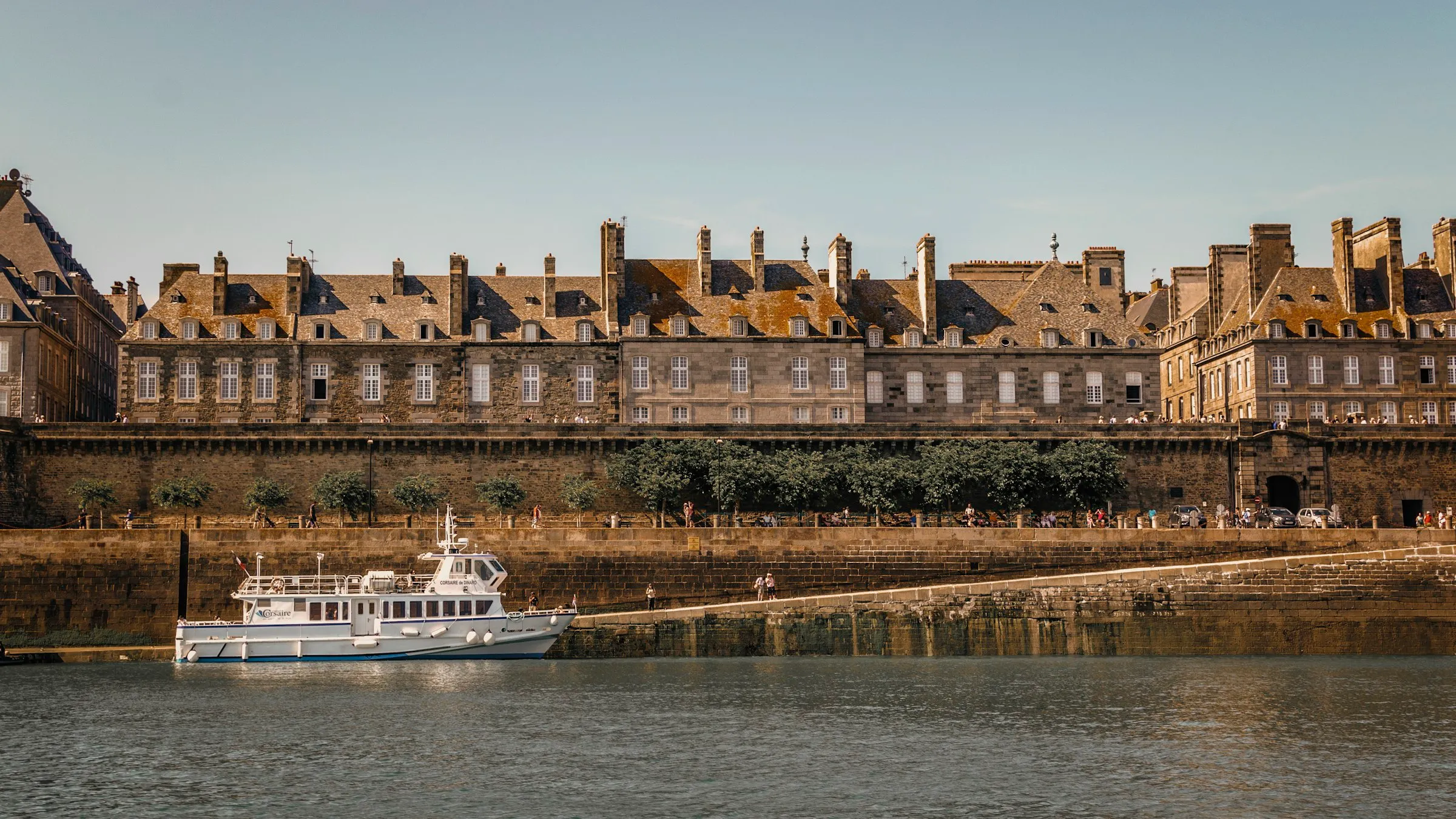
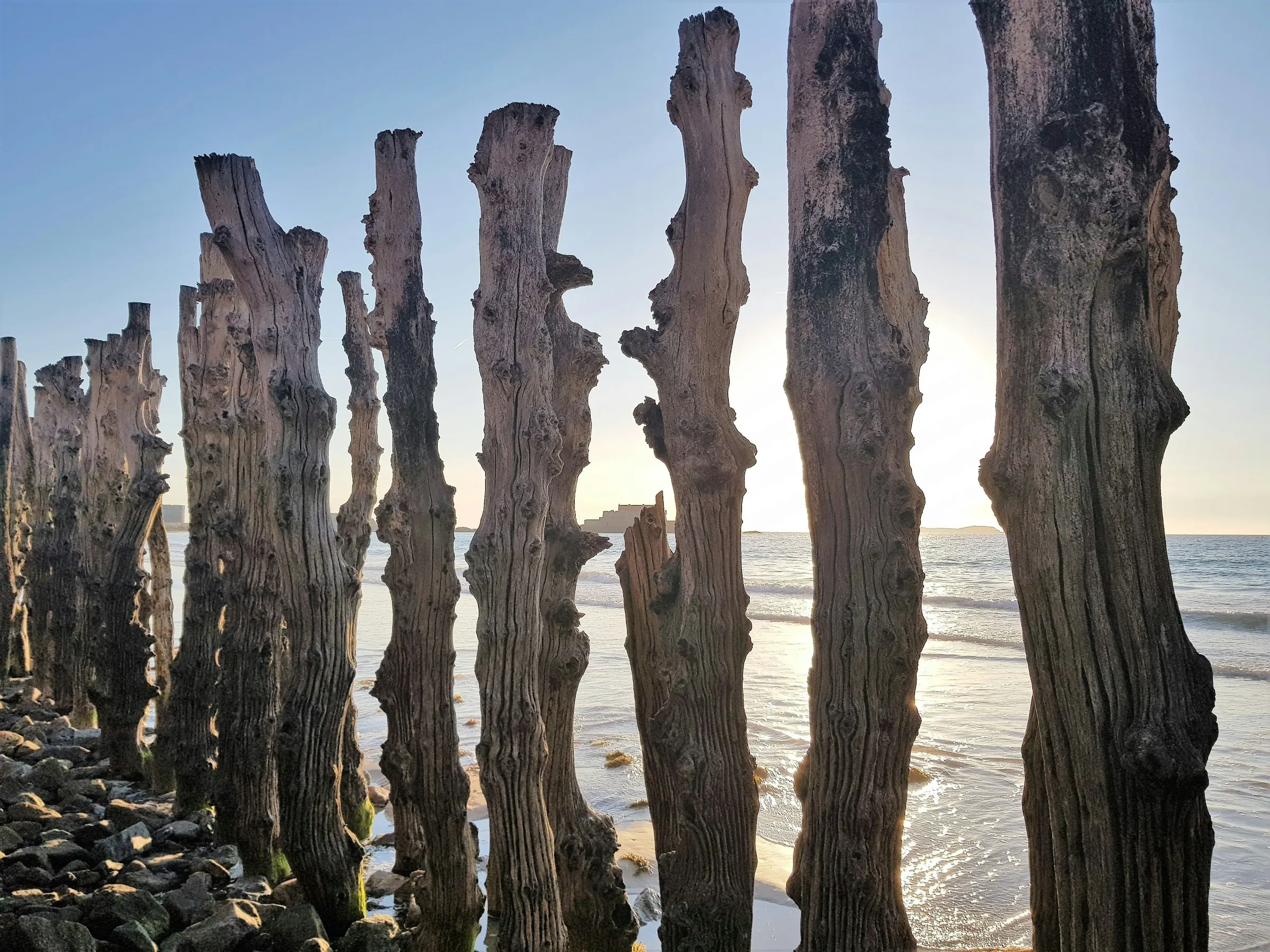
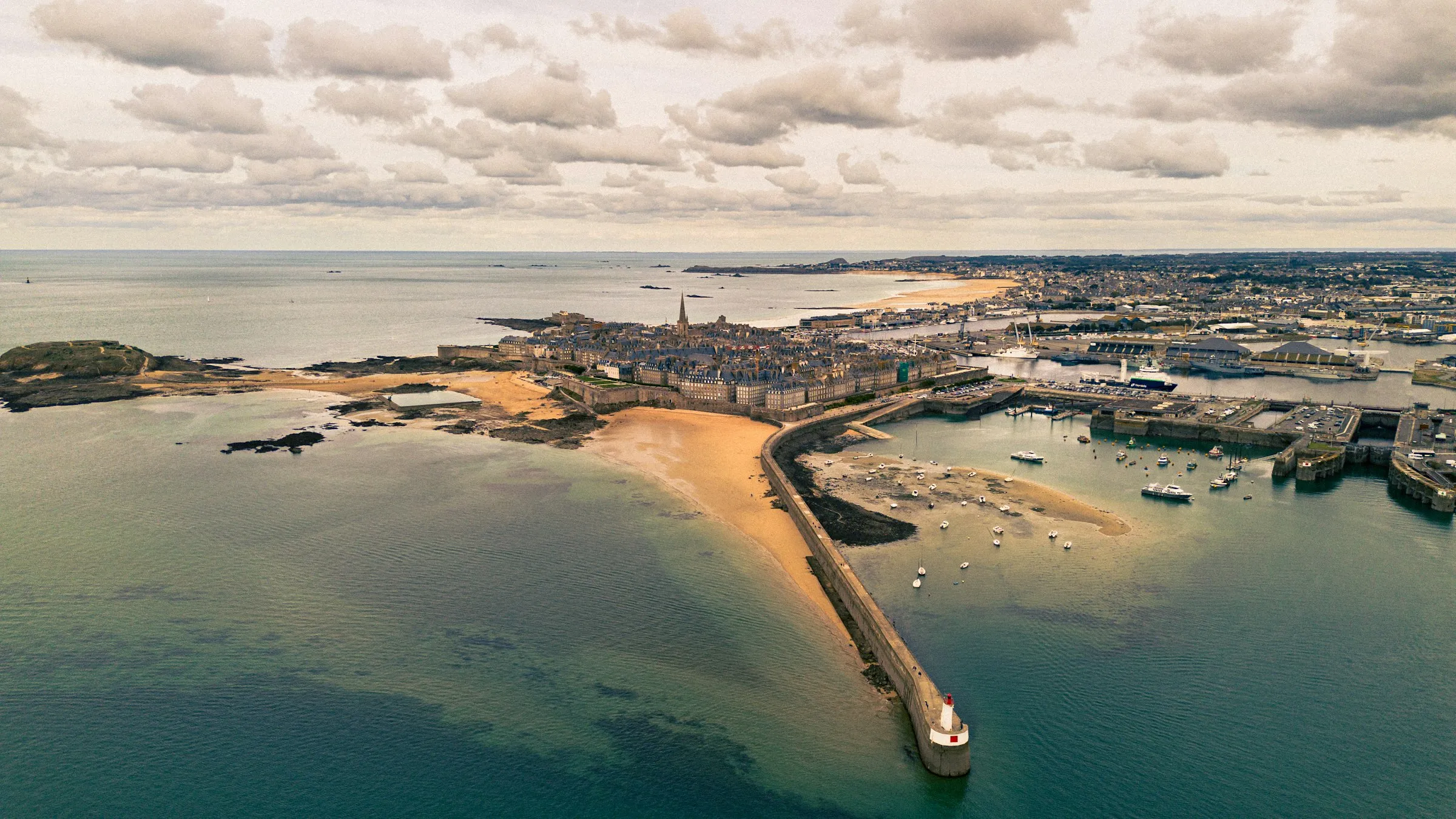
Twice a day, the sea rewrites the map: the tide can swing more than forty feet — the biggest range in continental Europe — leaving the beach below the ramparts vast at breakfast, gone by noon; the offshore forts walkable, then abruptly not. The walled city is newer than it looks — four-fifths destroyed in August 1944 and rebuilt in granite, which is why it feels at once old and oddly composed — and it is only the postcard: most of its 47,000 people live outside the walls, in Paramé, Rocabey, and Saint-Servan, quarters uninterested in performing. Saint-Malo is not a resort with residents; it is a working port that happens to contain one.
Market day
Somebody holds a market most days. Inside the walls, the Halle au Blé runs Tuesday and Friday mornings, the fish stalls at the Place de la Poissonnerie on the same days. Rocabey — the everyday quarter where year-rounders push their trolleys — goes Monday, Thursday, and Saturday; Paramé takes Wednesday and Saturday. If you want to know whether this town closes in winter, visit Rocabey on a February Thursday.
Where your coffee happens
A terrace inside the walls, where morning light on granite is worth the tourist traffic — or along the Sillon, the long beachfront promenade, where the regulars read the paper facing the sea. People who stay end up with one of each, plus a tide app.
A Saturday here
Market first, then the ramparts' full circuit above the beaches. If the tide table says yes, walk out across the sand to the Grand Bé, where Chateaubriand — Saint-Malo's writer — lies buried facing the sea; checking the hour first is the local habit you'll acquire fastest. Oysters for lunch, here or in Cancale. This is thalassotherapy country: a winter afternoon in warm seawater while the weather rages outside is the town's quietest argument for itself.
The year, honestly
The nearest Météo-France station is Dinard-Pleurtuit, just across the Rance estuary, and its numbers state the deal plainly: about two days a year over 30 °C, roughly 1,730 hours of sun, 128 days with rain. Summer is the reward — mild, bright, never punishing — and draws the crowd to match: over a quarter of homes are second homes, and August inside the walls is not yours. Winter is the test. The grey arrives in long installments, and storm tides send waves clean over the Sillon seawall — half hazard, half spectacle. The town does not shut: the markets run, Étonnants Voyageurs fills it with writers at Pentecost, Quai des Bulles with comics in October, and every fourth November the Route du Rhum sails for Guadeloupe.
Who thrives here
People who chose the Atlantic on purpose — walkers, sea-swimmers, anyone whose good year has boots in it. People who want a real town under the scenery: the hospital is in town, GP coverage among the strongest we track, a cinema screening undubbed films. The anglophone circle is real but modest and distinctly British — an English-speaking club in town, an Anglican church across the water in Dinard, an AVF welcome chapter — which suits people who'd rather integrate than join a colony.
Think twice if
Winter light matters to you — 1,730 hours of sun is Brittany, not Provence, and the grey asks for stamina, not just a good coat. You dreamed of Mediterranean warmth — you will rarely be hot here, even when you'd like to be. Your budget assumed Brittany was cheap: at about €4,700 per square meter, Saint-Malo is priced like the landmark it is, the walled city more still. Or you want English-speaking medicine nearby: the nearest doctors on the US Embassy's list are in Rennes, seventy kilometers away.
The orbit
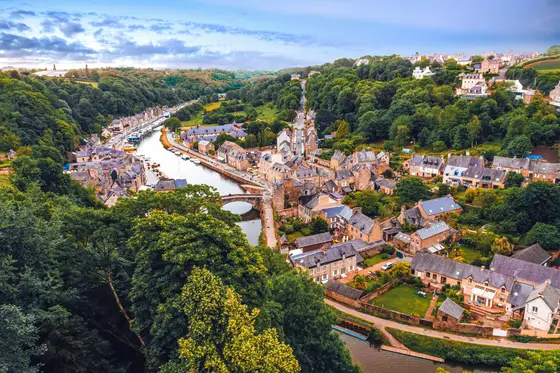
Dinard, ten minutes across the estuary by sea shuttle in season. Cancale, about twenty-five minutes; Dinan, the medieval port up the Rance, about forty-five; Mont-Saint-Michel, an hour. Rennes — university hospital, big-city errands — is under an hour by train, and a few direct TGVs a day put Paris about two and a half hours away. Flying home means one stop via a Paris hub; Dinard's small airport, fifteen minutes off, flies to London and little else.
The Aelos view
Saint-Malo is the strongest case we know for an Atlantic retirement — a real town with real medicine, real trains, and a sea that never stops being dramatic. The terms: you trade the south's light for the north's weather, and you lend the walls to August. We'd send the couple who walk in all weathers and wilt in heat; anyone who needs winter sun, we'd point south without a second thought.