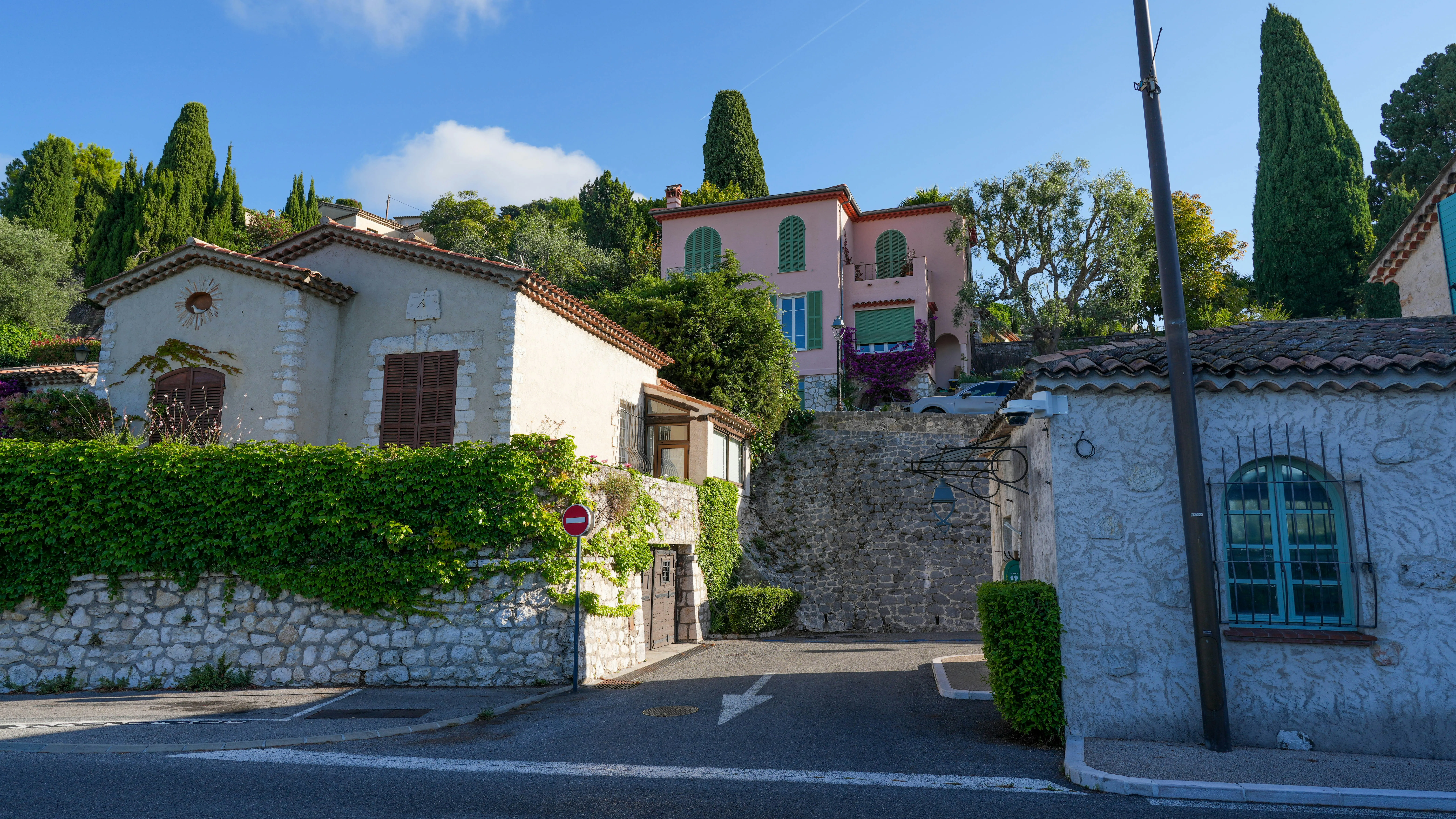
Where to Retire in Europe: France, Portugal, Spain, and Italy Compared
France, Portugal, Spain, or Italy for retirement? An evidence-based comparison for Americans: taxes, healthcare, visas, cost of living, and estate planning, with the numbers.

For most Americans weighing retirement in Europe, the shortlist ends up looking the same: France, Portugal, Spain, and Italy.
On paper, all four promise universal healthcare, a mild climate, rich culture, and passive-income residence visas designed for retirees. Beyond the brochures, however, the practical realities diverge significantly. Taxes, out-of-pocket healthcare costs, residency timelines, estate planning, and day-to-day administrative friction vary far more than most people expect.
The short version
| Factor | France | Portugal | Spain | Italy |
|---|---|---|---|---|
| US Retirement Income | Taxed only in the US | Taxed as ordinary income | Taxed as ordinary income | Taxed (or 7% flat rate in South) |
| Taxes on wealth | Real estate only | Real estate only | Worldwide wealth | Foreign financial assets |
| Estate & Inheritance | Treaty limits double tax | Spouses & kids exempt | Varies heavily by region | 4% above €1M (Spouse/Kids) |
| Out-of-Pocket Health | ~9% (Lowest) | ~28% | ~21% | ~22% |
| Price Level (EU=100) | 111 (Highest) | 87 (Lowest) | 91 | 98 |
| Homicide Rate (per 100k) | 1.3 | 0.7 | 0.7 | 0.6 |
| English Rank (EF Index) | #38 (Moderate) | #6 (Very High) | #36 (Moderate) | #59 (Moderate) |
| Standard residence before naturalization eligibility | 5 Years [*] | 10 Years | 10 Years | 10 Years |
In broad strokes:
- France for treaty protection on US retirement income, the strongest healthcare cost protection, and the shortest standard residence period before naturalization eligibility.
- Portugal for the lowest baseline cost of living, easy English integration, and zero wealth/inheritance tax on direct heirs.
- Spain for excellent climate, infrastructure, and lifestyle at net worths below wealth-tax thresholds.
- Italy if relocating to a qualifying southern town to leverage the 7% flat tax on foreign income.
The rest of this guide explains why, and where each of those headlines breaks down.
Taxation
How a country taxes the money you live on matters far more than its baseline tax brackets. Here, France stands apart due to its unique treaty provisions.
Social Security, Pensions, and 401(k)/IRA Distributions
- France: Under the 1994 US-France Income Tax Treaty, US Social Security is taxable only in the United States. US pensions, 401(k), and traditional IRA distributions receive a French tax credit equal to the French tax itself. This effectively leaves your US retirement income sheltered from French income tax. More on taxes for American retirees in France here.
- Portugal: The Non-Habitual Resident (NHR) 10% pension rate closed to new arrivals in 2024. Retirement income is now taxed at progressive resident rates ranging from 12.5% to 48% (plus surcharges).
- Spain: Taxes foreign retirement income as ordinary employment income at progressive rates. Spain's "Beckham Law" excludes retirees.
- Italy: Taxes foreign income at ordinary rates (23% to 43%) unless you qualify for the 7% regime.
| Tax residents in qualifying southern towns (population under 30,000) can pay a flat 7% substitute tax on all foreign income (pension, dividends, interest, rentals) for 10 years. |
|---|
Investment income, Roth IRAs, and wealth
| Tax Feature | France | Portugal | Spain | Italy |
|---|---|---|---|---|
| Financial Wealth Tax? | Real estate only | Real estate only | Yes (0.2%–3.5% + Solidarity Tax) | No |
| Investment Tax Rate | 0 on most US-source investment income | 28% flat | 19%–30%(Savings scale) | 26% flat(or 7% regime) |
| Roth IRA Treatment | High (Recognized by treaty) | Low (Taxed as income) | Low (Taxed as income) | Low (Taxed as income) |
Estate Planning & Forced Heirship
Estate planning for an American abroad sits across three systems: US estate tax, local inheritance tax, and local succession law. The tax bill is only part of the picture. Forced heirship applies in all four countries, and the Brussels IV election of US law is the main tool to preserve testamentary freedom—subject to the French limit noted earlier (where Article 913 gives French-resident children a right to claim against French estate assets) and to the rule that the election governs succession law, not tax.
Furthermore, US revocable living trusts—a cornerstone of American estate planning—are not cleanly recognized in these civil-law systems and can produce unexpected tax and legal outcomes. A specialized cross-border review is essential rather than assuming a US will and trust carry over intact.
On the numbers, Portugal and Italy are the most benign for transfers; France is heavier on transfers to children but exempts the spouse; and Spain is the most variable across its regions and is the only one in the group without a US estate treaty.
| Country | Forced Heirship Rules | Spouse Exemption | Children Allowance / Tax | US Estate Tax Treaty |
|---|---|---|---|---|
| France | Yes (EU Brussels IV election available, subject to Art. 913) | 100% Exempt | €100,000 allowance per child, then 5%–45% progressive rates | Yes (1978 Treaty) |
| Portugal | Yes (Brussels IV election available) | Exempt (10% stamp duty applies only to Portuguese assets) | Exempt (10% stamp duty applies only to Portuguese assets) | No |
| Italy | Yes (Brussels IV election available) | 4% rate above €1M exemption per heir | 4% rate above €1M exemption per heir | Yes (1955 Treaty) |
| Spain | Yes (Brussels IV election available) | Varies by region (0% to heavy tax) | Varies by region (e.g., Madrid/Andalusia give 99% rebates) | No |
| ⚠️ In France, Spain, and Italy, transfers out of a US trust can be treated as taxable gifts to strangers, incurring tax rates as high as 60%. |
|---|
Healthcare
All four countries feature high-performing universal systems, superior life expectancy, and significantly lower spending per capita than the United States.
| Healthcare Metric | France | Portugal | Spain | Italy |
|---|---|---|---|---|
| Life Expectancy (2024) | 83.0 | 82.4 | 83.9 | 83.9 |
| Treatable Mortality (per 100k) | 58.8 (Best) | 74.2 | 60.2 | 61.9 |
| Out-of-Pocket Cost Share | ~9% | ~28% | ~21% | ~22% |
| Annual Spend Per Capita (USD) | $7,367 | $5,212 | $5,346 | $5,164 |
France leaves patients paying the least out of pocket. The public system (PUMa), combined with a top-up policy (mutuelle), leaves patients paying roughly 9% out-of-pocket—the lowest in Europe.
| ⚠️ US Medicare provides zero coverage abroad. Maintaining Medicare Part B depends on whether you intend to keep a return safety net intact in the US. |
|---|
Cost of living
Eurostat’s Price-Level Index measures comparative household consumption across Europe, setting the EU average at 100.
| Country | Price level index ( EU=100) | Relative Cost Drivers |
|---|---|---|
| France | 111 | Highest overall cost; higher rents, dining, and consumer goods. |
| Italy | 98 | Sits near the EU average; high regional split (North vs. South). |
| Spain | 91 | Moderate cost; reasonable dining, groceries, and services. |
| Portugal | 87 | Cheapest overall; real estate and dining offer maximum value. |
Housing explains most of the difference between these countries. While groceries and everyday goods are priced similarly across Western Europe, property costs and monthly rents in Portugal and Spain pull significantly ahead in affordability compared to France.
Visa Routes & Citizenship Pathways
Each country offers a specific passive-income visa for non-working retirees.
| Country & Visa Type | Monthly Passive Income Floor | Remote Work | Standard residence for naturalization | Dual Nationality |
|---|---|---|---|---|
| France (VLS-TS Visiteur) | ~€1,478/mo (French net SMIC benchmark, per applicant) | Strictly Barred | 5 Years [*] | Allowed |
| Portugal (D7 Visa) | ~€920/mo (Minimum wage) + dependent fees | Gray Area | 10 Years | Allowed |
| Spain (Non-Lucrative Visa) | ~€2,400/mo (400% IPREM) | Strictly Barred | 10 Years | Renunciation Required |
| Italy (Elective Residence) | ~€2,583/mo (€31,000/yr floor; discretionary) | Strictly Barred | 10 Years | Allowed |
| ⚠️ Effective May 2026, Portugal extended its naturalization requirement from 5 to 10 years for non-EU citizens. |
|---|
Buying and renting property
Americans can freely purchase property in all four countries—none restrict foreign or non-resident buyers, though each requires a local tax identification number (such as a French SPI, Portuguese NIF, Spanish NIE, or Italian Codice Fiscale). Italy applies a reciprocity rule that US citizens satisfy automatically.
Transaction fees, local transfer taxes, and recurring property holding costs differ significantly across the four nations:
| Property Factor | France | Portugal | Spain | Italy |
|---|---|---|---|---|
| Transaction Costs (Existing Homes) | ~7%–8% (Frais de notaire, including transfer tax & notary fees) | IMT + 0.8% Stamp Duty (Flat 7.5% IMT for non-residents in 2026) | ~6%–11% (Regional transfer tax + legal/notary fees) | Registration Tax ~9% (Reduced to 2% for primary home) |
| Recurring Property Tax | Taxe foncière (Municipal property tax) | IMI (0.3%–0.45% of cadastral value) | IBI (Municipal real estate tax) | IMU (Generally exempt on primary residences) |
Banking
Opening a European bank account is usually straightforward; keeping your US brokerage accounts open while living abroad is where most Americans encounter friction. Major US brokerages (Fidelity, Schwab, Vanguard) frequently freeze or restrict accounts once a foreign address is registered. Confirm your US financial institution’s foreign-residence policies before moving.
On the European side, under the US Foreign Account Tax Compliance Act (FATCA), foreign banks report account balances to the IRS. While basic checking accounts are easily opened, local European banks often refuse to open full-service investment or wealth management accounts for US citizens due to compliance costs. However, for everyday banking, France's droit au compte and EU directives across Spain, Portugal, and Italy guarantee legal residents the right to open a basic retail bank account if an institution arbitrarily denies service.
Language & Social Integration
Language barriers directly impact day-to-day administrative ease and social life.
| Country | EF English Proficiency Rank | Administrative Language Barrier | Expat Landing Ease |
|---|---|---|---|
| Portugal | #6 (Very High) | Moderate | Easiest |
| Spain | #36 (Moderate) | High | Moderate |
| France | #38 (Moderate) | Very High | Moderate |
| Italy | #59 (Moderate) | Very High | Harder |
Portugal offers the easiest transition for non-polyglots. English proficiency is widespread across medical professionals, banks, and coastal towns.
France and Italy require a serious commitment to learning the local language. Public offices, tradespeople, and rural medical centers operate almost exclusively in French and Italian.
Lifestyle
For many retirees, this is the section that decides the move. Here, local geography and seasonal patterns matter more than national boundaries.
| Lifestyle Factor | France | Portugal | Spain | Italy |
|---|---|---|---|---|
| Winter Climate (Representative) | Paris 5°C / Nice 10°C | Lisbon 12°C | Madrid 7°C / Barcelona 10°C | Rome 7°C / Milan 3°C |
| Homicide Rate (per 100k) | 1.3 | 0.7 | 0.7 | 0.6 |
| High-Speed Rail Links | Excellent (TGV Network) | Limited (Leans on road/air) | World-Class (AVE Network) | Excellent (Frecciarossa) |
- Climate & Seasonality: All four offer far milder climates than most of the US. Portugal’s Atlantic coast is the most temperate year-round. However, heavy tourist regions (the Algarve, Costa del Sol, Tuscany) can feel quiet and shut down significantly in the off-season.
- Safety: All four countries are exceptionally safe by US standards (US homicide rate sits around 5.8 per 100,000). Violent crime is low across the board, though pickpocketing and minor property crime are more visible in heavy tourist hubs across Barcelona, Paris, and Rome.
- Public Transit: Walkable historic centers are standard across all four. Spain boasts Europe’s largest high-speed rail network, while France and Italy offer extensive regional train coverage. Rural locations in all four countries still require a personal car.
Administrative Burden & Paperwork Culture
Every country in this comparison involves more paperwork than most Americans are used to, but the points of friction differ:
- France: Highly digitized through central online portals (e.g., France-Visas, Étrangers en France). The system is efficient once understood, but exacting—a single mismatched date or uncertified translation will halt your application.
- Spain: Highly decentralized. Administrative appointments (cita previa) are notoriously difficult to book online in major provinces, often forcing reliance on local gestores (administrative helpers).
- Italy: Highly dependent on your local municipality (comune). Procedures for registering residency (residenza) can vary significantly between local offices.
- Portugal: Reorganizations of its immigration authority (AIMA) have led to processing backlogs for visa renewals and initial residency cards.
Which country fits which retiree
No single country wins. The right choice depends on your finances, family, and priorities.
France makes the most sense if your income is mainly treaty-covered US Social Security, a pension, and 401(k)/IRA withdrawals, you value the lowest out-of-pocket healthcare costs, and you can absorb a higher cost of living and a heavier inheritance regime on transfers to children. One thing that changed in 2025: France's five-year citizenship path, once a headline draw, is now largely closed to retirees whose income comes mainly from abroad, so choose France for the life and the tax treatment, not for a fast passport.
Italy is compelling if you will live in a smaller southern town, especially with substantial foreign investment income, and the 7% flat regime on all foreign income for ten years is decisive. Without that regime, Italy looks much more like Spain or Portugal from a tax perspective, with excellent healthcare, low inheritance tax, and a mild southern climate.
Portugal remains attractive if you prioritize a lower cost of living, the easiest language transition, and estate preservation (a real estate wealth tax, but effectively no inheritance tax), provided you're comfortable with the fact that the old NHR break is gone and citizenship now takes ten years.
Spain is hard to beat if you want its climate, culture, and lower cost of living and your net worth sits comfortably below the wealth-tax thresholds, or you settle in a rebate region and stay under them. Its healthcare and safety are excellent, and its costs are below France's or Italy's; for a high-net-worth retiree, its worldwide wealth tax, ordinary taxation of US income, and variable inheritance regime make it the least tax-efficient of the four, while for a middle-income retiree those drawbacks largely fall away.
The best country is not the one with the lowest taxes or the lowest rent. It is the one whose rules best fit your own finances, family, and priorities. Two retirees with the same net worth can look at the same evidence and rationally choose different countries.
Frequently asked questions
Does France tax US Social Security? No. Under the US-France treaty, US Social Security is taxable only in the United States. France counts it to set the rate on any French-source income you have, but does not tax it.
Which European country taxes American retirees the least? For income made up mainly of treaty-covered Social Security, pensions, and retirement-account withdrawals, France, by default. Italy can beat it for a retiree with large foreign investment income who claims the 7% flat tax in a qualifying southern town.
Is Portugal still tax-friendly for retirees? Less than it was. The NHR regime, which taxed foreign pensions at 10%, closed to new arrivals in 2024, so new retirees are taxed like any resident. It has a wealth tax on real estate, but effectively no inheritance tax, which helps for passing on assets.
Which country has the cheapest healthcare for a retiree? All four cost a fraction of the US. France leaves patients the least out of pocket, about 9% of health spending, the lowest of the four.
Where is the cost of living lowest? Portugal, then Spain, on Eurostat's price-level index; France is the most expensive of the four and Italy sits near the EU average.
Which offers the fastest path to EU citizenship? On paper France, with a five-year residence requirement against ten years in the others. But since a May 2025 rule change, France refuses most naturalization applicants whose income comes mainly from abroad, which includes many American retirees on US pensions. For that group, the five-year path is no longer a reliable route, and the real gap between the four is narrower than the numbers suggest.
If this comparison has helped you decide on France, we'd be happy to help with the next step. Aelos coordinates every aspect of your move and provides ongoing support once you're there, from visas and banking to healthcare, taxes, and residence renewals.
[*] France's five years is the legal residence requirement. Since 2025, naturalization is in practice refused for applicants whose income comes mainly from abroad, which affects many retirees.
Sources
Figures are current to mid-2026; rules change, so verify specifics for your own situation with a qualified cross-border adviser.
- OECD, Health at a Glance 2025 (health spending, out-of-pocket share, life expectancy): https://www.oecd.org/health/health-at-a-glance/
- World Bank / UN (life expectancy SP.DYN.LE00.IN; intentional homicides VC.IHR.PSRC.P5): https://data.worldbank.org/
- Eurostat, comparative price levels of household final consumption (prc_ppp_ind), 2024: https://ec.europa.eu/eurostat/databrowser/view/prc_ppp_ind/
- Eurostat, preventable and treatable mortality (hlth_cd_apr), 2023: https://ec.europa.eu/eurostat/statistics-explained/index.php?title=Preventable_and_treatable_mortality_statistics
- US-France income tax treaty (1994) and estate/gift tax treaty (1978): https://www.irs.gov/businesses/international-businesses/france-tax-treaty-documents
- US-Spain income tax treaty and Agencia Tributaria guidance: https://www.irs.gov/businesses/international-businesses/spain-tax-treaty-documents
- US-Italy income tax treaty and estate tax treaty (1955): https://www.irs.gov/businesses/international-businesses/italy-tax-treaty-documents
- Italy, Agenzia delle Entrate, 7% substitute-tax regime for foreign pensioners (town-size cap 30,000, 2026): https://www.agenziaentrate.gov.it/
- Portugal, closure of the Non-Habitual Resident regime and the IFICI regime: https://info.portaldasfinancas.gov.pt/
- Portugal, Lei Orgânica n.º 1/2026 (nationality law, in force 19 May 2026): https://diariodarepublica.pt/
- Spain, Agencia Tributaria, wealth tax and Solidarity Tax on Large Fortunes: https://sede.agenciatributaria.gob.es/
- French Civil Code, article 913 (Légifrance): https://www.legifrance.gouv.fr/codes/article_lc/LEGIARTI000043982288
- EF English Proficiency Index 2025 (private index): https://www.ef.com/wwen/epi/
- Official visa portals: France-Visas, Portugal AIMA, Spain and Italy Ministries of Foreign Affairs.
- Portugal, 2026 property-tax reform (flat 7.5% IMT for non-resident buyers): Autoridade Tributária / Diário da República.
- National meteorological services (Météo-France, IPMA, AEMET, Aeronautica Militare) climate normals.
This article is educational and not tax, legal, or immigration advice. It compares general rules that vary by individual circumstance and by region within each country, and that change over time. Confirm the current position for your own situation with a qualified professional before acting.