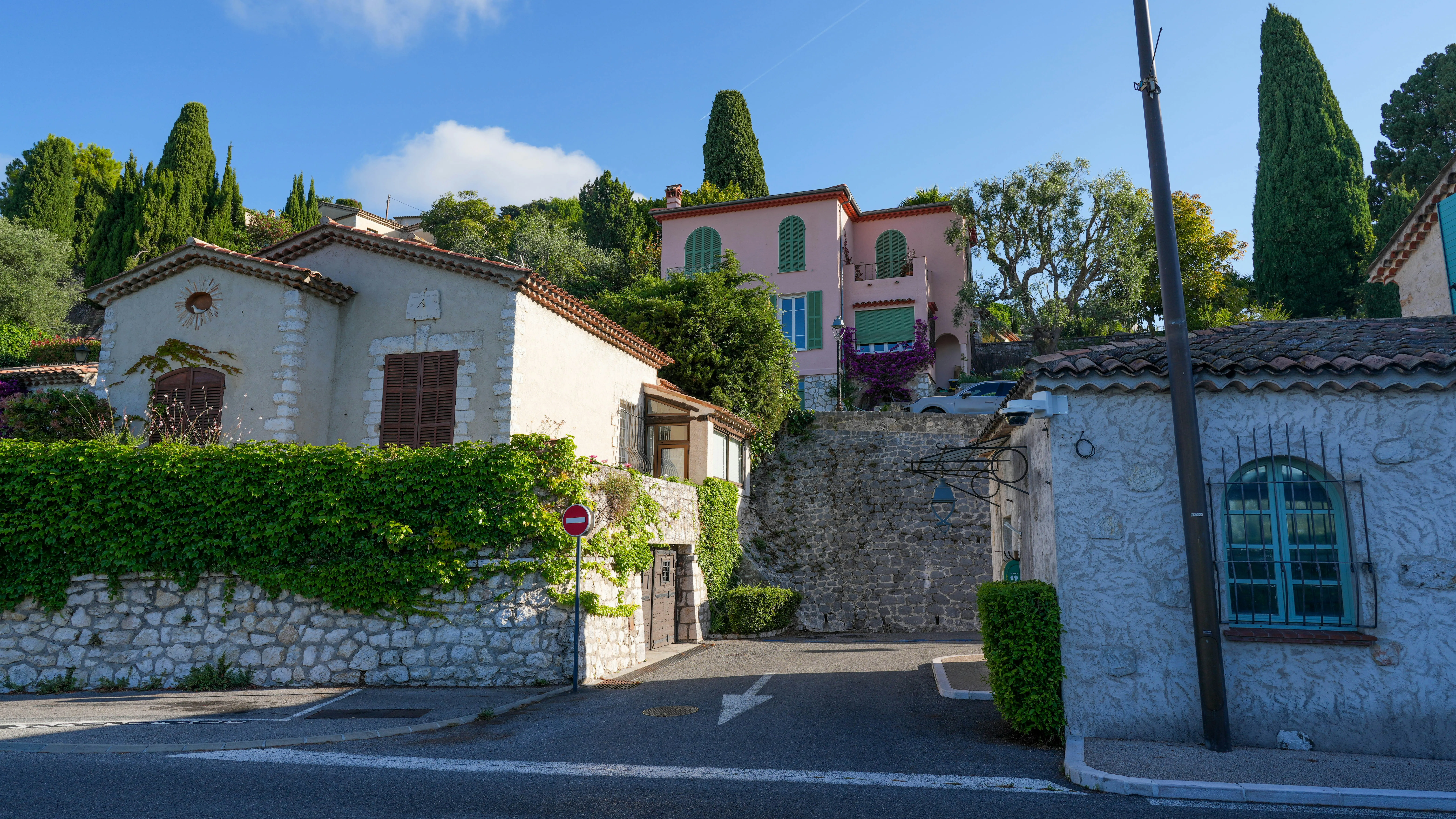
How to Choose Where to Live in France: A Decision Framework for American Retirees
The right place in France isn't the one that dazzled you in June. It's the one that still works on an ordinary Tuesday in February. A decision framework for retirees.
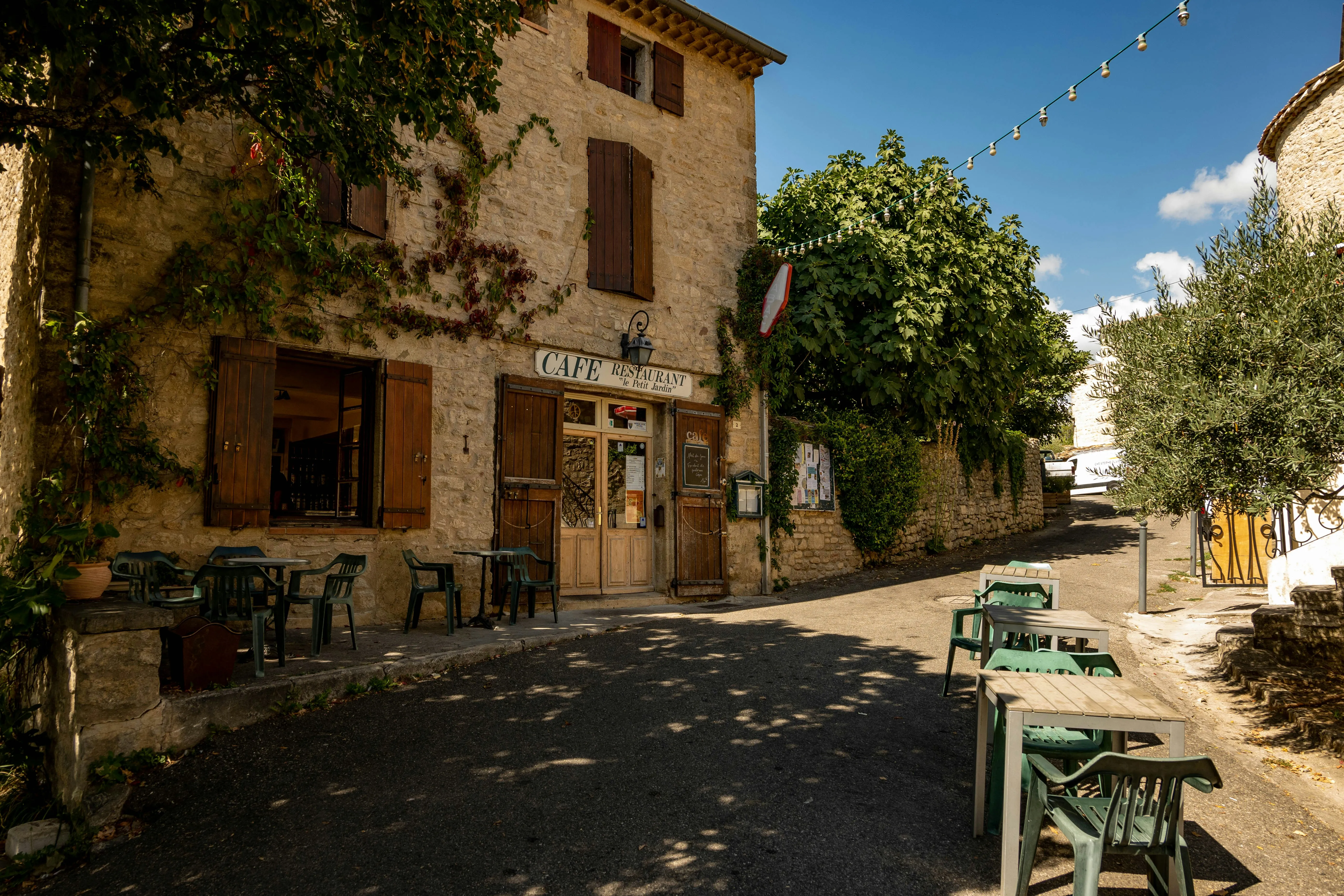
The right place in France is not necessarily the one that dazzled you for five days in June. It's the one that still works on an ordinary Tuesday in February, when it's gray, you have a doctor's appointment across town, the weekly market is three days away, and several of the restaurants you loved in summer are closed for the season.
It's easy to choose a French town the way you'd choose a vacation, and then have to live there. This guide is about closing that gap. It won't tell you where to go, because only you know how you actually want to spend a week. What it can do is give you a way to decide that survives contact with real life.
Why holiday impressions mislead
Picture the same town two ways. You visit for five days in June: long dinners outside, the light on the old stone, a market spilling into the square. Now picture living there through February: the terrace furniture put away, a forty-minute drive to the nearest specialist, the square quiet, the friends you'd have made all gone home until Easter. The second is closer to the version you'll meet in ordinary life, and it's the one that decides whether you're happy.
Choosing a place to retire is less like choosing a vacation and more like choosing where your daily life will actually happen. On a visit, people overvalue what a holiday is built around: beauty, the weather that week, the restaurants, the sea nearby, the feeling of a property listing. They undervalue what a life is built around: getting to a doctor, getting around without a car you may not always drive, having a social world in November, reaching an airport that flies where you need it, and the slow practical questions of growing older somewhere. None of that shows up in five sunny days. Most of it shows up by the second winter.
Start with the life, not the map
Before you look at a single town, answer a harder question: what do you want an ordinary week to look like?
Describe the Tuesday, not the highlight reel. Do you want to walk to the café, the pharmacy, and the doctor, or are you happy driving for everything? A garden and space, or less house and less to maintain? Something on the calendar midweek, or is quiet the point? How often will you fly back to the US, and how often will family come to you? Full year, or splitting it? A life among French neighbors, other Americans, or a mix? And the question couples skip: do the two of you even want the same things?
"We want the South of France" is not yet a usable requirement. It's a mood. The work is turning the mood into specifics. "We want peace and quiet" often really means "we don't want traffic outside the house, but we'd still like to walk to dinner," which points at a small town, not a remote farmhouse. Those are different lives with different problems, and the gap between them is where people get it wrong.
Sort your wishes into three piles
Take every preference you have and sort it into one of three piles. Be ruthless about which pile each one goes in, because the piles behave very differently.
| Pile | What it means | Examples |
|---|---|---|
| Non-negotiables | The move doesn't work without it | A hospital with the care you'll need within a reasonable drive; no daily driving required; a direct train to Paris; a real international airport within 90 minutes; shops and restaurants open year-round; a home inside your budget; being near your kids |
| Strong preferences | Important, but you'd trade it | A sea view; a weekly market; an international community; historic streets; golf or hiking or sailing; mild winters; a detached house; a big garden |
| Holiday fantasies | Lovely, but they won't shape your daily happiness | The postcard village; vineyard views; being "completely authentic"; five minutes from the beach; the enormous old stone house; the town that feels magical in August |
The mistake is letting a fantasy pose as a non-negotiable. A view can be a reason to buy a particular house. It is rarely a reason to choose a region. If your non-negotiables list runs past about six items, some of them belong in another pile, and catching that is the whole point of the exercise.
The trade-offs that shape the decision
You don't need to review forty towns. You need to understand a handful of trade-offs, because almost every French location is some blend of them. And they are spectrums, not switches: many of the happiest choices are hybrids, a small city ringed by countryside, a village fifteen minutes from a service town, an inland town half an hour from the sea.
City or village. A regional city is more likely to give you walkability, specialist healthcare, public transport, and an easier social life, usually at a higher price and with less space. A village is more likely to give you room, quiet, nature, and a tighter local community, often at the cost of more driving, fewer medical specialists, and a house that asks more of you. Neither is better. Rural life rewards people who actively want the rural lifestyle, and frustrates people who only wanted the rural house. If deep community, space, and quiet are what you're genuinely after, a village can deliver a daily life a city never will.
Coast or inland. Many sought-after coastal markets come with higher prices, summer congestion, off-season shutters, and a commerce built around tourists. But the French coast isn't one place: the Mediterranean, the Atlantic southwest, and the Channel coasts differ enormously in price, weather, and season. The question to sit with is whether you're choosing the coast because you'll use the sea, or because "the sea" is what retirement looks like in your imagination.
Well-known name or quiet town. A well-known destination tends to offer an established international community, English-speaking professionals, more services, and a broader pool of buyers if you ever sell, alongside higher prices and summer crowds. A lesser-known town can offer better daily value, though in some of them daily life will ask more French of you and more deliberate effort to build a circle. Neither is virtuous.
Expat community or immersion. An English-speaking community gives you a soft landing: quick social connections, practical advice, someone who's already found the good electrician. It can also become a bubble, a social world floating slightly above the local one. Immersion isn't a merit badge, and the useful question isn't whether a town has expats. It's whether you'll have realistic ways to build relationships, and the best answer usually mixes French neighbors, other internationals, and a few fellow Americans.
Eight things to actually check
Standing in a candidate town, these eight dimensions separate a place that photographs well from one that runs well. Where a dimension is broad, break it into the parts that matter to you, because a single "healthcare" verdict can hide a town with a fine hospital and no GP taking patients.
1. Healthcare. Not just whether there's a hospital, but whether the care you'll actually need is realistically reachable, and whether it has the specialties you use. Check the distance to a GP and whether local doctors are taking new patients, which can be hard in France's medically underserved areas. Check pharmacies, the nearest appropriate hospital, out-of-hours care, and how you'd reach all of it if one of you couldn't drive. Our healthcare guide covers how the system works once you're in it.
2. Daily mobility. Walk from a realistic neighborhood to the grocery store and notice the slope, the sidewalks, the distance. Check whether buses run outside commuter hours and whether taxis exist. Then ask the question people skip: if one of you eventually stops driving, does this place still work? Choose not only for how mobile you are now, but for how you may be living in ten years. That reframing changes more decisions than anything else on this list.
3. Connections to the outside world. Distance to an airport and usefulness of an airport are different things. A nearby regional airport helps only if its routes, frequency, and operating season fit the journeys you'll actually make. Look at direct routes, winter schedules, the real door-to-door time to the US, and whether a TGV station nearby does more for you than a small airport an hour away.
4. Year-round life. Picture the town in November. How many restaurants are open midweek, is there a market, a cultural calendar, a resident population rather than a summer one? Plenty of places feel electric in July because visitors triple the population, then empty out by October into somewhere much quieter than the brochure.
5. The true cost of the home. Not the purchase price. The whole running cost: property taxes (taxe foncière), the building fees if it's an apartment (charges de copropriété), heating a stone house through a damp winter, the garden and the pool, insurance, regular chimney sweeping (generally required at least annually, sometimes more under local rules), and the second car a remote house quietly requires. The cheapest house can create the most expensive lifestyle.
6. Which bad weather you can live with. Look past annual sunshine totals. Depending on the exact location, the hard season may mean summer heat and wildfire exposure, winter rain, persistent wind, humidity, flooding, or mosquitoes. These vary at a very local level, so check the specific town rather than trusting a regional stereotype. The useful question is which of these you mind least, because you'll get a few months of one of them.
7. Social life and belonging. Are there clubs and associations, recurring activities, a permanent population? Are newcomers welcomed, and is French needed to take part? Is there enough for both of you: one partner may be content in the garden while the other needs museums, a class, and a wider circle, which is one of the conversations worth having before you move at all. A place that works for one of you and starves the other creates tension over time.
8. Everyday infrastructure. Banking, decent internet and mobile coverage, tradespeople who show up, groceries, home help if you'll want it, a vet, and English-speaking professionals where you'll actually need them. Larger towns often have more alternatives when one provider falls through, though that still needs checking locally.
How to build a shortlist and score it
Work from broad to narrow, never the other way.
- Pick the type of life first. From the trade-offs above, choose the shape you want: a walkable regional city, a smaller town on a train line, a coastal town, a village near a service center, or the edge of a bigger city.
- Narrow to two or three regions. Use the things that are hard to change: climate, transport, budget, landscape, and distance to family or an airport.
- Pick three contrasting candidates. Deliberately different from one another, so the comparison teaches you something: one larger city, one medium town, one rural or coastal option.
If building that shortlist from a blank map feels daunting, this is exactly what we built our Find Your France tool to do. You describe the life you want, and it surfaces French towns that fit, scored on the kind of criteria below, so you start from a handful of real candidates instead of the whole country.
Then score each against the eight dimensions. Give each dimension an importance from 1 to 5, based on how much it matters to you. Score each town from 1 to 5 on how well it delivers. Multiply importance by score, add down the column, and the bottom row is your weighted total. Here it is with illustrative numbers, for a walkable city (A), a mid-size town on a train line (B), and a rural option (C):
| Dimension | Importance | Town A | Town B | Town C |
|---|---|---|---|---|
| Healthcare | 5 | 5 | 4 | 2 |
| Daily mobility | 5 | 5 | 4 | 2 |
| Connections (airport, train) | 4 | 4 | 4 | 2 |
| Year-round life | 3 | 4 | 4 | 3 |
| Cost of the home | 4 | 2 | 3 | 5 |
| Climate | 3 | 3 | 4 | 4 |
| Community | 3 | 3 | 4 | 5 |
| Infrastructure | 2 | 5 | 4 | 3 |
| Weighted total | 114 | 112 | 90 |
Set the importance column yourself, and the whole table moves. Someone flying home three times a year rates connections a 5; someone who never will drops it to a 2. Notice what the grid does here: it puts the city and the town neck and neck, so the choice between them comes down to what you weighted, not to a winner it picked for you. The rural option scores lower overall, but it owns cost, community, and climate. If those are the three things you're really optimizing for, that low total isn't telling you to cross it off. It's telling you to look harder at your own weights.
Visit as a resident, not a tourist
This is where the real value is, and where most people waste the trip by having a lovely holiday instead of a useful one.
Don't stay in the best hotel in the historic center. Stay in a normal neighborhood, near the kind of home you could actually afford, and spend the days running errands rather than sightseeing. And spread the visit across the parts of the week that behave differently:
- A weekday. Buy groceries, walk to a pharmacy, take the bus, drive to the hospital and time it, go to the train station and picture it with luggage in the cold. Sit in the square on a wet Tuesday evening, not a sunny Saturday. Check whether your phone works in the house.
- Saturday. See the market, the crowds, the parking, the town at its liveliest.
- Sunday. Find out what's actually open, and how much the transport thins out.
- The off-season, on a second trip if you can. For the south, compare July with a gray week in February. For a tourist town, compare August with November, when you learn how many of those charming shops stay open.
The measure at the end of a day isn't whether you enjoyed it. It's whether you could run your life here. Stay long enough to get past the surface, too: a weekend tells you whether a place is pretty, and four to seven days per serious candidate begins to tell you whether it's livable. The first couple of days are mostly novelty. The ordinary annoyances take a little longer to surface.
While you're there, talk to people who have reasons to tell you different things: recent arrivals, long-time foreign residents, French neighbors, the shopkeeper, and, most usefully, someone who tried this town and left. People who love a place will sell you its summer. People who left will tell you about the winter closures, the drive to the specialist, the maintenance that ate their weekends. Just remember that anecdotes are evidence, not verdicts. One person who never settled in doesn't prove the town is cold.
How to check a place from home
You can rule out a lot before you ever book a flight. A few French tools worth knowing:
- Doctolib and ameli.fr for whether doctors near a town are taking patients, and where the pharmacies and practitioners are. Doctolib is the main appointment-booking platform; ameli.fr is the public health-insurance site.
- SNCF Connect for real train frequencies and journey times, not just "there's a station."
- The airport's own site for which destinations run year-round, rather than distance on a map.
- Géoportail and Géorisques for location-specific risk. Géoportail is the official government mapping portal; Géorisques looks up flooding, wildfire, and ground-subsidence risk by address.
- The town or intercommunal website for buses, associations, and services.
- ARCEP's Ma connexion internet and Mon réseau mobile for broadband and cell coverage at a specific address. ARCEP is the French telecoms regulator, and both tools map coverage down to the street.
- DVF and the listing portals for what places have actually sold for. DVF (Demandes de Valeurs Foncières) is the government's public database of real recorded sale prices, so you can compare asking prices against what buyers really paid.
Rent before you buy
If you take one recommendation from this guide, take this one: avoid making the location decision permanent before you've lived ordinary life there, ideally across more than one season.
For most newcomers, the right sequence is to choose a region, rent for six to twelve months, live through the seasons, learn the roads and the healthcare network and where daily life really happens, and only then decide whether and where to buy. A scouting trip is good at helping you reject the wrong places. Renting is the best way to test whether the right one really works. Your first rental doesn't have to be your forever home, and it's better if you don't treat it as one. If you learn you were wrong, you walk away from a lease, not from a house you may need to sell, with transaction costs and no guarantee of a quick exit. We made the fuller case in rent or buy when retiring to France.
The mistakes that come up again and again
- Choosing the house before the place. Falling for a property and building a life around it backwards.
- Choosing for summer. Assuming the July version of a town is the year-round one.
- Optimizing for your visitors. Picking somewhere impressive for children who come twice a year instead of somewhere that works for you, who live there daily.
- Assuming you'll always drive easily. Ignoring age, eyesight, illness, and the loss of one driver in a couple.
- Counting an airport because it's close. Ignoring where it flies, how often, and whether the routes vanish in winter.
- Assuming beauty makes community. A gorgeous village can be a lonely one.
- Overestimating the English. The waiter's English is not the English you'll need for a contractor, a specialist, or the tax office.
- Underestimating an old house. The pool, the garden, the stone walls, the roof, the heating, the septic tank: each is another job.
- Copying someone else's answer. A town that suits one retiree can be wrong for you, because your legs, budget, French, and social needs aren't theirs.
You don't have to get it perfect
The anxiety in all of this comes from one false belief: that you have to identify the single right town before you move, from four thousand miles away, and live with the result. You don't. Choose a good first base, rent it, live through a winter, and let the place show you what you got right before you commit to anything permanent. If you want a starting point, our Find Your France tool sorts towns by the criteria in this guide, so your shortlist begins from how you want to live rather than from a map of everywhere.
Get the first base right, keep it reversible, and France gives you the rest of your life to find the place that's truly yours.