The feel
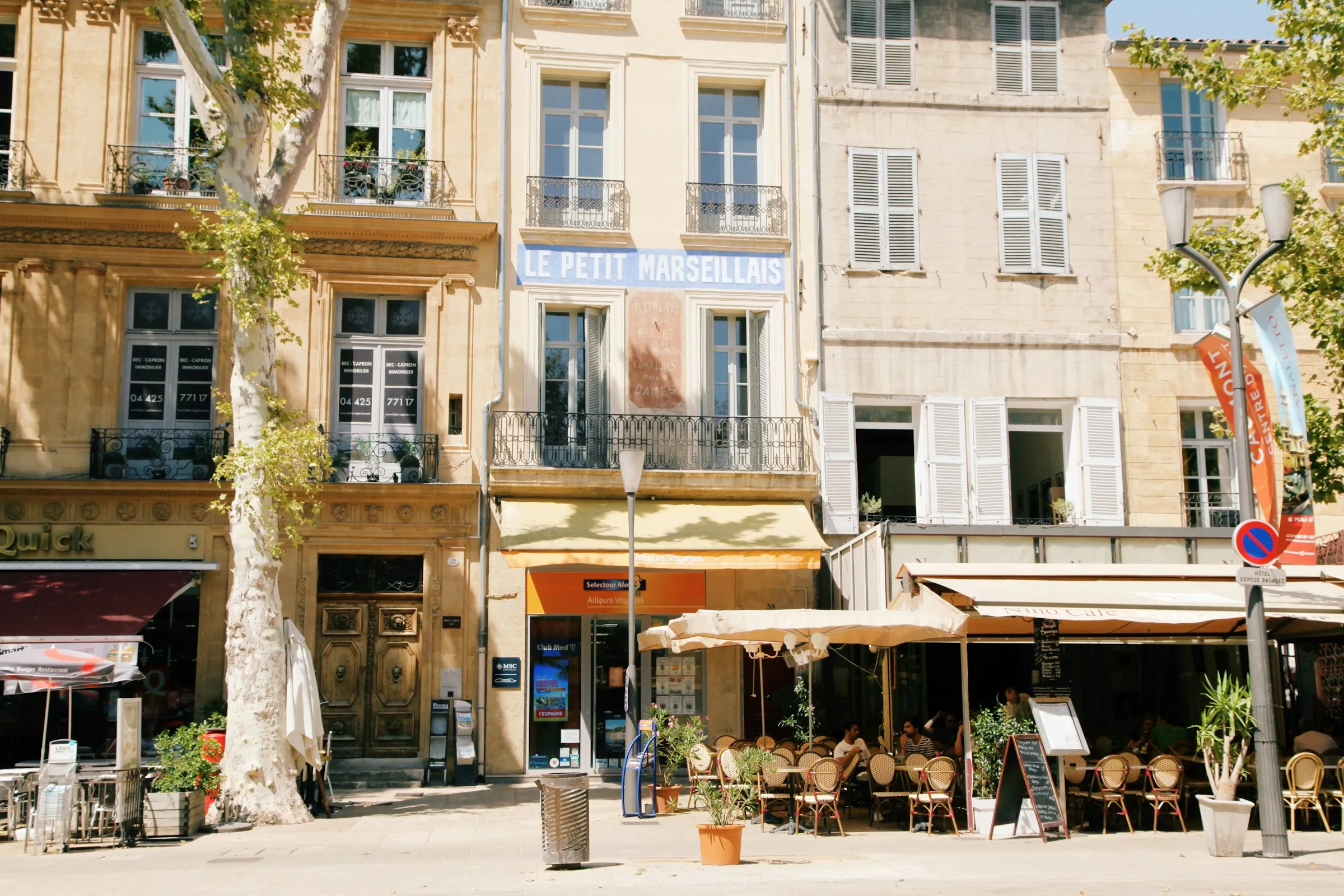
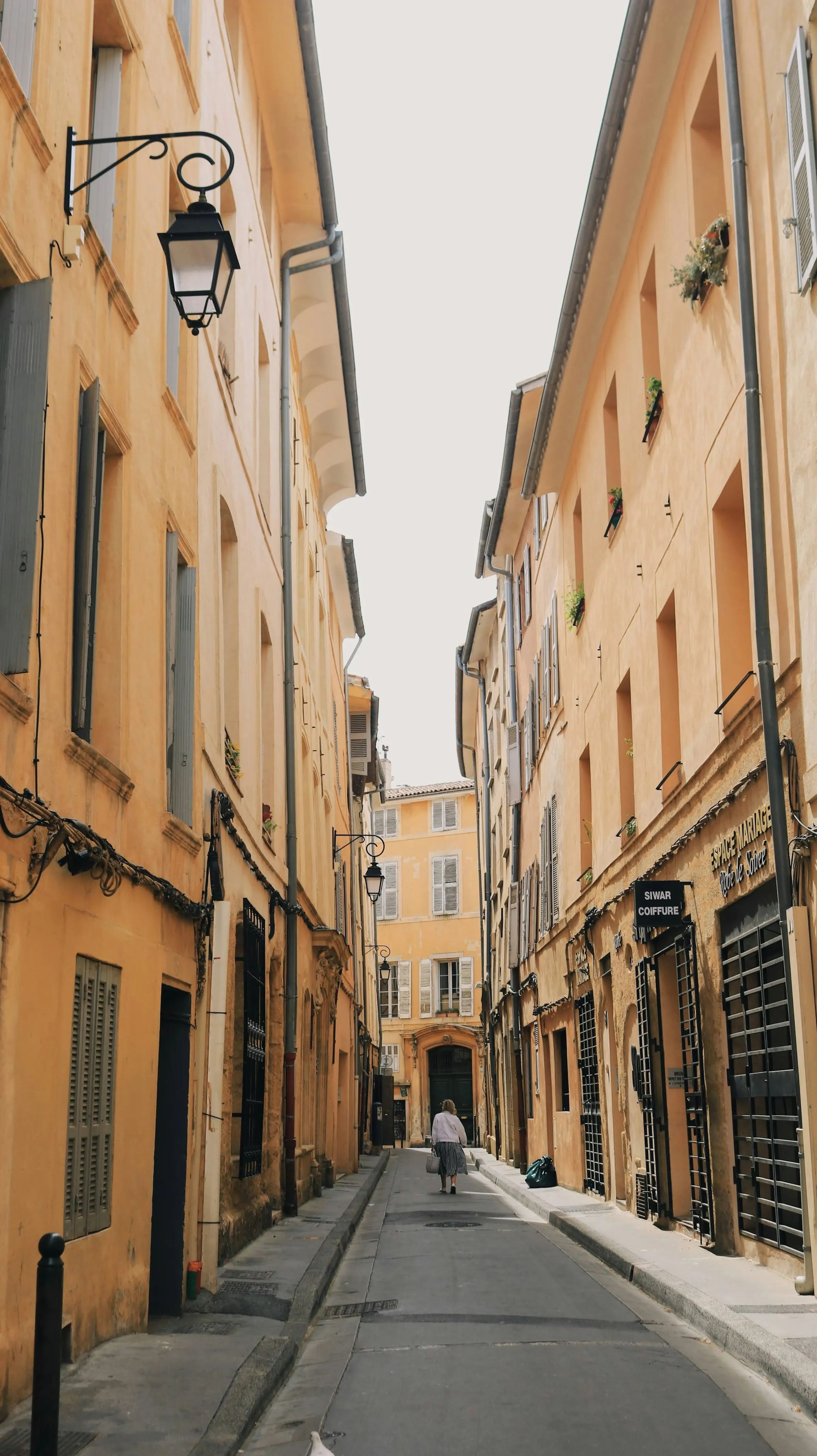
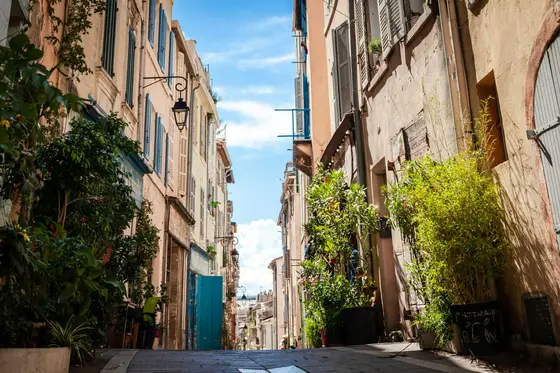
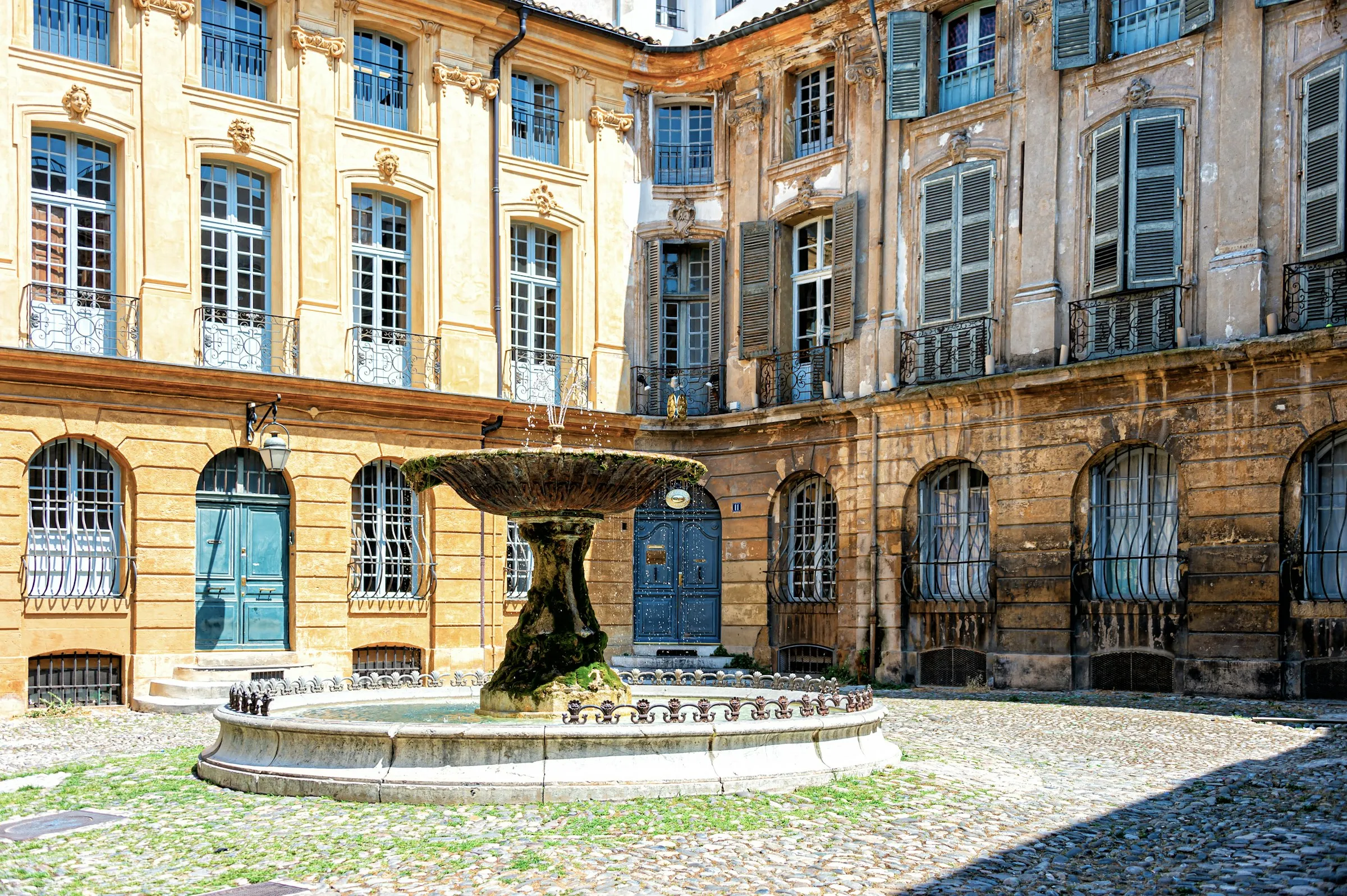
Aix has been comfortable for centuries. This was the old capital of Provence, and the inheritance shows: a fountain at nearly every corner, and a boulevard — the Cours Mirabeau — built for the specific purpose of walking slowly under plane trees. Cézanne grew up here and spent a lifetime painting the mountain at the end of the road. It is a real city of about 150,000, yet the historic core works like a town — compact, flat, walkable end to end. The polish is the point — and the caveat.
Market day
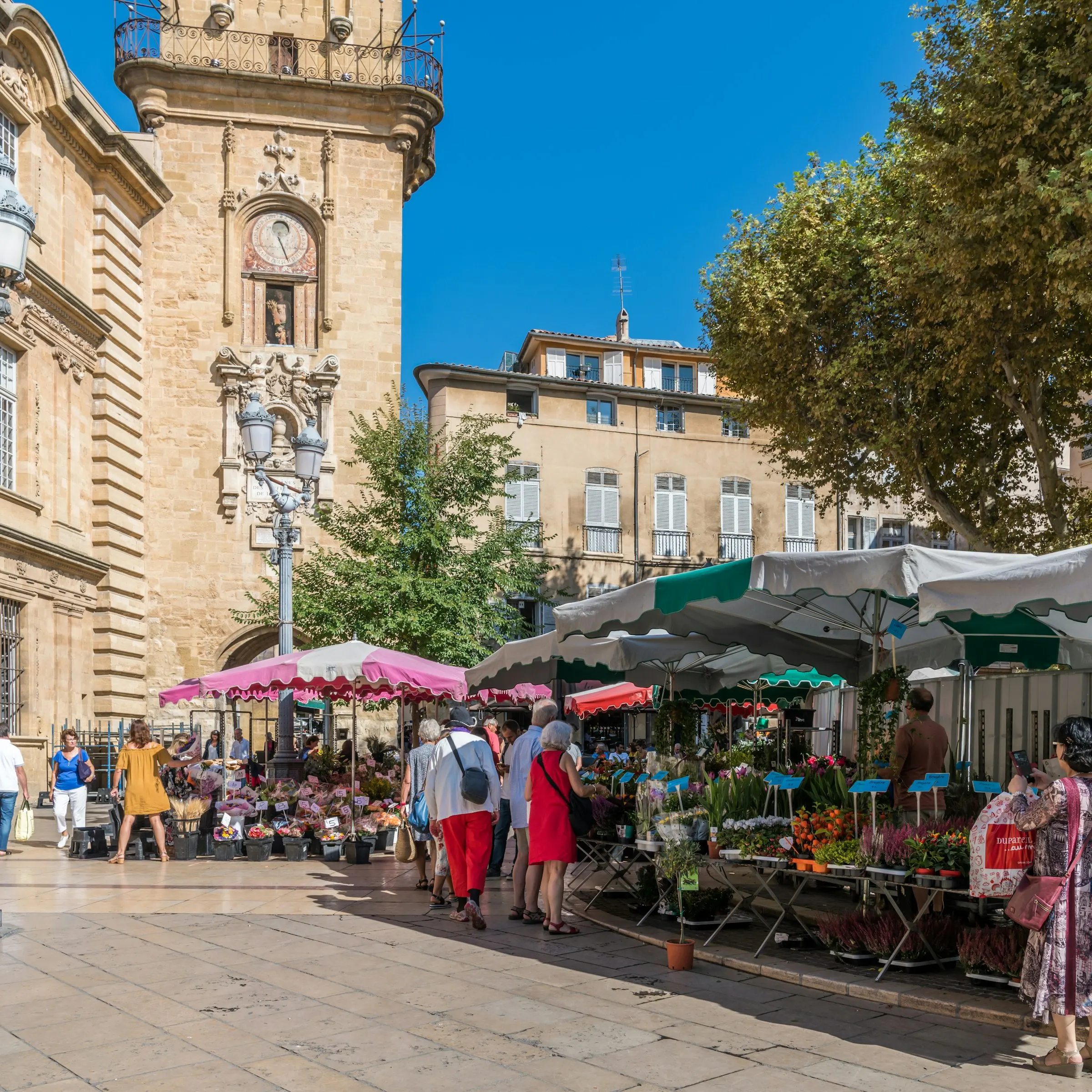
Every day. That is the luxury: the Place Richelme food market sets up every morning of the year — goat cheese, olives, whatever came out of the ground this week — and packs up by one. Tuesdays, Thursdays, and Saturdays, the bigger version spreads across the Place des Prêcheurs and the Place de la Madeleine, flowers, linens, and antiques joining in. In a village, market day is the event you build a week around; in Aix it is simply how you shop.
Where your coffee happens
On the Cours Mirabeau if you want the full parade, mossy fountain and all — at parade prices. On the Place Richelme once the stalls come down and the square turns from commerce to café. Or on a smaller square deeper in the old town, where nobody is performing anything.
A Saturday here
The grand market first. Then the afternoon everyone adopts: out to the Montagne Sainte-Victoire, the limestone ridge Cézanne painted more than sixty times, for a walk on its lower trails. Back for a film in version originale — four cinemas, three of them art-house, keep undubbed English-language films routine. In July, forget all that: the opera festival takes over for three weeks and the town's courtyards become theatres.
The year, honestly
The numbers come from Aix's own Météo-France station just outside town: about 2,870 hours of sun and a genuinely long hot season — 55 days over 30 °C, nearly four months' worth over 25. July is festival month, glorious and elbow-to-elbow. The surprise is the other end: Aix sits inland, off the coast's thermostat, and logs around 43 mornings of frost a year — winter is bright, dry, and colder than the postcards admit, especially when the mistral is working. But the city never empties: second homes are just 7% of housing, one of France's largest universities keeps its students here through February, and the cultural calendar has no real off switch.
Who thrives here
People who want a city, not a village — bookshops, specialists, opera — and want to live it entirely on foot. People for whom healthcare is the quiet first question: the hospital is eight minutes away, Marseille's university hospital about 25, and the Anglo-American Group of Provence — headquartered here — keeps member directories of English-speaking doctors, dentists, and tradespeople; even the US Consulate's medical list includes Aix practitioners. Add an Anglican congregation, and this is the most organized soft landing in the south — in a city that stays unmistakably French.
Think twice if
Money gets the deciding vote: at roughly €5,000 per square metre to buy and €19 to rent, this is one of France's priciest cities outside Paris. You're chasing deep France — Aix is polished, international, and can feel like a beautifully maintained bubble. You plan to drive daily: traffic and parking are notorious, and a car in the old town is a liability. Or you want village intimacy — a city this size will give you a regular café, but it will not learn your name. Petty theft runs at ordinary city levels: you'll lock things.
The orbit
Marseille is the counterweight — about 25 minutes to its university hospital, with the big-city everything Aix delegates downhill. Marseille Provence airport, 30 minutes away, gets you home with one stop through a European hub; the TGV reaches Paris in just under three hours. The day trips are almost unfair: Sainte-Victoire on the doorstep, Lourmarin about 40 minutes north with the deeper Luberon beyond it, Cassis and the calanques about 40 minutes south.
The Aelos view
Aix is our default answer when a member wants France with nothing given up — walkable streets and real opera, a daily market and serious medicine, and the deepest American support network in Provence. The catch is simply the price, in euros and in polish. If your dream is being the only American in a shuttered village, we'll steer you elsewhere; if it's a long, interesting life lived on foot, Aix is as close to a sure thing as the south offers.