The feel
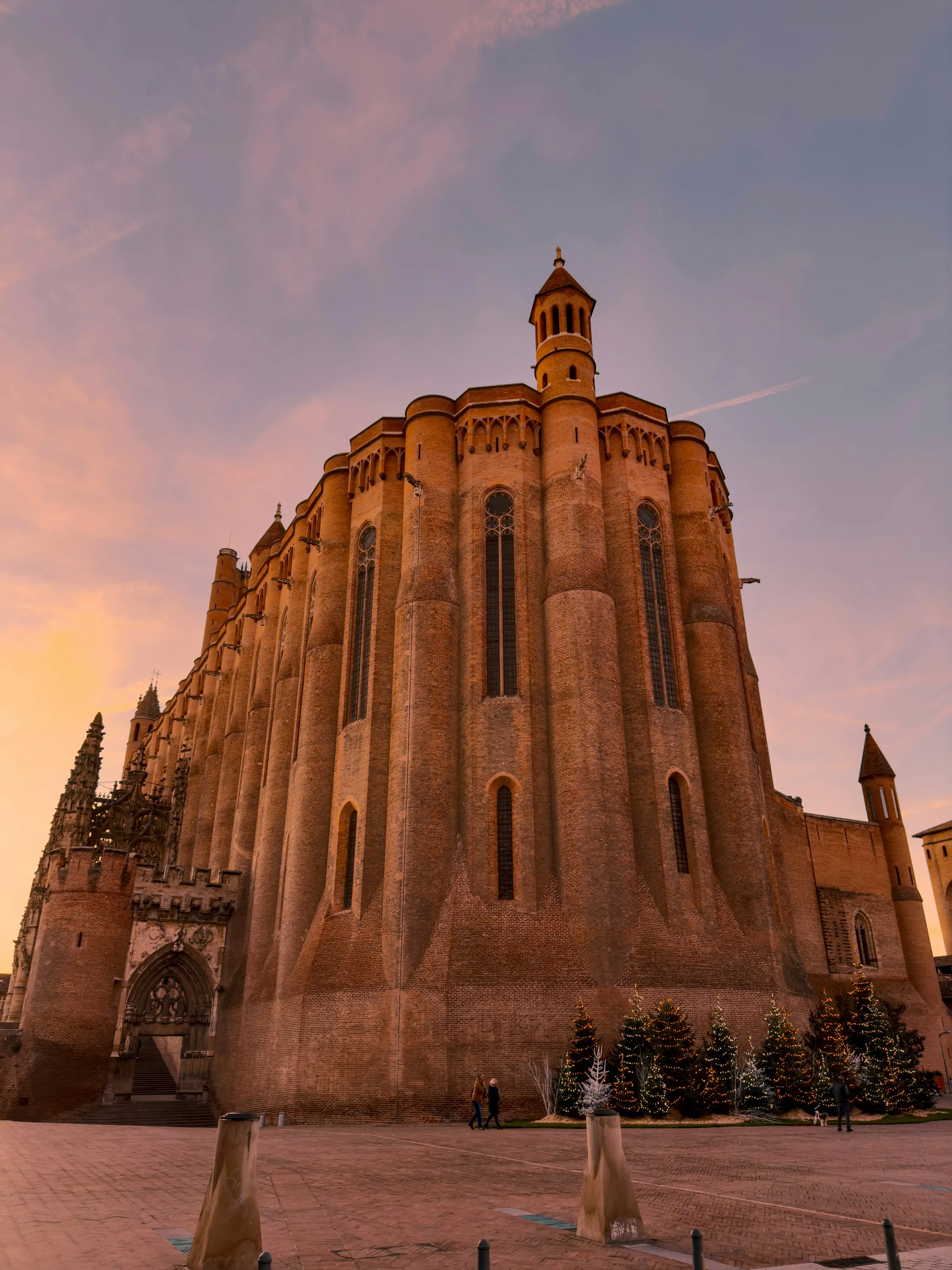
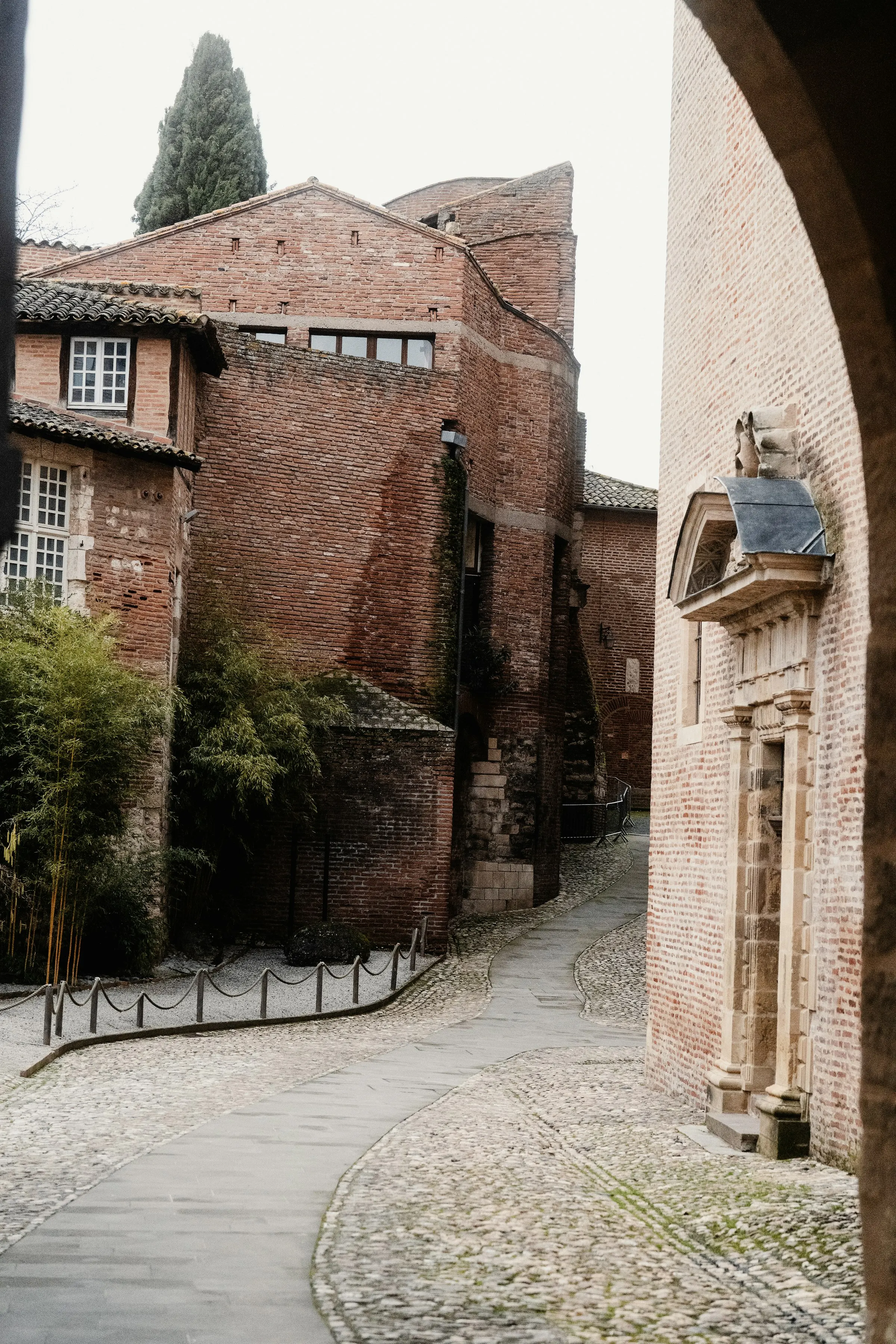
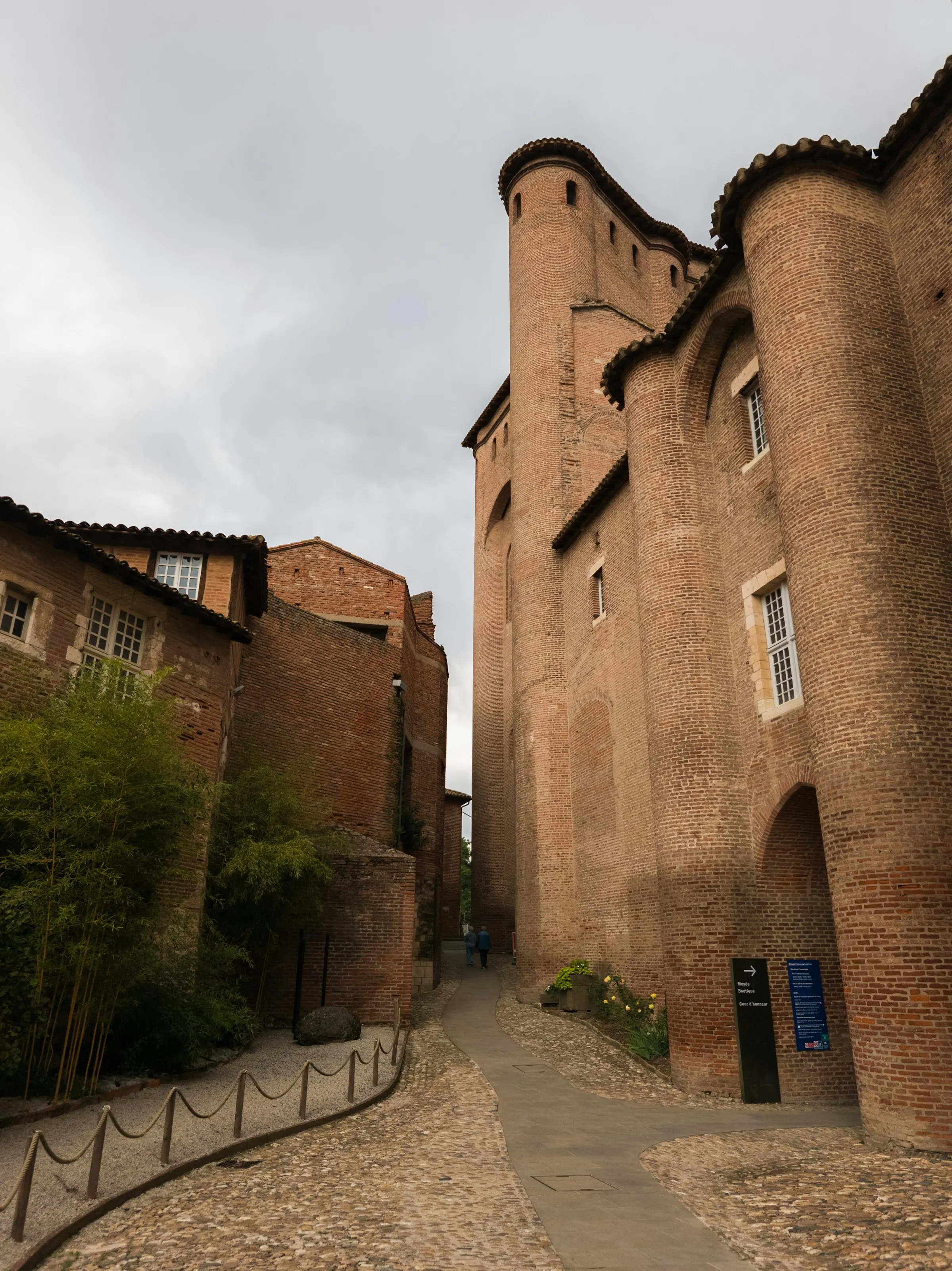
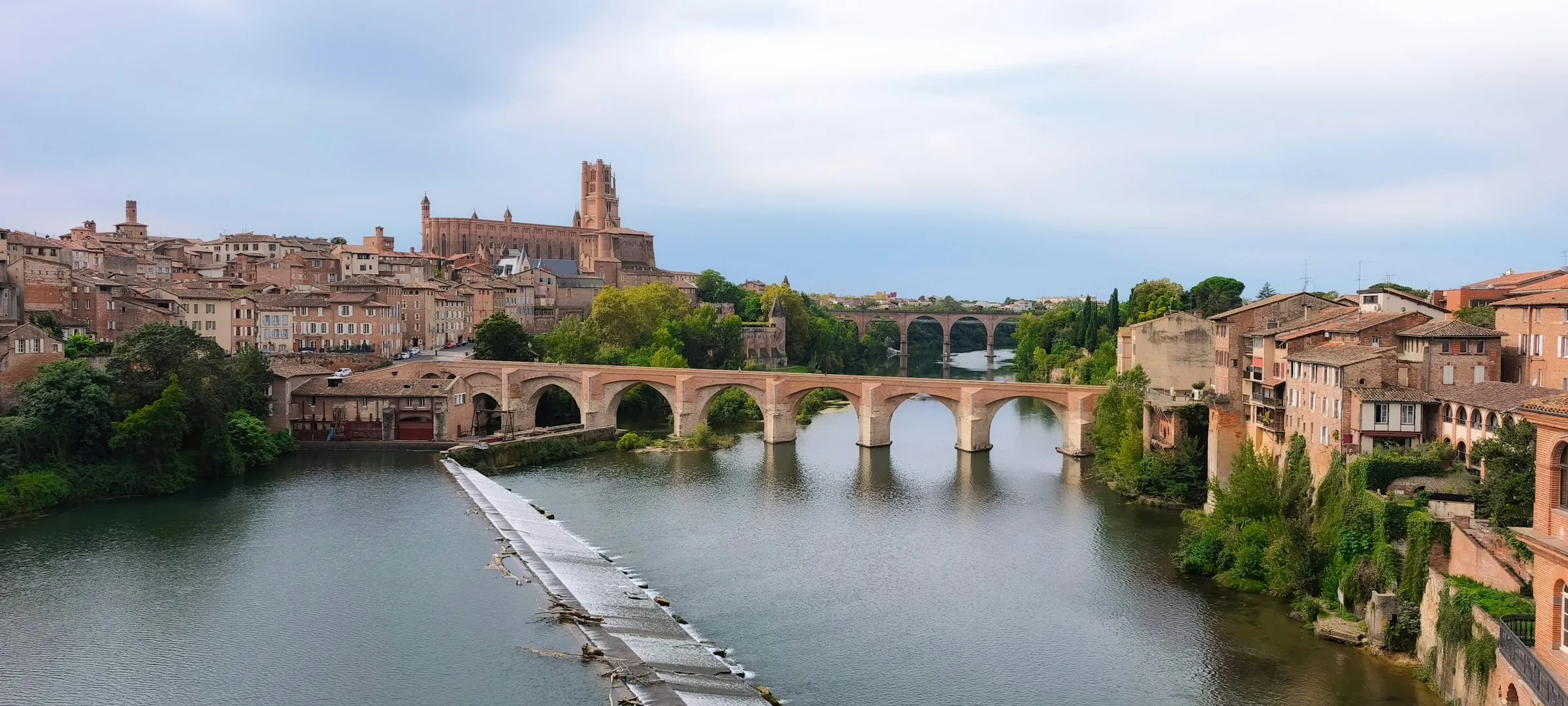
Everything here is brick — rose at midday, ember at dusk — and all of it answers to Sainte-Cécile, a cathedral raised like a fortress and visible from every approach. Below it the Tarn slides under the Pont Vieux, a bridge that has been doing this since the eleventh century. What surprises you after the architecture is the ordinariness, in the best sense: Albi is the working prefecture of the Tarn, a city of 51,000 where the UNESCO quarter is simply the neighborhood you cross to buy bread. About 4 percent of homes here are second homes — the crowds visit, but they don't own the place.
Market day
The covered market, a Baltard-style pavilion of iron and brick, raised between 1903 and 1905, sits fifty meters from the cathedral and opens Tuesday through Sunday morning — a couple dozen permanent traders: market gardeners, a fishmonger, cheesemakers, charcuterie, a pastry counter. On Saturday mornings an open-air market wraps the streets around it. The rhythm this sets is daily rather than weekly: you don't wait for market day in Albi so much as decide which one.
Where your coffee happens
On the Place du Vigan, the broad square with the fountain where Albi runs its errands — cafés along the edges, locals at the tables. Or up in the shadow of Sainte-Cécile, if you want the view working while you read.
A Saturday here
Market under the pavilion, then next door to the Palais de la Berbie, the thirteenth-century bishops' palace that now holds the largest public collection of Toulouse-Lautrec anywhere — he was born here, and the town has never quite gotten over it. The palace's terraced gardens above the Tarn stay free and open year-round. Cross the Pont Vieux, take the riverside path, and look back: the postcard assembles itself. Dinner early — this is not a late city.
The year, honestly
The Météo-France station at Le Séquestre aerodrome — effectively the edge of town — puts it plainly: about forty days a year over 30 °C, a real southwestern summer, though gentler than the Mediterranean's; and around 2,130 hours of sun, which is bright but not Provence. Rain falls on just over a hundred days, and winter brings nearly forty frosty mornings — expect a proper cold season with gray stretches, not the Riviera's stubborn blue. What winter does not bring is emptiness. With second homes at 4 percent and thirteen festivals spread across three seasons, November Albi is very nearly July Albi, minus the visitors around the cathedral.
Who thrives here
People who want small-city infrastructure underneath the beauty: a general hospital five minutes away, Toulouse's university hospitals about an hour, and — rarer — home-help and residential-care capacity that ranks near the top of the country for a city this size. People who use culture weekly, not annually: three cinemas, two of them art-house, with films screened in English. And people content to build a French life in French: there is an AVF newcomers' association, and an Anglican congregation worships out near Gaillac, but the American community here is essentially undocumented. You would be early.
Think twice if
You want an established English-speaking circle — Albi barely has one, and the US Embassy's regional list names exactly one English-speaking doctor in town. You wilt in heat: forty days over 30 °C is real. You won't drive — the old core walks beautifully, but the region, the airport, and much of daily life beyond the center ask for a car. Trips home weigh on you: every US flight from Toulouse routes one-stop through a hub, and the journey is long. And if you buy, survey carefully — the clay soils here carry strong shrink-swell exposure, and the Tarn has a flood history.
The orbit
Toulouse, about an hour away by direct train, roughly hourly — the university hospitals, the big-city Saturday, and Blagnac airport, about fifty-five minutes by car, with one-stop routings to the States. Cordes-sur-Ciel, the hilltop village, about twenty-five minutes. The Gaillac vineyards, practically next door. Paris, roughly six and a half hours by rail.
The Aelos view
Albi may be the best culture-per-euro ratio in the south of France: a UNESCO skyline, a world-class museum, and homes selling around €2,200 a square meter. We'd send members who want real immersion with real infrastructure — hospital, care capacity, art-house cinema — and who don't need an English-speaking safety net, because there isn't one yet. If you'll fly home often, or want company from day one, look toward the better-documented anglophone towns instead.