The feel
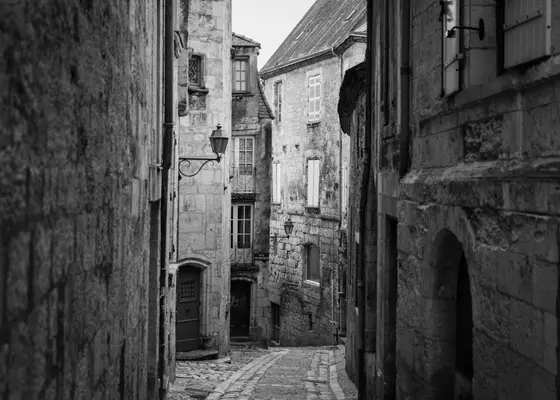
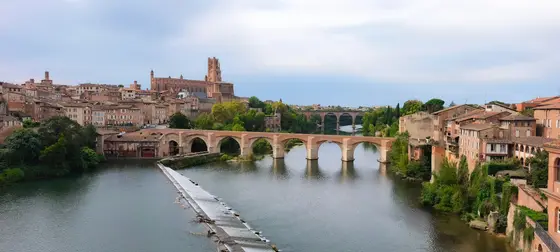
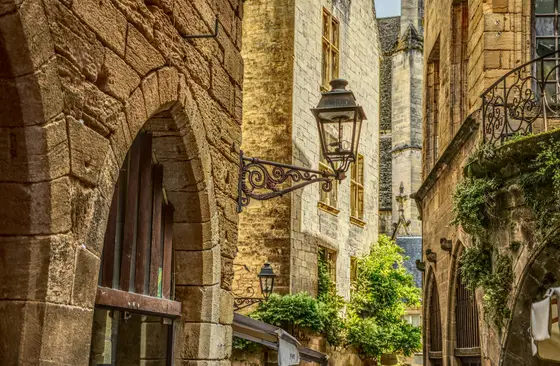
Bergerac is where the Dordogne gets things done. The old core earns the postcards — half-timbered lanes tipping down to the river, flat-bottomed gabarres tied up below the old bridge — but around it stands a working sub-prefecture of 27,000, with clinics, supermarkets, and traffic. That is exactly the point. This is the infrastructure capital of the anglophone Dordogne: a hospital in town, an airport ten minutes out, banks with English-speaking staff, English-language local papers — even the tax office has been known to field questions in English. You will hear English in the market queue. Most of it will be British.
Market day
Wednesday and Saturday mornings, seven to one, around Notre-Dame and spilling along Place Gambetta and Place Louis de la Bardonnie. Saturday is the full production; Wednesday the quieter rehearsal. The covered halle on the same square runs Tuesday through Saturday, mornings and again in the late afternoon, which matters more than it sounds: with second homes under 5 percent of housing, Bergerac is a town that shops for itself in February.
Where your coffee happens
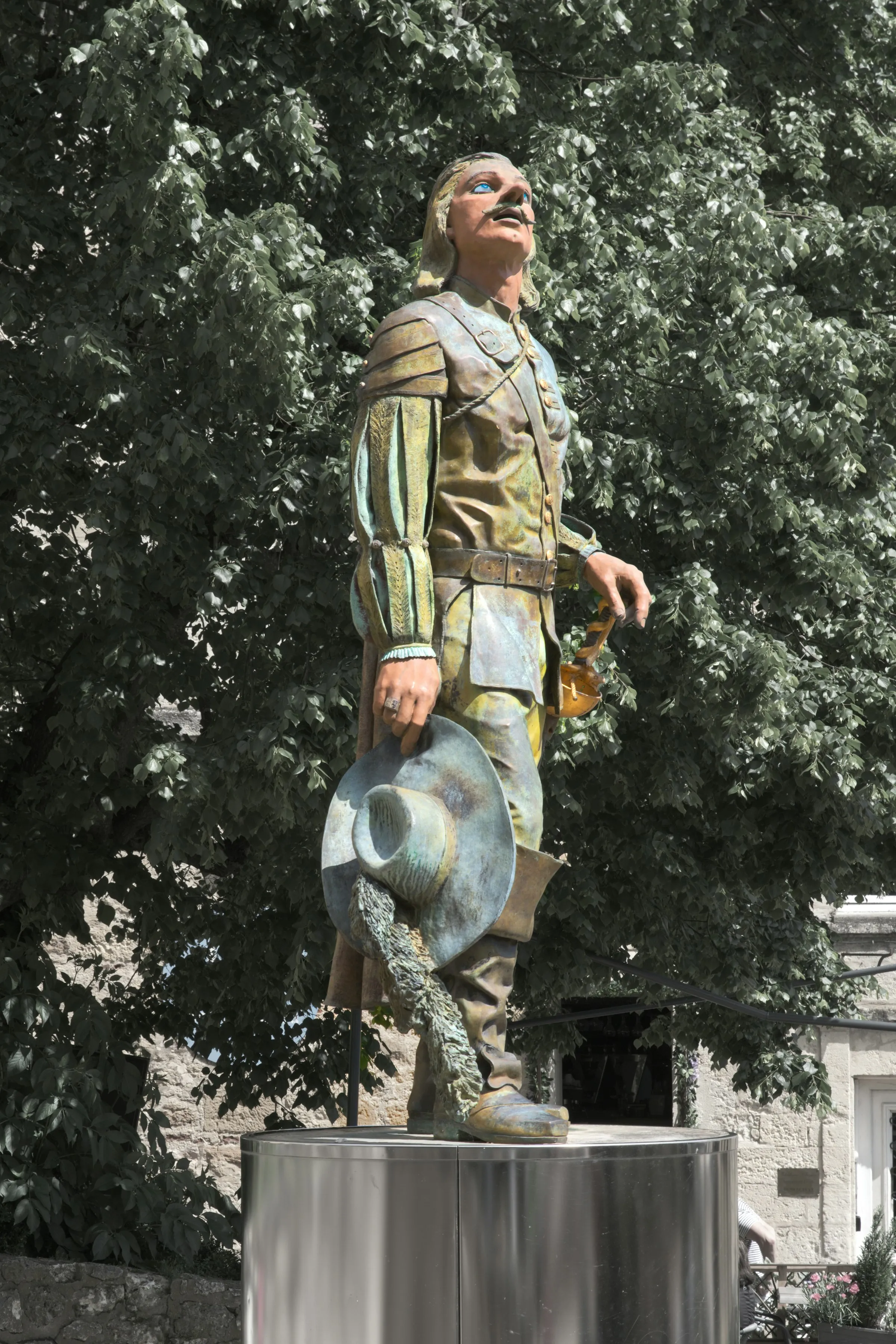
On Place Pélissière, under Saint-Jacques church, where Mauro Corda's sly bronze Cyrano holds court over the terraces — the man himself was a Parisian, but the town adopted him anyway. Or down on the quay, coffee facing the river.
A Saturday here
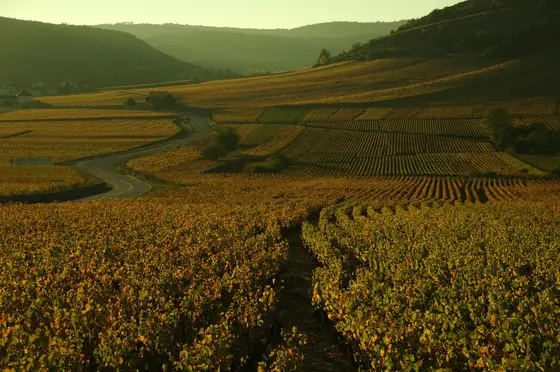
Market first, then the halle for what the stalls didn't cover. Walk it off through the lanes to the port — a gabarre trip in summer, the bank-side walk otherwise. The Maison des Vins, in the seventeenth-century Cloître des Récollets, makes the case that this is its own wine country — Monbazillac's sweet whites, Pécharmant's reds — and not Bordeaux's junior partner. In the afternoon, cross the river and test the argument on the Monbazillac slopes. Dinner back in the old town.
The year, honestly
The Météo-France station sits at Bergerac's own airport, just southeast of town, so the numbers are properly local: about 2,000 hours of sun a year, 114 days with rain, 50 mornings of frost, and 29 days over 30 °C. Read that honestly — real summer heat, and grey, damp winters the Mediterranean towns don't have. This is Atlantic France; the green river country is the receipt. July and August bring the river tourism and full terraces, festivals stretch across three seasons, and because the town's economy is its own, nothing shutters in November. Winter here is not lonely. It is just grey.
Who thrives here
People who want the Dordogne with the infrastructure attached — the couple who fell for the river country and then read the fine print about hospitals. Joiners: the Dordogne Ladies Club International keeps a Bergerac hub, the Dordogne Organisation of Gentlemen has met since 1987, Cancer Support France runs a south-Dordogne branch, and the Chaplaincy of Aquitaine holds services in English. Budget-minded buyers: recorded sales in town have averaged around €1,600 a square metre, rents about €11 — a fraction of what the fashionable south now asks. And the one cinema is an art-house that screens undubbed films.
Think twice if
You came for the postcard — Bergerac is a workaday town with a handsome core, not a golden-stone village; the villages are day trips. You're picturing an American community: the scene here is so British the area answers to "Dordogneshire," and you would be joining an English world, not finding an American one. You need winter sun — reread the numbers above. Your medical file is complicated: the Samuel Pozzi hospital in town covers everyday care, but university-level medicine means Bordeaux, about an hour and a half, GP coverage in the department is middling, and English-speaking doctors take persistence to find. And if a house by the water tempts you, take the flood maps seriously — the town's disaster record is mostly the river's doing.
The orbit
The airport, ten minutes out, flies budget routes mostly pointed at Britain; for the States, count on one stop through a hub. Bordeaux — the big city, the university hospital, the cancer center — is about an hour and a half. Paris is about three and three-quarter hours by rail, with a change. The postcard Périgord of Sarlat, cliff villages, and painted caves makes an easy day trip upriver; Saint-Émilion an easy one west. Monbazillac starts at the edge of town.
The Aelos view
Bergerac is the practical answer in a region most people choose romantically — hospital in town, airport in ten minutes, an anglophone support network that already exists, and prices that leave room for the rest of life. We send pragmatists here with confidence. Postcard-seekers get the honest version: live in Bergerac's orbit, not necessarily in Bergerac.