The feel
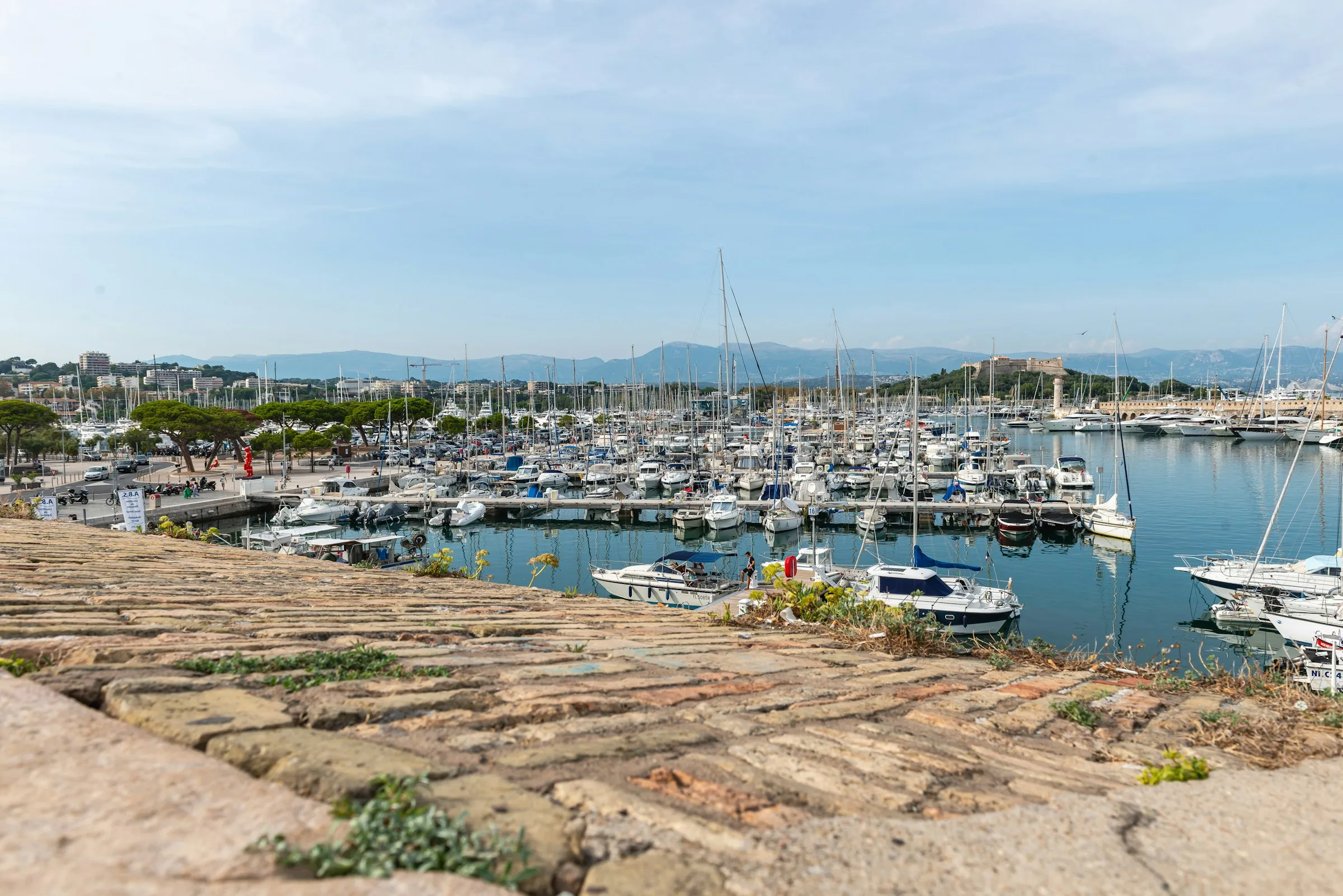
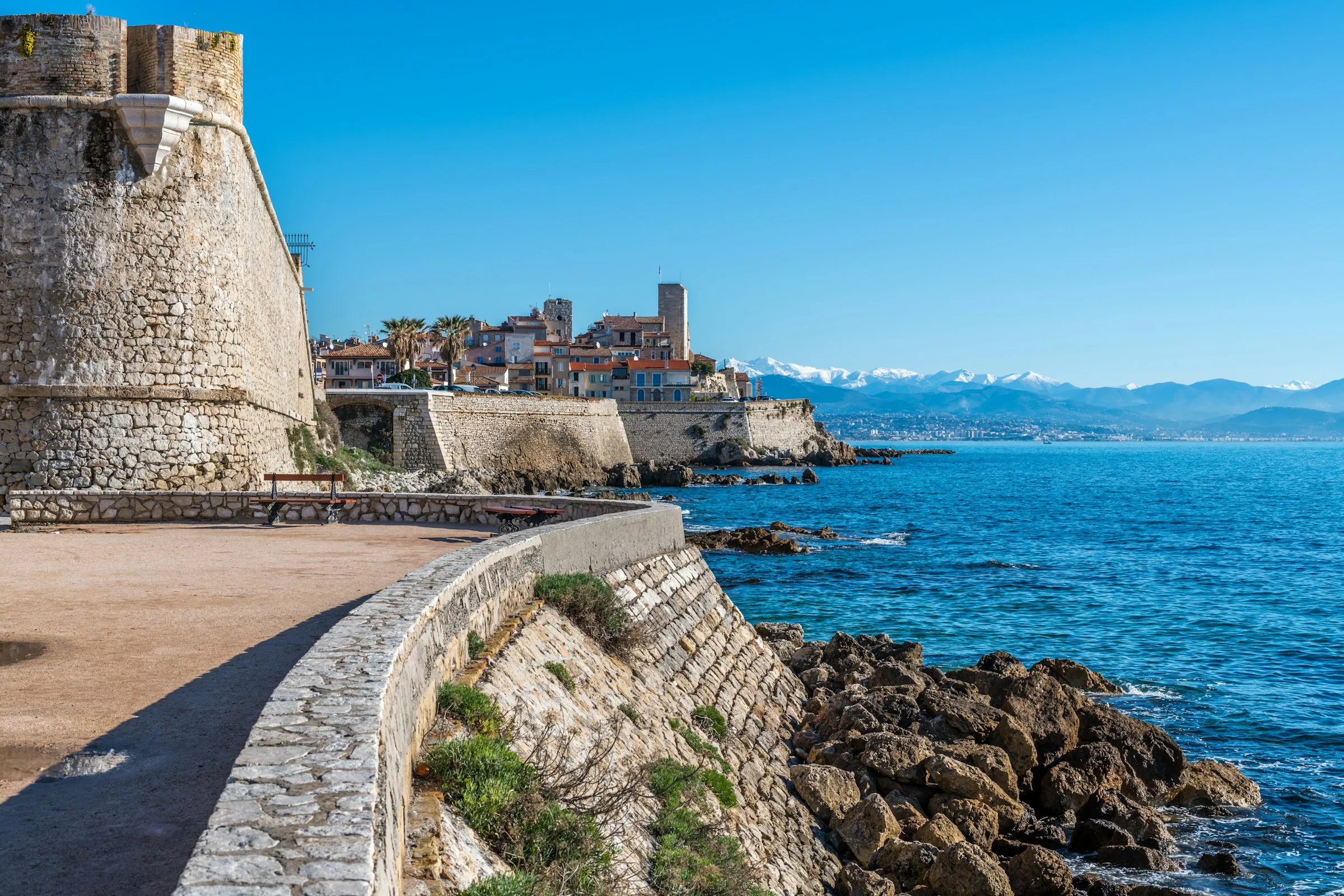
Antibes is what happens when a working town declines to get out of the Riviera's way. Outside the ramparts, Port Vauban — Europe's biggest yacht harbor — runs its forest of masts along the bay. Inside, the old town goes about its morning: market filling, shutters opening, a Picasso museum in the castle on the sea wall. The scale is the quiet surprise. This is a city of nearly 78,000, with hardware stores, cardiologists, and a mainline train station — not a village performing for the coast. Wedged between Nice and Cannes, it is somehow the least self-conscious address on this stretch of shoreline.
Market day
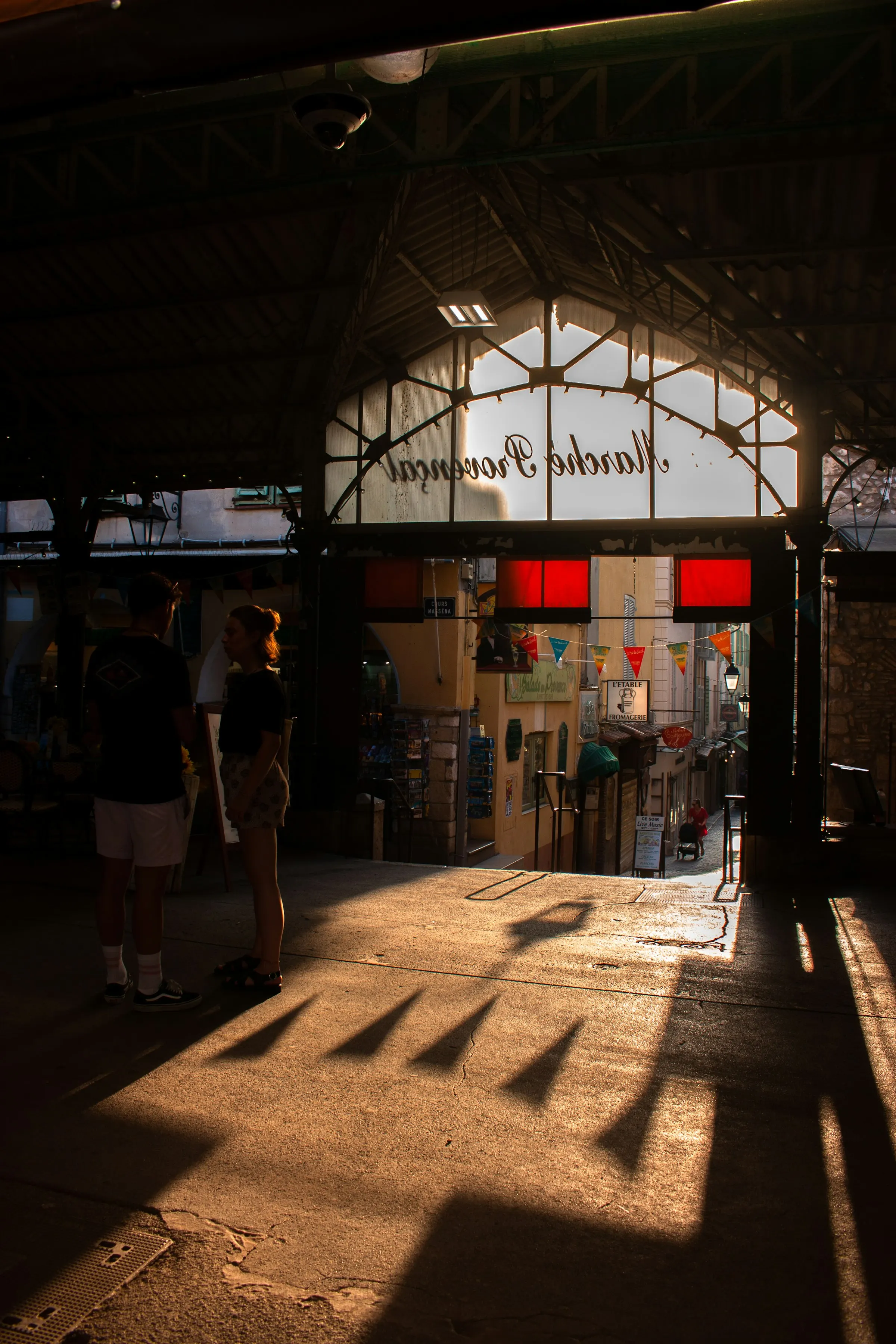
Every morning, not just one. The Marché Provençal runs under its covered hall on the Cours Masséna from half past seven until about one, taking Mondays off from September through May and otherwise simply not stopping — producers from the hills, cheese, flowers, olives, and a standing argument about tomatoes.
Where your coffee happens
The Place Nationale, under the plane trees, is the town's living room. The cafés along the Cours Masséna catch the market as it packs up. And the sea wall is for clear winter mornings, when the view runs across the bay to snow on the Alps.
A Saturday here
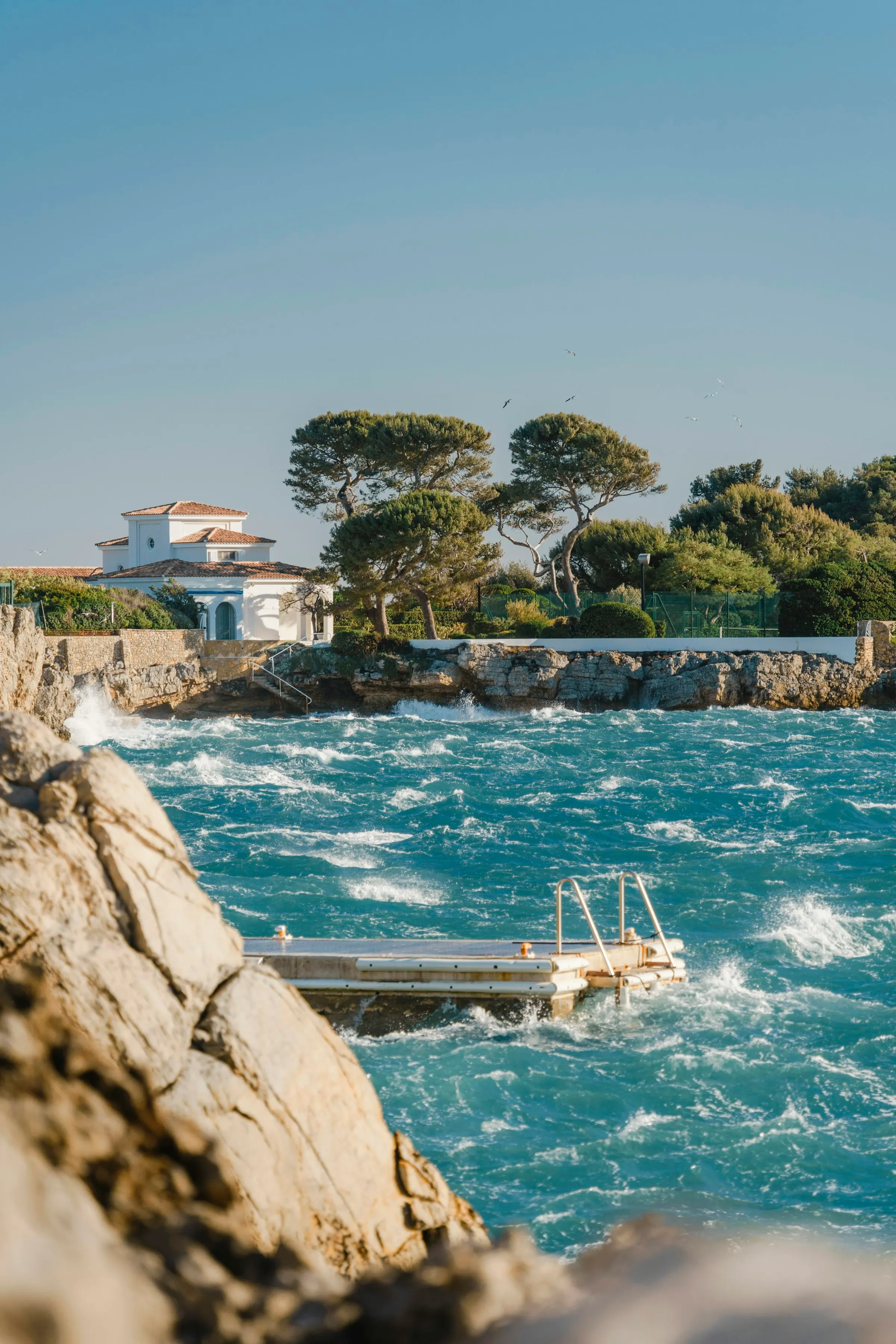
Market first, then the ramparts to the Picasso museum. In the afternoon, the coastal path around the Cap d'Antibes — the Sentier du Littoral, a little under three kilometers of rock and pine from the Plage de la Garoupe to the Baie des Milliardaires — or simply the sandy Plage de la Salis at the foot of the Cap, on a coast that mostly deals in pebbles. Evenings: a film in version originale, dinner in the lanes, or — in mid-July — jazz drifting over from Juan-les-Pins.
The year, honestly
The numbers come from the Météo-France station at Nice airport, ten kilometers up the coast: about 2,760 hours of sun a year, roughly one frost day, rain on about 62 days and mostly in bursts. The sea keeps true scorchers rare — around nine days a year over 30 °C — but stays humid doing it: nearly three months run over 25 °C, and August asks something of you. July and August are also the crush — beach crowds, coast-road traffic, and Jazz à Juan, in the pines at Juan-les-Pins since 1960 — a highlight or a siege, depending on your street. About a third of Antibes's homes are second homes, so some quarters go dark in November. But a city this size keeps its schools, its errands, and its market running all winter — Mondays excepted.
Who thrives here
People who want the Mediterranean with a soft landing. The yachting industry anchors one of the coast's largest English-speaking communities, the American Club of the Riviera is within reach, and there's an AVF welcome association in town. People for whom healthcare decides the map: GP coverage is strong, Antibes runs its own general hospital with round-the-clock emergency care, Nice's university hospital is about 25 minutes away, and home-help coverage sits near the top of the towns we track. And non-drivers: with the walkable core, dense shops, and the train station, a car is optional in a way it rarely is in the south.
Think twice if
Your budget decides: sales here average around €5,000 per square meter, rents around €20 — and nothing on the Riviera is drifting cheaper. You dread crowds — July and August are a genuine crush, and the sprawl between Antibes and Juan-les-Pins, with Juan's nightlife, is not everyone's retirement soundtrack. You're buying a part-time base — the town levies a 50 percent second-home surcharge on the taxe d'habitation. You came for deep France: with this much spoken English, Antibes is an easy landing, not an immersion. And the coastal plain carries a long file of declared flood events — read the risk report before buying at ground level.
The orbit
Nice in about twenty minutes by TER; Cannes about ten the other way; the same coastal line carries on toward Monaco and Italy. Nice Côte d'Azur airport is roughly 25 minutes away, with seasonal nonstop flights to the US. Paris by rail is a bit over five hours.
The Aelos view
Antibes is our easiest Riviera answer: the softest anglophone landing on this coast, serious medicine and a US-connected airport under half an hour away, and a daily-market old town behind the yacht harbor. We send people here who rank ease, healthcare, and community above immersion and price. If your France is a quiet village square and a gentler budget — or if sharing your town every summer sounds like a tax you'd resent — we'd point you inland.