The feel
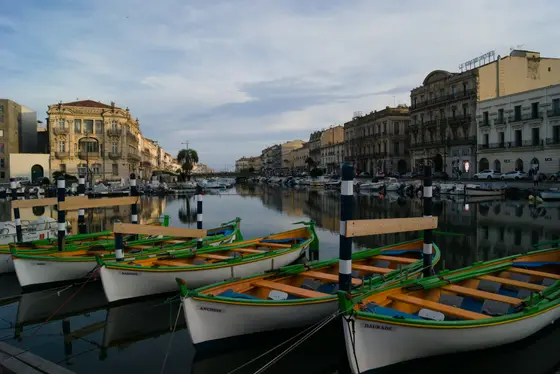
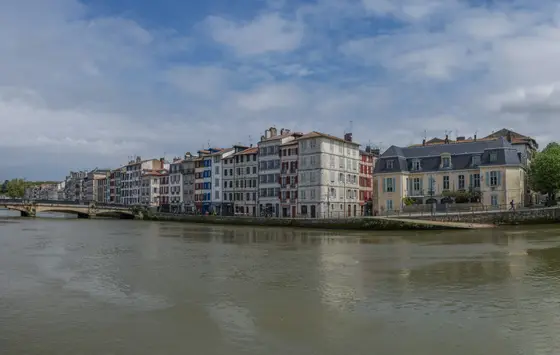
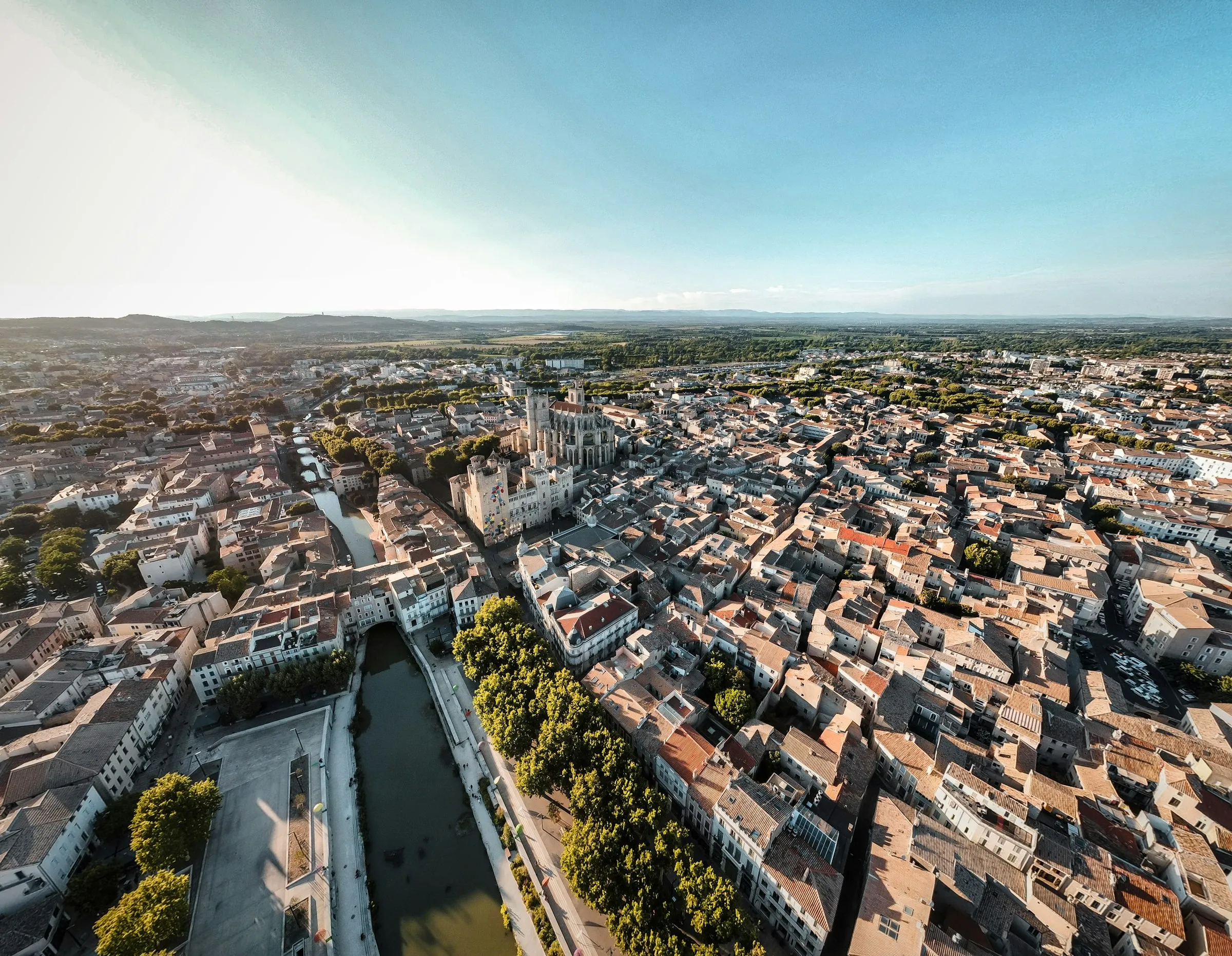
Rome planted Narbo Martius here in 118 BC and named a province after it; a worn stretch of the Via Domitia lies open to the sky in the heart of town, and the cathedral was never finished — what stands is still among the tallest in France. Yet Narbonne performs remarkably little. It is a working city of about 57,000, vines and lagoons at its edges, the Canal de la Robine running straight through its middle. The effect is of a place with nothing left to prove and dinner to buy.
Market day
Every day, in fact. Les Halles — an iron-and-glass hall of 1901 on the bank of the Robine — opens 365 mornings a year, seven until two: some seventy stalls of fish, butchery, cheese, fruit, and wine, with lunch counters among them. Thursday and Sunday mornings are the crush; on Mondays some stalls rest. The rest of Narbonne's food life takes its cues from the hall.
Where your coffee happens
At a counter inside the Halles mid-morning, if you like company; on a quay of the Robine, if you'd rather watch the water. The café terraces near the Archbishops' Palace do the grand version.
A Saturday here
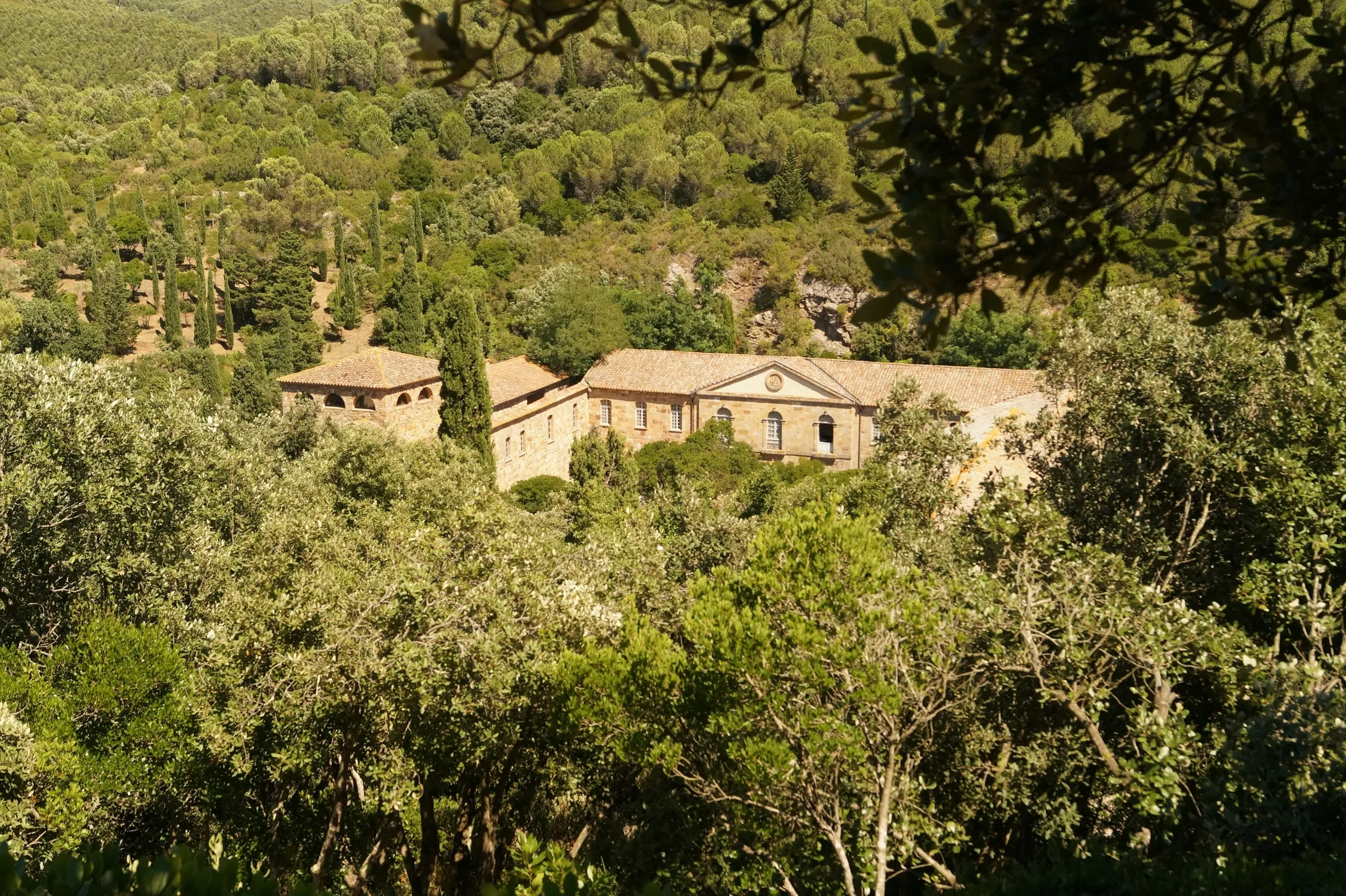
The Halles first, before ten. Then the canal-side walk to Narbo Via, the Roman museum Foster + Partners built at the city's entrance in 2021, its lapidary wall stacked with carved stone. Lunch late. In the afternoon, the sea — Narbonne-Plage is fifteen kilometers away, an outing rather than an expedition — or Fontfroide, the Cistercian abbey folded into the hills fifteen kilometers southwest. In the evening, a film: the town keeps two cinemas, one art-house, and undubbed showings matter more in February than in July.
The year, honestly
A caveat: the nearest Météo-France reference station is Perpignan's aerodrome, fifty kilometers down the coast — read these as coastal-Languedoc numbers, not Narbonne's own. They say just under 2,500 hours of sun a year, thirty-six days over 30 °C, rain on some fifty-four days, frost on perhaps nine mornings. No station captures the tramontane, the dry northwest wind of the Languedoc — it scrubs the sky blue, and it can wear on you. Summers are seriously hot and trending hotter. The consolation is the off-season: only about 17 percent of homes are second homes — low for this near the Mediterranean — so the town does not empty in November. Midwinter is genuinely sleepy, though. A dozen festivals stretch across three seasons, and the Halles does not take a single morning off.
Who thrives here
People who want a real city at market-town prices: recent sales average around €2,340 a square meter (across more than 3,000 sales) and rents run about €11.50. People who want services close: Narbonne's own hospital is eleven minutes away, and GP access scores near the top of our grid. Train people — the station is a genuine junction. And people content to build a French-first life: the anglophone scene amounts to one Franco-English association, the Alliance Franco-Anglaise du Languedoc, and it skews British.
Think twice if
The tramontane would grind you down — spend a windy week here before deciding. You hate heat: thirty-six days a year over 30 °C, and climbing. You are picturing a polished postcard: Narbonne is a workaday southern city with scruffy stretches, and its crime figures sit mid-range for a city this size — nothing alarming, nothing invisible. You buy without reading the fine print: the combined property-tax rate stood at a steep 61.6 percent in 2025, and twenty-three of the commune's disaster decrees are for flooding — lowland streets deserve a hard look at the flood maps. Or you are counting on a soft landing: no AVF newcomers' chapter, no American circle — and every flight home connects.
The orbit
The beach at Narbonne-Plage, fifteen kilometers. Fontfroide Abbey, fifteen southwest. The station is the real asset: Toulouse, Montpellier, Marseille, and Barcelona direct, and Paris in about four and a half hours. Montpellier's airport is about an hour by car, and its university hospital a little more — specialist medicine means that drive, while the everyday kind stays eleven minutes from home.
The Aelos view
Narbonne is the best city-for-the-money in our Mediterranean-adjacent set: a serious daily market, its own hospital, direct trains to four big cities, and prices most of the coast left behind long ago. We send here people who want a working French city and don't mind being the only Americans at the table. We steer elsewhere anyone who needs polish, an anglophone cushion, or shelter from wind and heat — Narbonne sells the south at a discount, and the wind and the scruff are the discount.