The feel
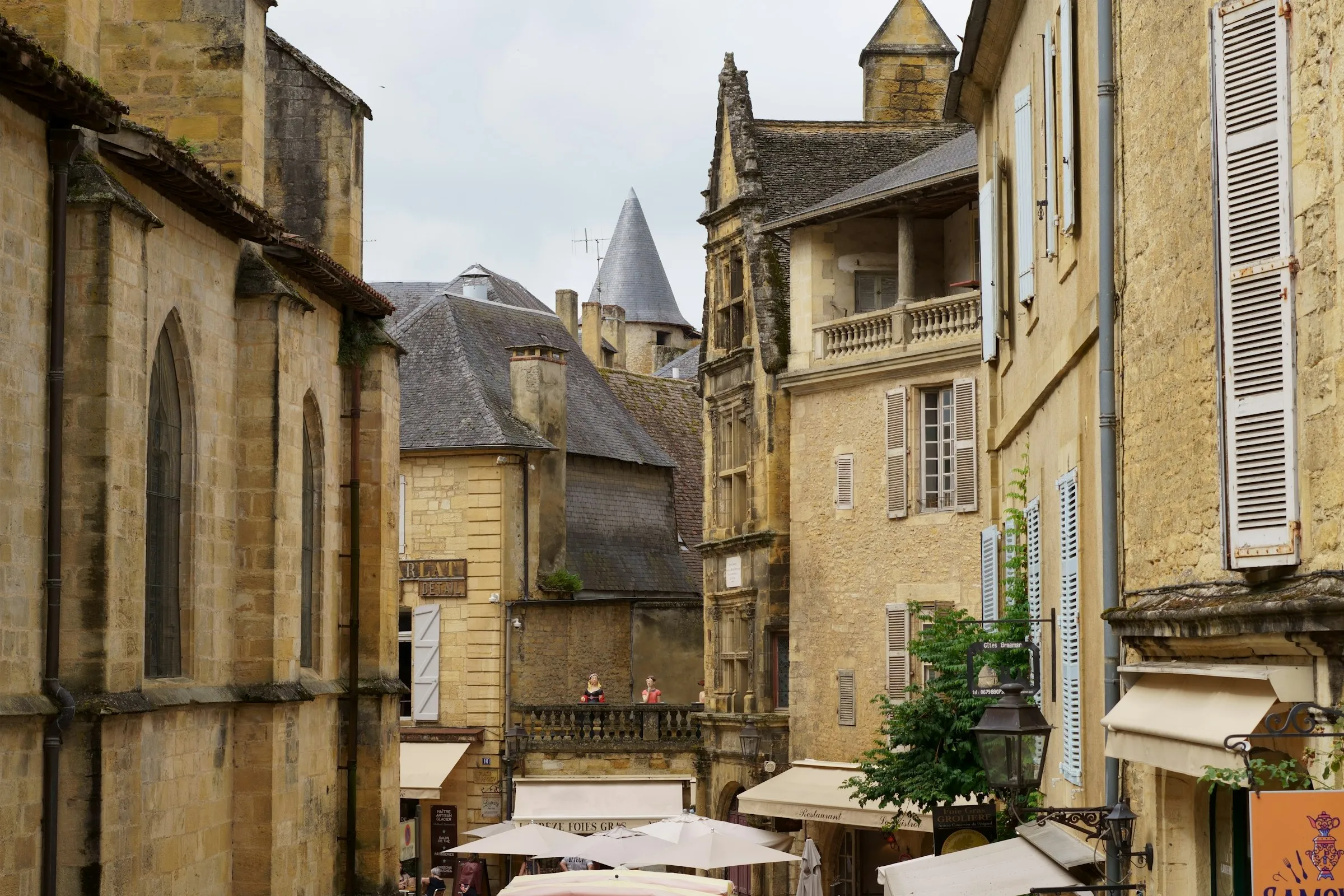
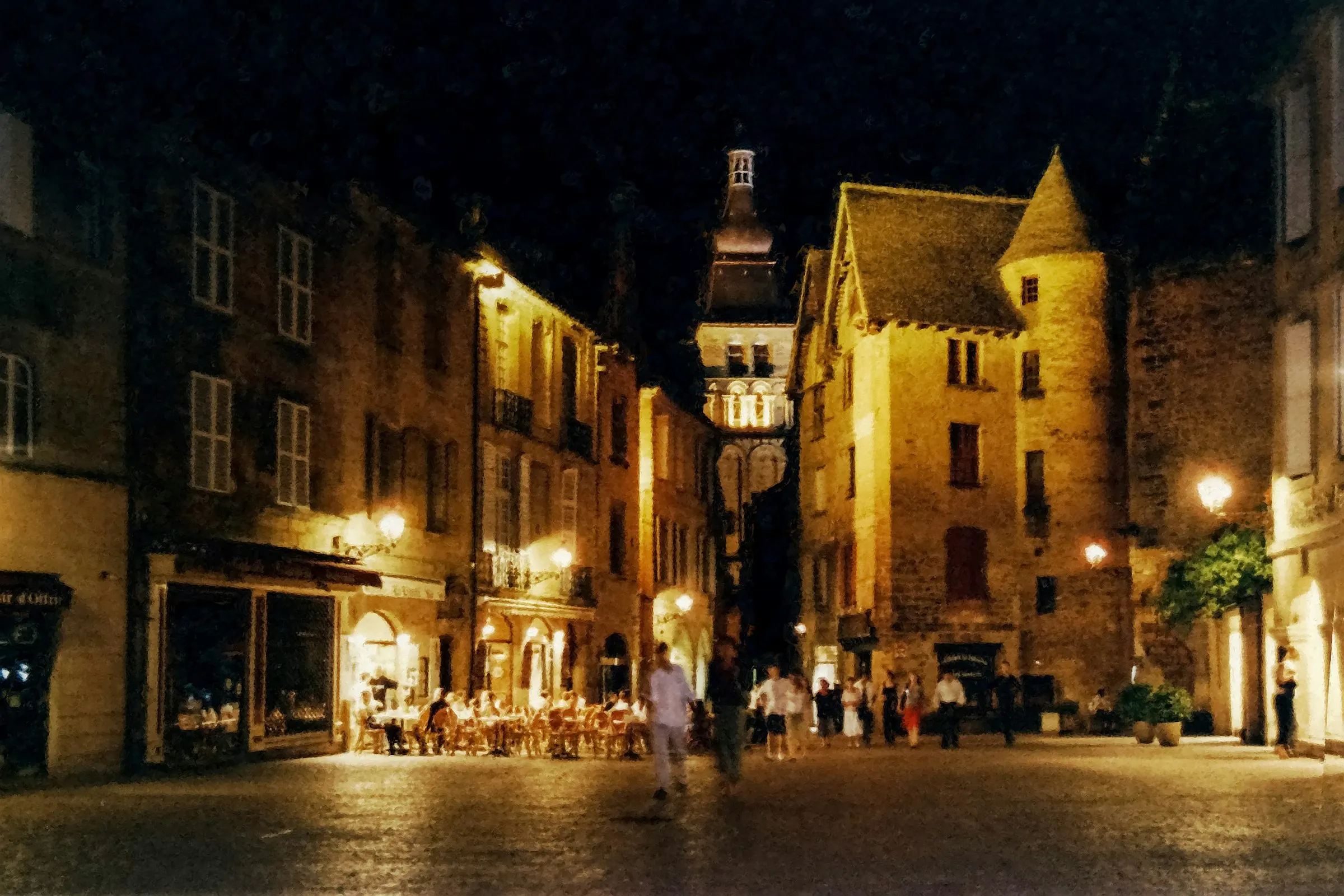
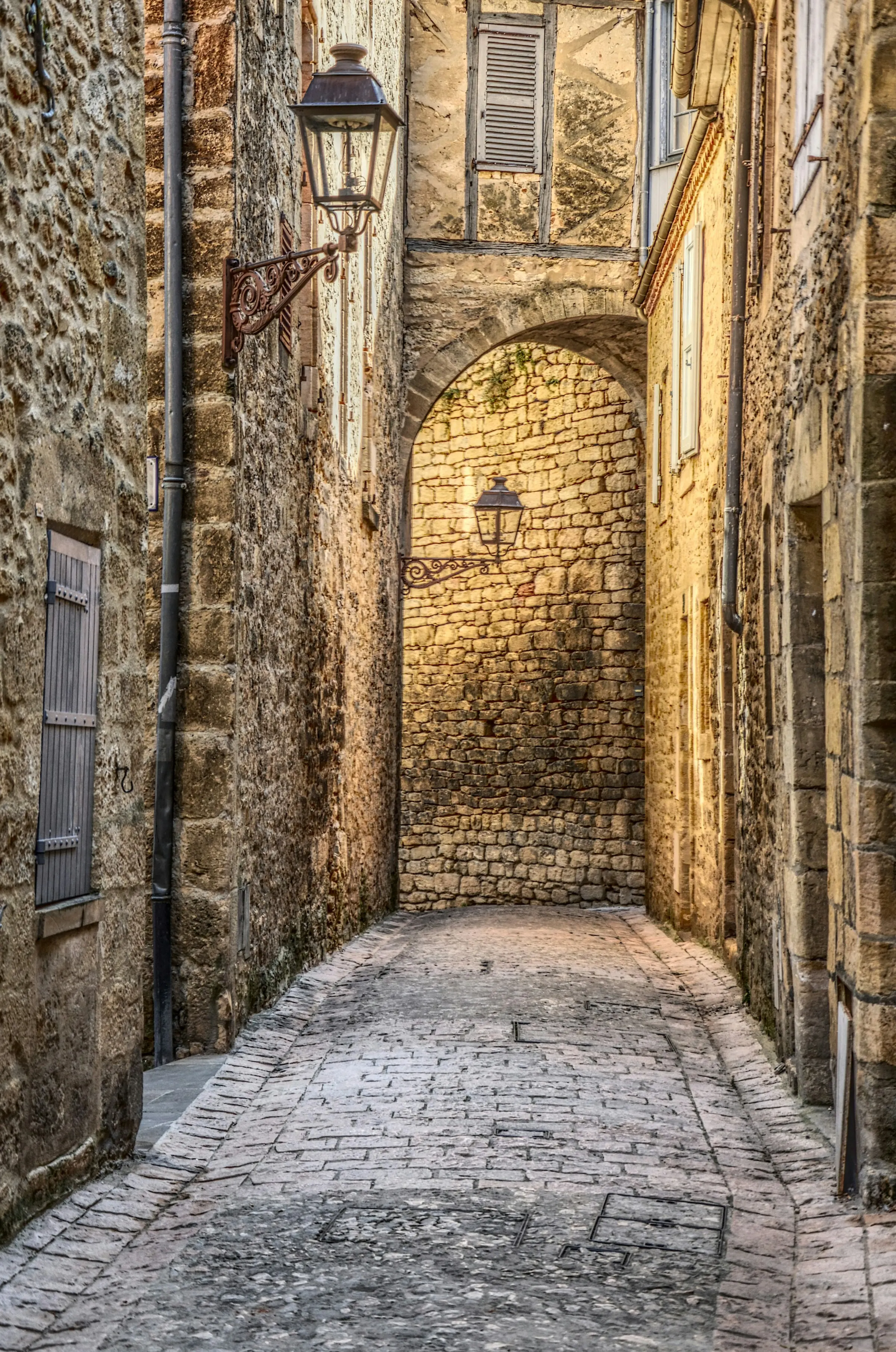
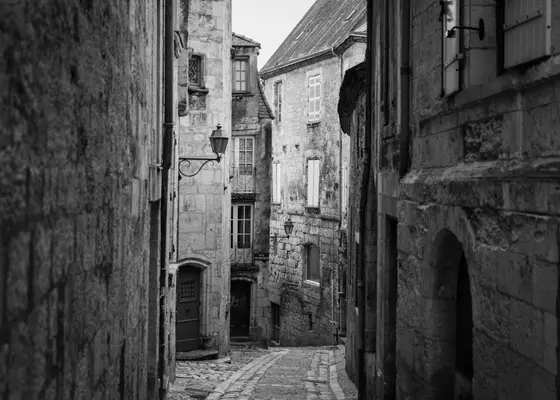
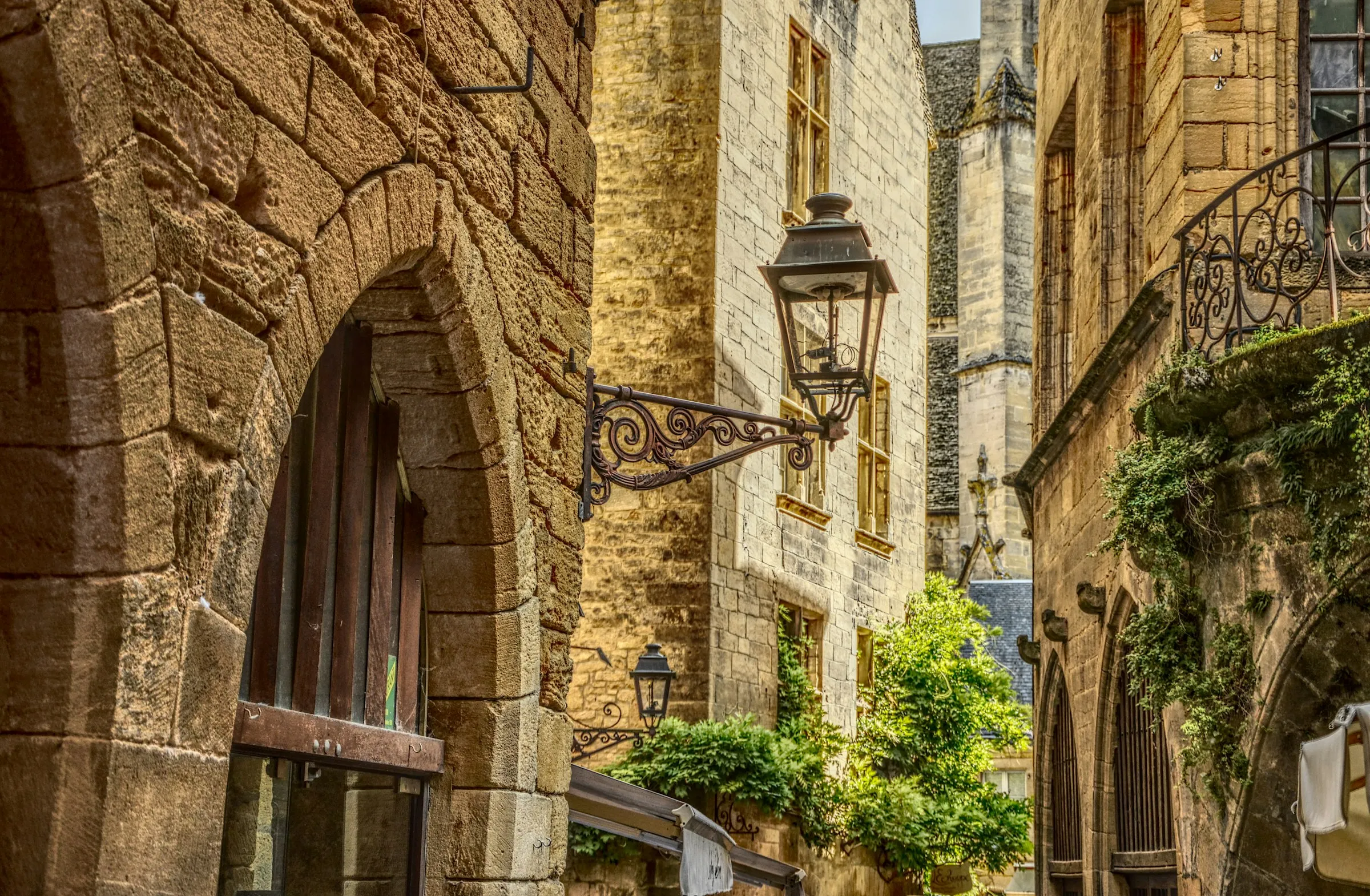
An old town of golden limestone — some seventy protected monuments among nine thousand people — lantern-lit and almost implausibly whole. None of it survived by accident: when the Malraux law created France's first protected historic sector in 1962, Sarlat was the pilot, the town the country decided to save on purpose. Nowhere this lovely stays private; Sarlat doesn't pretend otherwise. Underneath the performance, it is still the country town where the Périgord Noir comes to see the doctor, sell its geese, and do its paperwork.
Market day
Saturday takes the whole center, all day — food from eight in the morning, everything else alongside, threading the lanes and squares. The surrounding country is one of France's great larders and it all lands here: foie gras, walnuts, cèpes, strawberries, chestnuts. Wednesday morning is the quieter, food-only version; the covered market in the former church of Sainte-Marie — converted by Jean Nouvel — runs year-round. Winter is when Sarlat gets serious: Saturday-morning truffle markets from December to mid-March on the rue Fénelon, fattened duck and goose markets alongside, a truffle festival the third week of January.
Where your coffee happens
On the Place de la Liberté if you want the spectacle — the terraces face one of the handsomest squares in the southwest. A few turns deeper into the lanes if you'd rather read in peace. August will teach you which is yours.
A Saturday here
Market early, before the coaches. Then the valley: La Roque-Gageac hangs off its cliff about fifteen minutes south, the castles of Beynac and Castelnaud a short drive along the river — canoe past them in summer, walk the ridges off-season. Back for dinner, which in Sarlat is the point. Later, the lanes under the lamps, when the day-trippers have gone and the town returns to itself.
The year, honestly
The nearest Météo-France station — Gourdon, twenty-odd kilometers southeast — describes the inland southwest, not the Mediterranean: just over 2,000 hours of sun, about 117 rain days, forty-some frost mornings, about 30 days over 30 °C. Summers are hot and green; winters are real — misty, damp, short. Then the tide: July and August pack the lanes shoulder to shoulder; residents shop at eight and take the town back in September. Nearly one home in five is a second home, yet the off-season holds: a film festival fills the Rex — an art-house showing undubbed films all year — in early November, truffles carry December through February, Fest'Oie brings the geese in early March, and one of France's oldest theater festivals takes the squares each summer.
Who thrives here
Cooks, first — people whose week can be built around a market this good. Value-seekers: homes trade around €1,800 per square meter and rentals average about €11 — a fraction of Provence, for arguably better eating. Long-run planners: the Centre Hospitalier de Sarlat is five minutes away, and the district is unusually well provisioned with residential care and home help for rural France. And joiners who don't need the circle to be American: the scene here is real but British-flavored — a Chaplaincy of Aquitaine congregation in nearby Sainte-Nathalène, a Dordogne Sud branch of Cancer Support France.
Think twice if
Serious medicine is your first filter: the town hospital covers the everyday, the bigger regional hospitals are Brive and Périgueux, each about an hour, and true university-hospital medicine means Limoges or Bordeaux, two hours or more; the cancer center is Bordeaux at two and a half, and the Dordogne's doctor shortage is widely reported — we found no evidence of English-speaking practices in Sarlat; your medical life will run in French. Trips home are a project: Bergerac's small airport is over an hour away with one-stop routings at best; Paris is about five hours by rail. You hate crowds — for two months a year the whole world is in these lanes. And a car is non-negotiable: without one, the valley, the doctors, and the airport all recede.
The orbit
The Dordogne valley — La Roque-Gageac, Beynac, Castelnaud — about fifteen minutes. Lascaux, at Montignac, about twenty. Brive and its regional hospital, about an hour. Bergerac and the airport, an hour and ten. Bordeaux, about two and a quarter hours by direct TER from Sarlat's own small station — the one trip that spares you the car.
The Aelos view
If your France is fundamentally about the table — the market, the producers, the long lunch — few places deliver like Sarlat, and almost none at these prices. We'd send cooks, hosts, and members willing to work on their French. We'd steer away anyone who needs specialists close or a quick trip home: this is deep, gorgeous, inconvenient country, and the summer crowds are the rent.