The feel
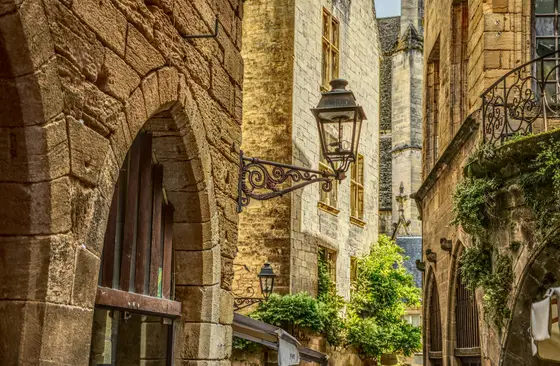
Wednesday, a little before nine. Under the arcades of the Place aux Herbes the plane trees are still throwing long shadows, and the producers — Wednesday is the farmers' market — are stacking apricots, goat cheese, and olives from the garrigue. The café chairs facing the square fill in a strict order the town understands, and you will too within a month. Uzès was a duchy, and it keeps a duchy's self-assurance: nothing here performs for visitors, even in high summer when the lanes are full. It is small enough that errands happen on foot and faces repeat, large enough to hold bookshops, galleries, and an opinionated cheesemonger.
Market day
Saturday is the grand version — a couple of hundred stalls spilling from the Place aux Herbes into the boulevards, one of the celebrated markets of the south, running year-round including holidays. Locals shop early; by half past ten it belongs to everyone. In winter the truffle stalls appear — this is serious truffle country — and the market simply carries on through January, which tells you most of what you need to know about whether this town closes for the season.
Where your coffee happens
On the Place aux Herbes if you want the theatre; on a side-street terrace toward the cathedral if you want your newspaper unbothered. The Fenestrelle tower — the round, faintly Pisan campanile that anchors every photograph of Uzès — supervises both options.
A Saturday here
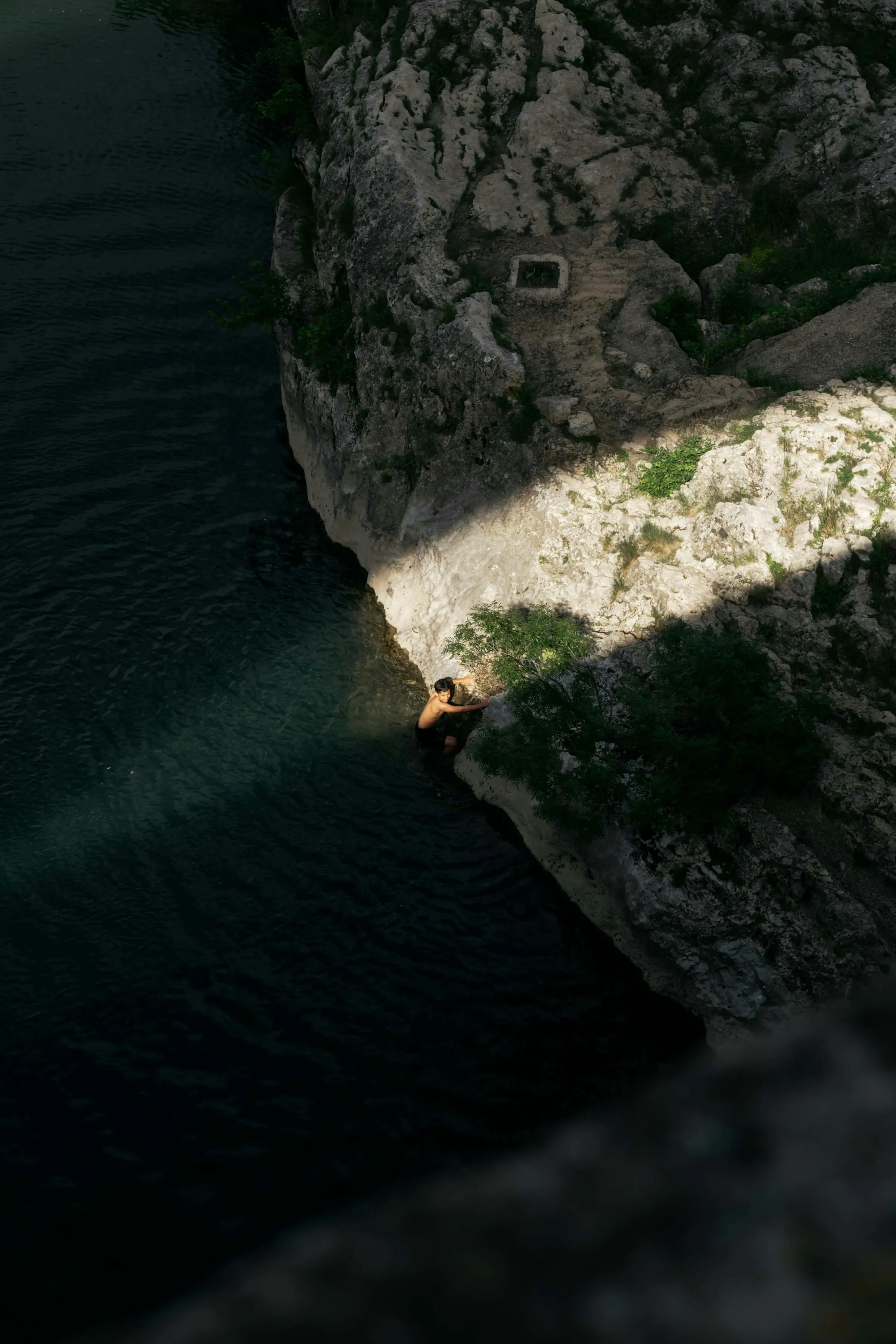
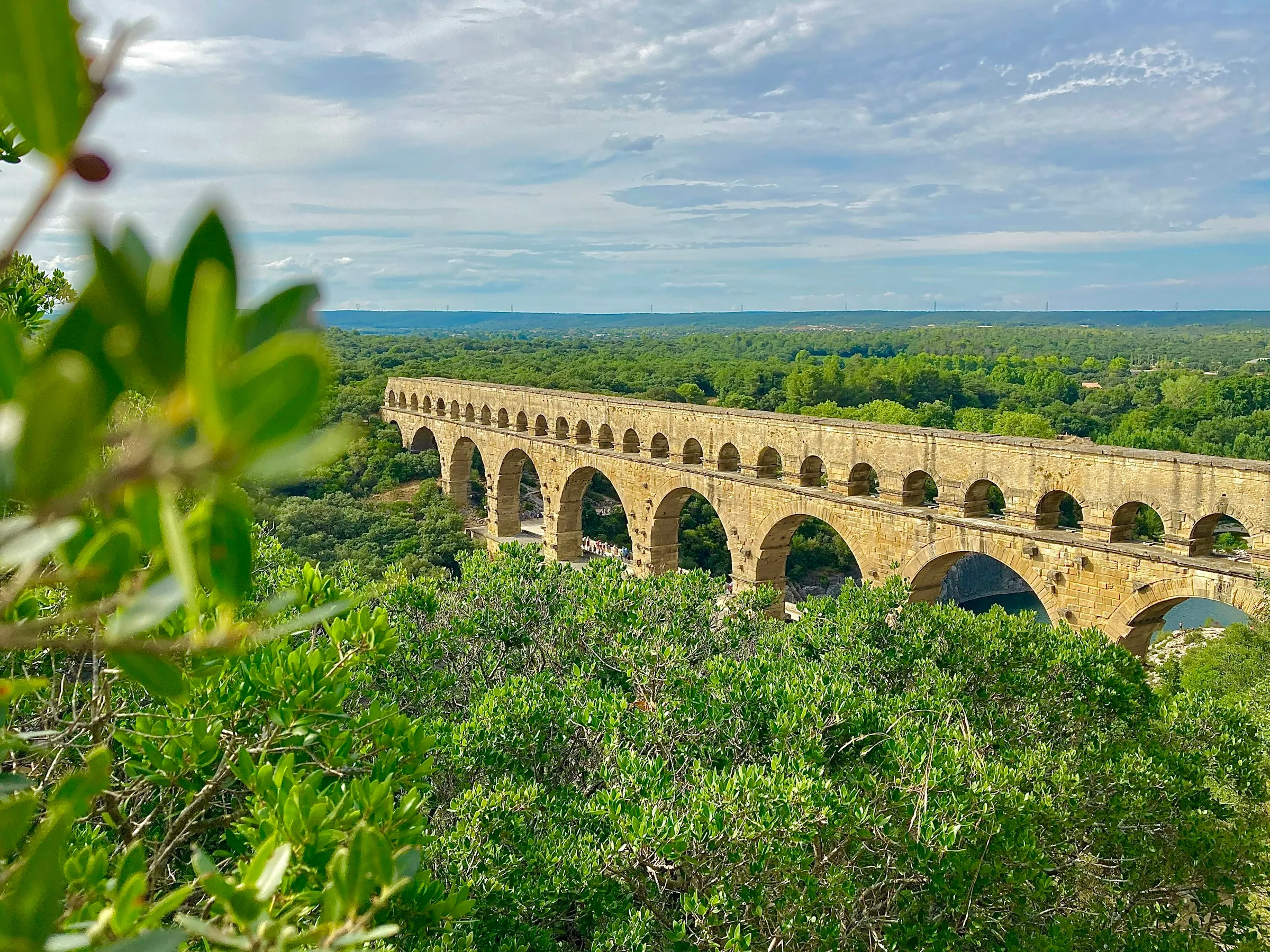
Market first, then the walk everyone ends up adopting: down through the Vallée de l'Eure, the green river valley below town where the Romans once collected the water they sent to Nîmes over the Pont du Gard — which stands, improbably intact, twenty minutes down the road. Lunch late. In summer, a concert in the old town; in winter, dinner at seven and the streets to yourselves.
The year, honestly
This is the hot south, and we mean it: the nearest Météo-France station — Nîmes, twenty minutes away on the same garrigue plain — logs fifty-nine days a year over 30 °C, and most of them arrive together. July and August are magnificent, crowded, and not really yours. September and October may be the best months anywhere in France. Winters are short and mostly bright — that same station counts around 2,700 hours of sun a year, with Mediterranean rain arriving in bursts rather than drizzle — and the town quietens without shutting: the markets run, the truffle season gives the cold months a purpose, and the year-round population keeps the bakeries honest.
Who thrives here
People who want beauty at walking speed and a real week built around the market. Hosts — this is a spare-bedroom town, and visitors will come. Anyone who wants an established English-speaking circle that stays a minority: Americans have been settling here for years, and the Nîmes–Uzès area carries an active anglophone network, without ever becoming an enclave.
Think twice if
You need a major hospital in ten minutes — serious medicine means Bagnols-sur-Cèze or the university hospital in Nîmes, each about half an hour away. You hate heat and summer crowds. You don't intend to drive: without a car and without a rail link, Uzès asks for patience. Or you want anonymity — in a town this size, the cheesemonger will know your order by October.
The orbit
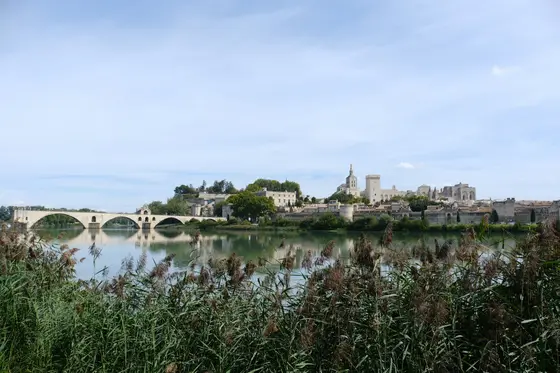
The Pont du Gard, twenty minutes. Nîmes and its Roman arena, about thirty-five. Avignon and its TGV to Paris, about forty-five. The Cévennes foothills, under an hour, for the cooler air the summer will make you crave.
The Aelos view
Uzès is the strongest version of the "perfect French market town" many of our members picture — with two honest caveats: the summer heat is real and getting realer, and the missing train line makes the trip home to the States a full travel day. If neither frightens you, few places in the south land better.